
Health Ministry launches inclusivity guidelines for digital health technology
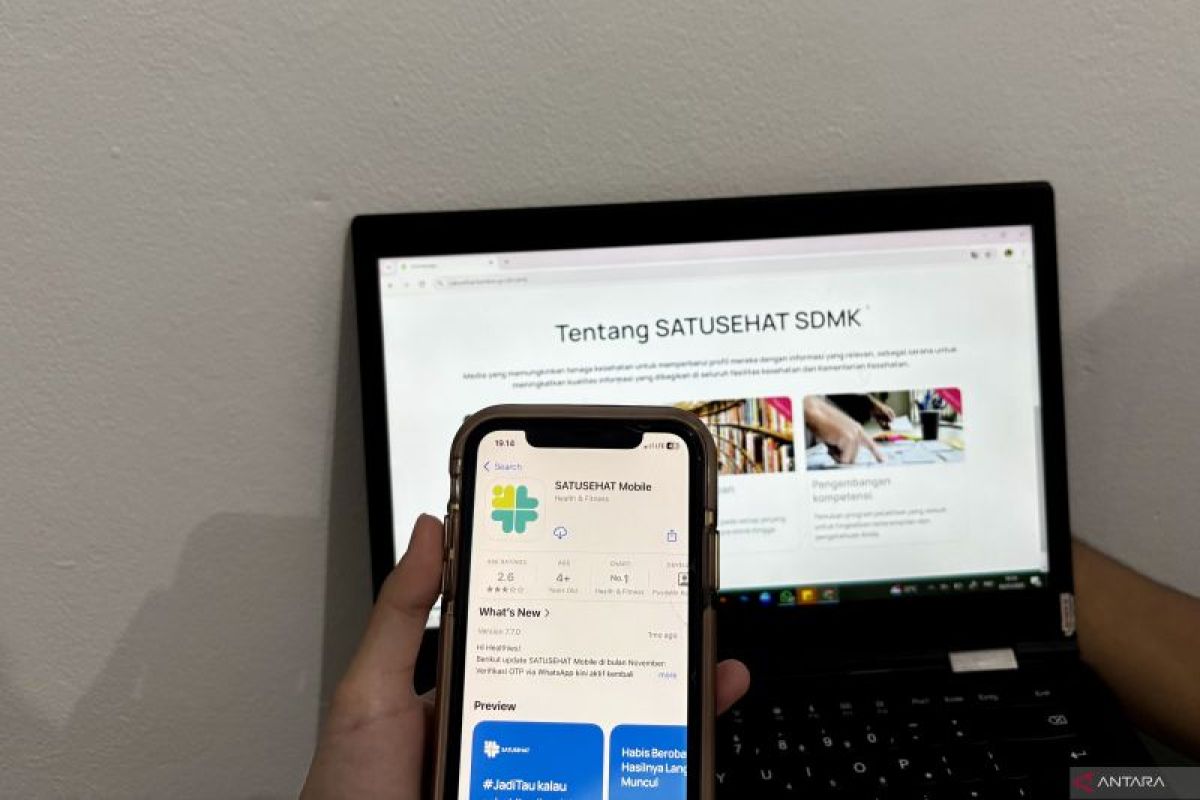
Jakarta (ANTARA) – The Health Ministry has launched Guidelines and an Inclusivity Assessment Tool for Digital Health Technology at the 2026 Health Sandbox Summit. The initiative aims to ensure that the country’s digital health transformation delivers not only innovation, but also accessibility and security.
Imran Pambudi, director of healthcare services for vulnerable groups at the ministry, said in Jakarta on Tuesday that the guidelines marked part of the three-year journey of the Health Sandbox, a national initiative designed to accelerate healthcare innovation through technology testing, support for innovators, evidence-gathering and the development of policy recommendations.
“Innovation must also be able to address the needs of highly diverse users, including vulnerable groups and those who have historically been under-represented in technology design,” he said.
Imran said the World Health Organization (WHO) estimates that around 16 per cent of the world’s population, or more than 1.3 billion people, live with disabilities, making them the world’s largest minority group. As technology becomes more widely used in public services, including healthcare, the digital challenges faced by this group have become a global concern.
In Indonesia, Statistics Indonesia (BPS) data show that more than 22 million people aged over five have varying degrees of functional difficulty. This figure does not include the growing elderly population, which is projected to reach almost 20 per cent of the total population by 2045.
“This shows that the need for accessible health technology is not limited to a small group; it is a need for a large part of society throughout the life cycle,” he said.
According to Imran, the guidelines bring together international standards and best practices used globally to develop inclusive technology, including the WHO-ITU Global Standard for Accessibility of Telehealth Services and the Web Content Accessibility Guidelines (WCAG) 2.2, developed by the World Wide Web Consortium (W3C).
“In addition to these standards, the guidelines also incorporate the global principles of Safety by Design and the human-centred design approach, which are increasingly used in the development of digital services in many countries,” he said.
The global standards have been adapted to the Indonesian context through three main pillars: accessibility, digital protection and security, and user-centred services.
The guidelines also serve as a practical tool for application developers, digital health start-ups, hospitals and electronic system operators in the healthcare sector to assess and improve their services.
“The importance of this approach can be seen in practical examples. A hospital appointment app with an automatic text-to-speech feature, flexible font-size options and adequate colour contrast would be much easier for people with visual disabilities and older people to use,” he said.
Health consultation features that use simple language and intuitive navigation can help users with varying levels of digital literacy.
Meanwhile, strong data-protection mechanisms and transparent privacy settings can increase users’ sense of security when they share sensitive health information.
Another strength of the guidelines is their participatory approach. The document was not developed solely by regulators, academics and technology experts.
“Representatives of people with disabilities, women, children, older people, people living with HIV and users of mental health services were also involved in its development,” he said.
This approach reflects a global trend towards recognising that the success of digital transformation is determined not only by technological sophistication, but also by technology’s ability to reach all sections of society.
Imran said that as Indonesia seeks to strengthen its health system through digital transformation, the launch of the Guidelines and Inclusivity Assessment Tool for Digital Health Technology sends a strong message that innovation and inclusivity must go hand in hand.
Source: jawawa.id (https://jawawa.id/newsitem/health-ministry-launches-inclusivity-guidelines-for-digital-health-technology-1794325888)
Originally published by Antara (Indonesian) (https://www.antaranews.com/berita/5845243/kemenkes-luncurkan-pedoman-inklusivitas-teknologi-kesehatan-digital), translated from Indonesian