
Health Ministry: Homecare Programme Strengthens Primary Services, Accelerates TB Case Detection
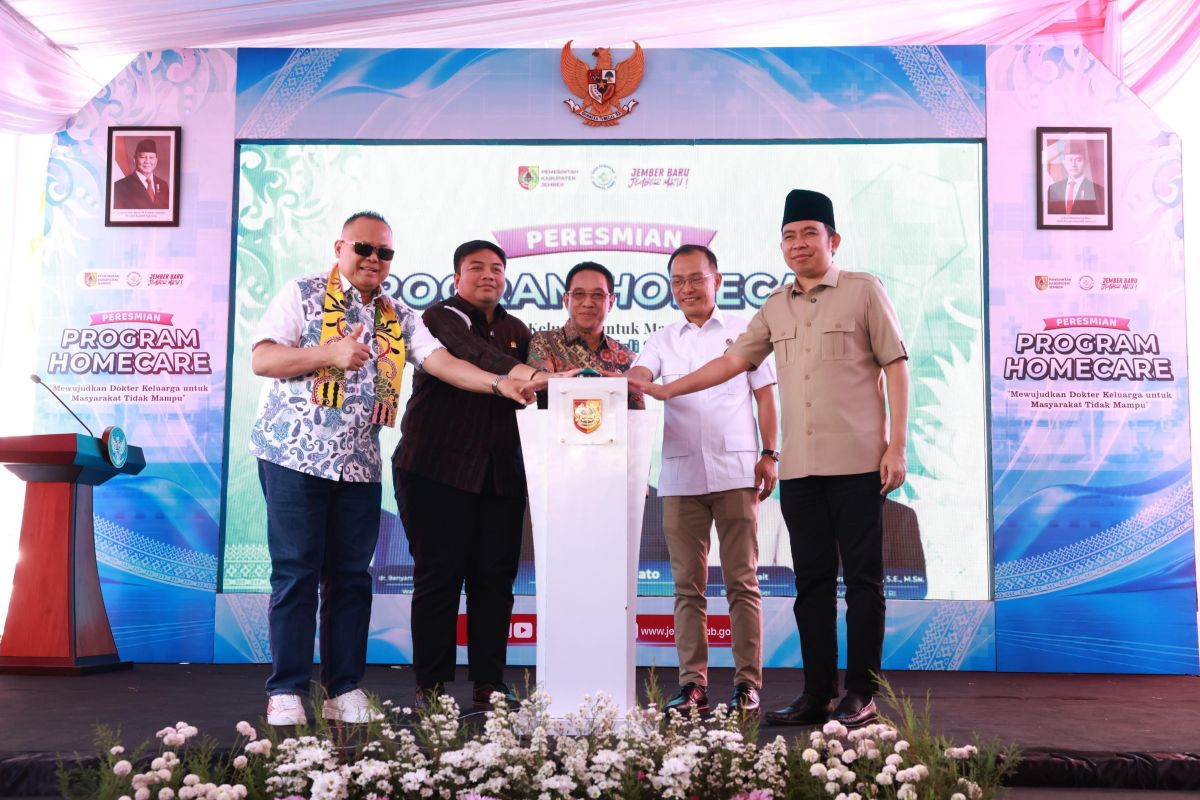
The Ministry of Health has stated that the launch of the Homecare programme, titled ‘Realising Family Doctors for Underprivileged Communities’ in Jember Regency, is an innovation that supports the strengthening of primary healthcare services while accelerating tuberculosis (TB) case detection through a family-based approach. Deputy Minister of Health Benjamin Paulus Octavianus said in Jakarta on Sunday that the programme, initiated by the Jember Regency Government, is expected to complement the Ministry’s priority programmes, including the implementation of free health screenings with chest X-rays for close contacts of TB patients. ‘This synergy is part of the government’s efforts to expand the reach of health services while breaking the chain of TB transmission in the community,’ he said. Benny explained that the government is continuously strengthening TB control efforts through early detection strategies, active case finding, and expanding access to health services down to the household level. ‘Indonesia is still the country with the second-largest number of TB cases in the world. Therefore, we must take extraordinary measures. So far, TB patient treatment has been going well, but the challenge is that people living in the same house or close contacts often have not been examined. This is where we must strengthen early detection so that transmission can be stopped more quickly,’ he said. In 2026, the Ministry of Health will implement free health screenings with chest X-rays at 53,335 locations across Indonesia, including 228 locations in Jember Regency. Through these examinations, suspected TB cases can be immediately found and treated, while asymptomatic family members or close contacts will be given Tuberculosis Preventive Therapy (TPT) to prevent the disease from developing into an active form. ‘We treat those who are sick, and we give preventive medicine to those who are not yet sick. TB germs can reside in a person’s body and cause disease one to two years later. If preventive therapy is given early, we can break the chain of transmission before the disease develops,’ he said. According to Benny, the success of TB elimination depends not only on health facilities but also requires the involvement of local governments, health workers, community health cadres, and the public in actively finding cases and ensuring patients complete their treatment. ‘We hope local governments will oversee this programme. The Ministry of Health has prepared support for the implementation of free health screenings with chest X-rays. The most important thing is that the public is willing to come for examinations so that TB cases can be found more quickly and treated immediately,’ he said. Meanwhile, Jember Regent Muhammad Fawait explained that the Homecare programme was born from the local government’s evaluation after all underprivileged citizens received protection through the National Health Insurance (JKN) programme. The evaluation showed that many people still did not utilise health services due to transportation costs or access barriers to health facilities. ‘We want to ensure that the public not only has health insurance but can truly obtain services. Therefore, health workers will come directly to residents’ homes to conduct basic health checks, provide education, and utilise telemedicine if a doctor’s consultation is needed,’ Fawait said. In agreement, Deputy Head of the Poverty Alleviation Acceleration Agency (BP Taskin) Iwan Sumule assessed that expanding access to health services to the household level is an important part of the strategy to accelerate poverty reduction. According to him, a healthy community will have better productivity, thereby improving family welfare. ‘Poverty and health are two interrelated issues. When people do not have adequate access to health services, the risk of losing productivity increases, the household expenditure burden grows, and it can even push families into or back into poverty,’ he said.