
Health Ministry Highlights Families’ Role in Nurturing Neurodivergent Children’s Potential
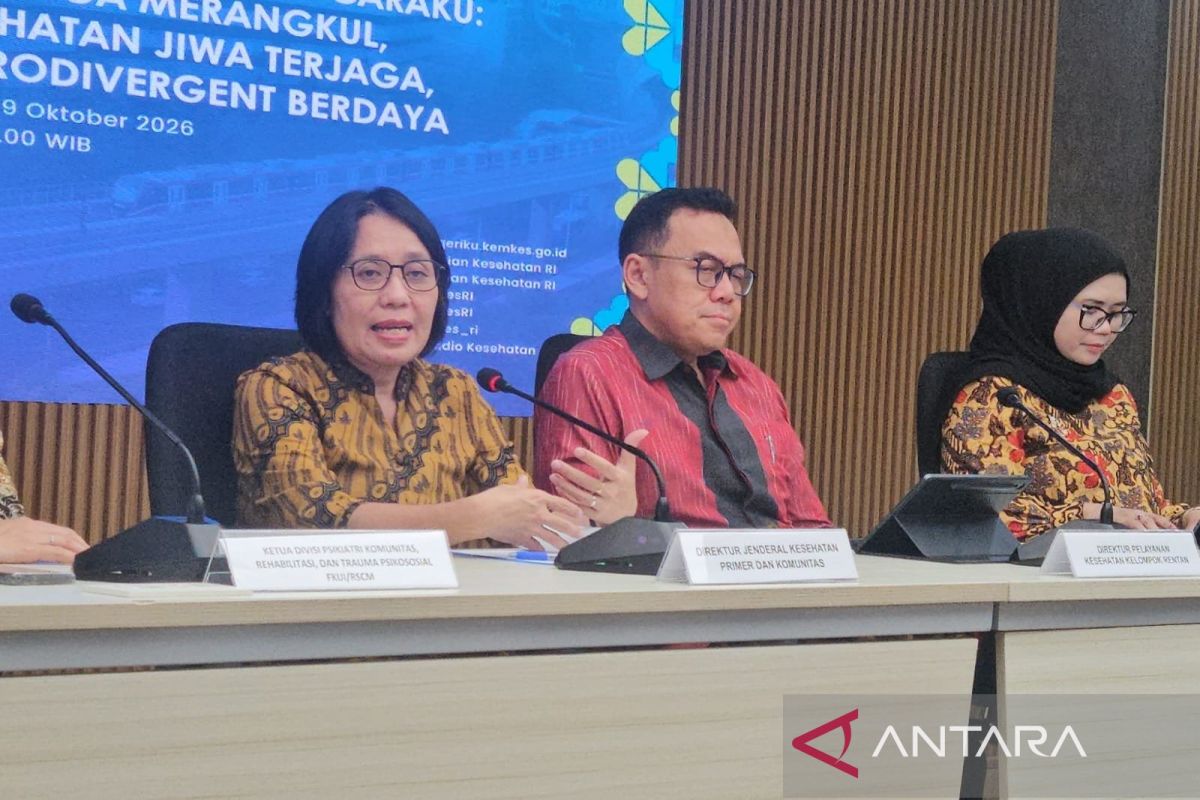
Jakarta (ANTARA) – The Ministry of Health has highlighted the importance of family support for children with neurodivergence or mental health conditions, saying it can provide a foundation for them to grow and thrive and give them the confidence to seek help.
“The biggest gap is not whether needs exist, but early recognition, acceptance and access. And all of that begins in the place closest to us: home. That is why our theme emphasises family. Embrace,” said Maria Endang Sumiwi, the ministry’s Director General of Primary and Community Health.
Speaking in Jakarta on Friday, Endang cited 2025 World Health Organisation data showing that more than one billion people live with mental disorders, with nearly half experiencing onset before the age of 18. The WHO also estimates that attention deficit hyperactivity disorder (ADHD) affects around 2.7 per cent of children aged 10–14 and 2.2 per cent of adolescents aged 15–19.
She added that research published in an international study in 2020 put the prevalence of dyslexia at around 5–20 per cent.
Endang said that paying attention to children, adolescents and families was an investment that could not be postponed. It was therefore important to recognise early signs and offer acceptance without assigning blame.
The Health Ministry is working to strengthen mental health services, particularly at primary care level. It has also begun providing community health centres, known as puskesmas, that cater to people with disabilities.
“There are already 932, or 9 per cent, of puskesmas that are disability-friendly,” she said.
Going forward, she said, collaboration was needed across posyandu community health posts, community health workers, schools, public figures and communities of people with lived experience to create more inclusive health services.
“People who are neurodivergent, including autistic people and those with ADHD or dyslexia, can act as a bridge between families and services. They have diverse needs and ways of interacting, so services must be inclusive and tailored to each person,” she said.
At the same event, Imran Pambudi, the Health Ministry’s Director of Health Services for Vulnerable Groups, said that in many cases observed, neurodivergent conditions were identified late.
He explained that ADHD is a neurodevelopmental disorder affecting the ability to focus, control impulses and regulate activity levels.
Dyslexia, meanwhile, is a learning disorder that affects reading, writing and spelling, despite normal intelligence.
Imran said the 2023 Indonesian Health Survey (SKI) found that 10 in every 1,000 children had an intellectual disability, while eight in every 1,000 had a mental disability.
“These are issues we need to address, because otherwise we may fail to identify these children’s potential, leaving them a less productive generation,” he said.
He also stressed the need for efforts ranging from health promotion to rehabilitation.
Source: jawawa.id (https://jawawa.id/newsitem/health-ministry-highlights-families-role-in-nurturing-neurodivergent-childrens-potential-1791557608)
Originally published by Antara (Indonesian) (https://www.antaranews.com/berita/5779173/kemenkes-soroti-peran-keluarga-dalam-gali-potensi-anak-neurodivergen), translated from Indonesian