
Health Ministry: AI use must be accompanied by strong governance and ethics
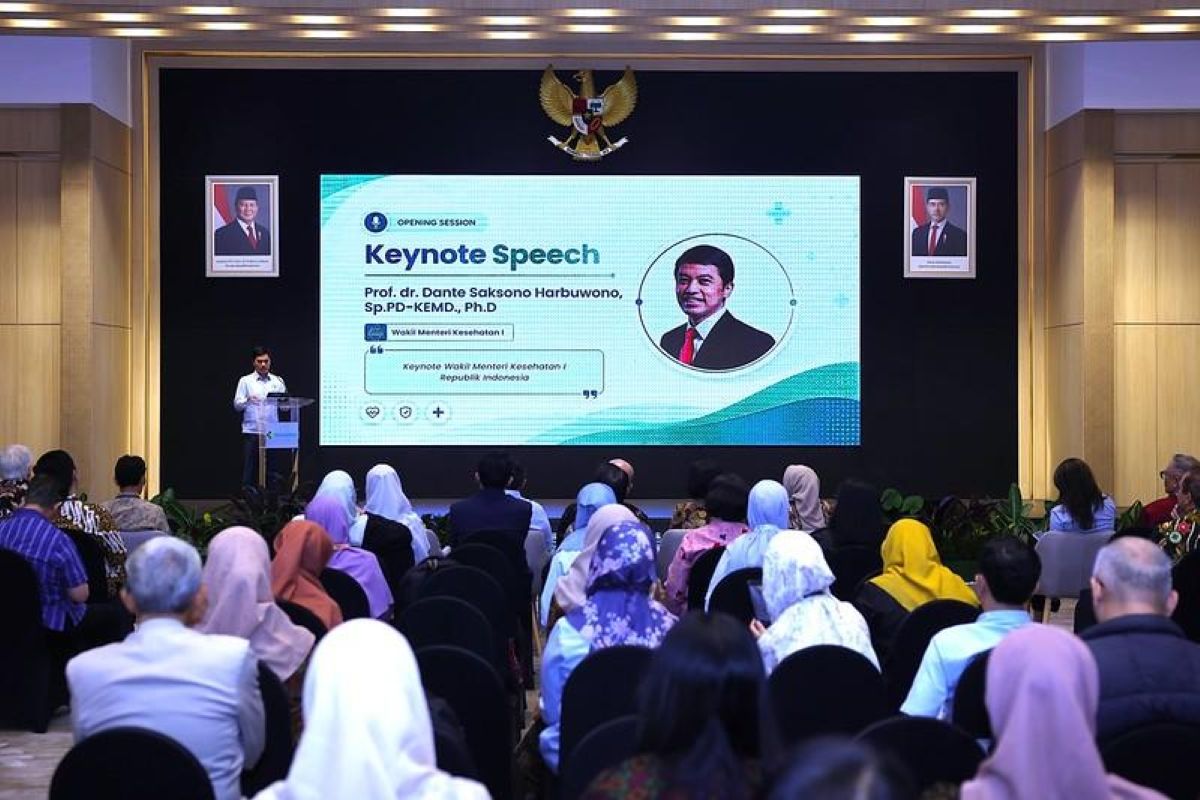
Deputy Health Minister Dante Saksono Harbuwono has stressed the need to pair the sophistication of artificial intelligence with strong governance and ethical foundations, given that the use of AI in healthcare concerns patient safety and lives. “When a computer program recommends a diagnosis to a doctor, who is responsible if the recommendation is wrong?” Dante asked in Jakarta on Wednesday. According to him, AI opens up great opportunities to improve the quality of health services, from detecting diseases earlier and accelerating diagnoses to processing large amounts of health data. However, he said, this technology also brings risks, such as biased or erroneous results, misdiagnosis, and threats to the security of private patient data. Therefore, its utilisation must be accompanied by strong governance, regulations that are adaptive to technological developments, and a non-negotiable ethical commitment. Since 2023, the ministry has used AI to detect Tuberculosis (TB) through portable AI-powered X-ray devices. By 2025, around 200,000 people had been examined using this technology. In addition, a number of AI trials have also shown promising results. In lung cancer detection with Harrison.ai, the accuracy rate of AI in finding cases reached 90 per cent, higher than the reading of radiologists without AI assistance, which stood at 83 per cent. Meanwhile, in stroke detection via brain CT scans with RSUP Dr. M. Djamil and the National Brain Centre Hospital, AI’s accuracy in confirming patients who were truly healthy reached 98 per cent, compared to 74 per cent in manual readings. In mass TB screening with Qure.ai, out of 38,000 examinations, AI successfully found 4,000 people suspected of having TB and also detected 12,000 other lung abnormalities. “This data proves one thing: AI does not only detect one disease but opens up greater opportunities to maintain patient safety and health,” Dante said. Although the benefits are real, Dante emphasised that technology must go hand in hand with good governance so that its risks can be minimised. “Innovation without governance is risk. And governance without innovation is stagnation,” he said. The National Conference entitled ‘Towards a Safe, Fair, and Responsible Future for the Health Artificial Intelligence Ecosystem’ was held concurrently with a workshop on the application of ethical guidelines, patient consent, and data governance in health AI. Dante expressed hope that the forum would produce concrete recommendations, ranging from regulations on AI-based medical devices and data governance to patient consent before their data is used, as well as strengthening the capacity of the Health Research Ethics Committee in assessing research using AI. At the same occasion, the Director General of Advanced Health at the Ministry of Health, Azhar Jaya, stated that the world has now entered an era heavily influenced by AI. This technology is changing the way people live, work, and make decisions, including in health services. According to him, AI has shown real benefits, from helping to diagnose diseases and developing more personalised treatments for patients to the use of robots in the health sector. However, these benefits must be balanced with serious attention to public data security. “Future research must be preceded by a supervisory body. Therefore, the Ministry of Health has established SATUSEHAT and SATUSEHAT AI to ensure that Indonesian citizen data is not misused or exploited by irresponsible parties,” Azhar explained.