
Health Ministry: AI strengthens TB detection in prisons, protects wider community
The Ministry of Health has stated that the integration of chest X-rays and artificial intelligence (AI)-based analysis enables the detection of tuberculosis (TB) cases that are often hidden without clear symptoms, thereby strengthening protection for residents of correctional institutions (Lapas) and the general public.
Director of Health Services for Vulnerable Groups at the Ministry of Health, Imran Pambudi, said in Jakarta on Thursday that in 2023, when X-rays were used on a limited basis, 6,039 TB cases were found, representing 2.3 per cent of the prison population. In 2024, when screening relied solely on symptoms, the number of detected cases plummeted to 2,151, or 0.8 per cent. However, in 2025, when X-rays were reapplied comprehensively, cases surged to 7,972, or 3.6 per cent.
Scientific evidence supports this approach. Various studies in Africa and Asia show that AI-based X-ray reading is consistently more accurate than manual examination, with higher sensitivity and specificity.
“This technology is not merely a complement, but a breakthrough that accelerates case detection, strengthens the screening system, and paves the way for more effective TB elimination,” he said.
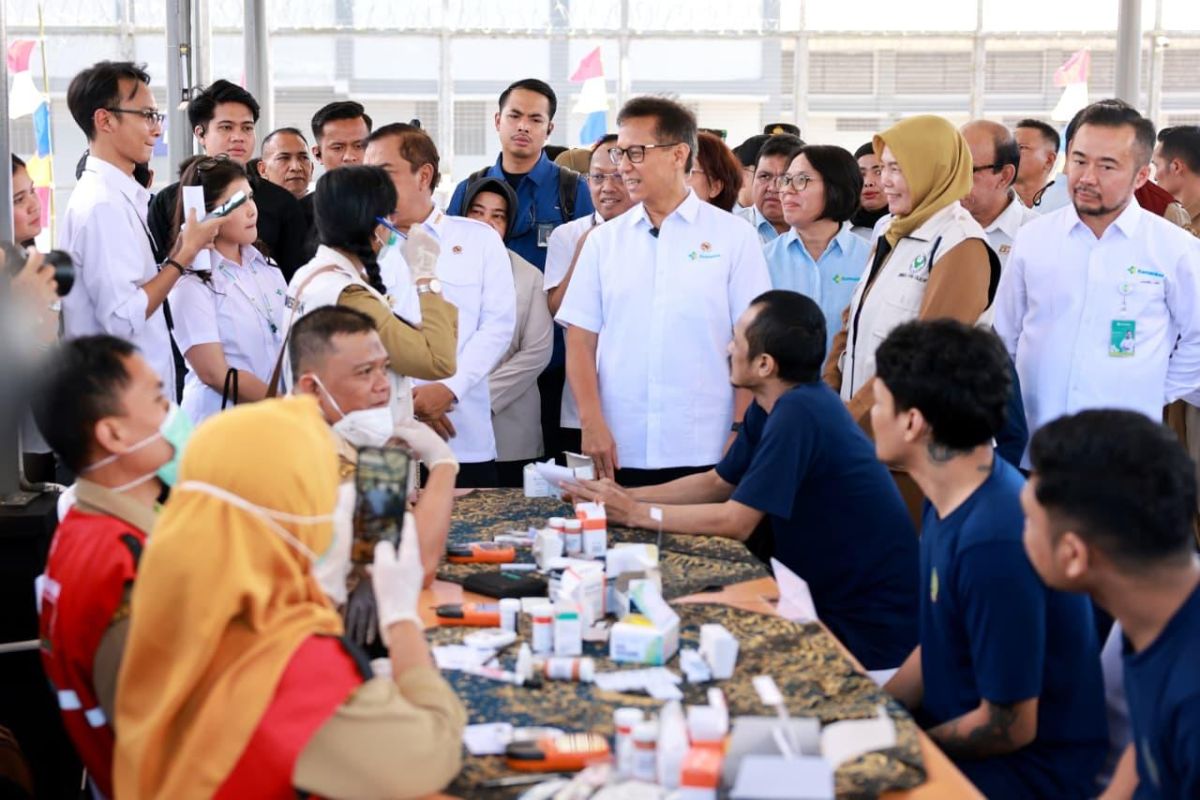
On 29 June 2026, at Nusakambangan Prison in Central Java, Health Minister Budi Gunadi Sadikin and Minister of Immigration and Corrections Agus Andrianto directly reviewed the Kick Off TB Screening, which provided free health checks including symptom screening, physical examinations, and chest X-rays for inmates.
He explained that this initiative is part of a 2026 national programme targeting 321,449 individuals, comprising 272,583 inmates and 48,866 officers across 532 prisons and detention centres. The programme’s scale is significant, covering 375 districts and cities and 33 regional offices, underscoring that this is a structured national movement, not a fleeting campaign.
According to him, the atmosphere at Nusakambangan reflected this commitment. Inmates queued for examinations, health workers acted swiftly, and mobile X-ray units were deployed on site. By integrating chest X-rays and AI-based analysis, diagnostic barriers were successfully overcome.
“Early detection means faster treatment, and faster treatment means the chain of transmission can be broken immediately,” he said.
Imran stated that the health of inmates is part of public health. Finding and treating TB behind bars means protecting officers, families, and the wider community.
For long-term success, he said, consistency is needed, including the provision of diagnostic tools, sustainable funding, trained health workers, and a robust treatment monitoring system.
“If all these elements are strengthened, X-ray and AI-based TB screening can become a model for TB control in Indonesia, proving that technology and policy together can accelerate the achievement of public health goals,” he said.
Source: jawawa.id (https://jawawa.id/newsitem/health-ministry-ai-strengthens-tb-detection-in-prisons-protects-wider-community-1782982493)
Originally published by Antara (Indonesian) (https://www.antaranews.com/berita/5632176/kemenkes-ai-kuatkan-deteksi-tb-di-lapas-lindungi-masyarakat-luas), translated from Indonesian