
Health Ministry accelerates robotic surgery transformation
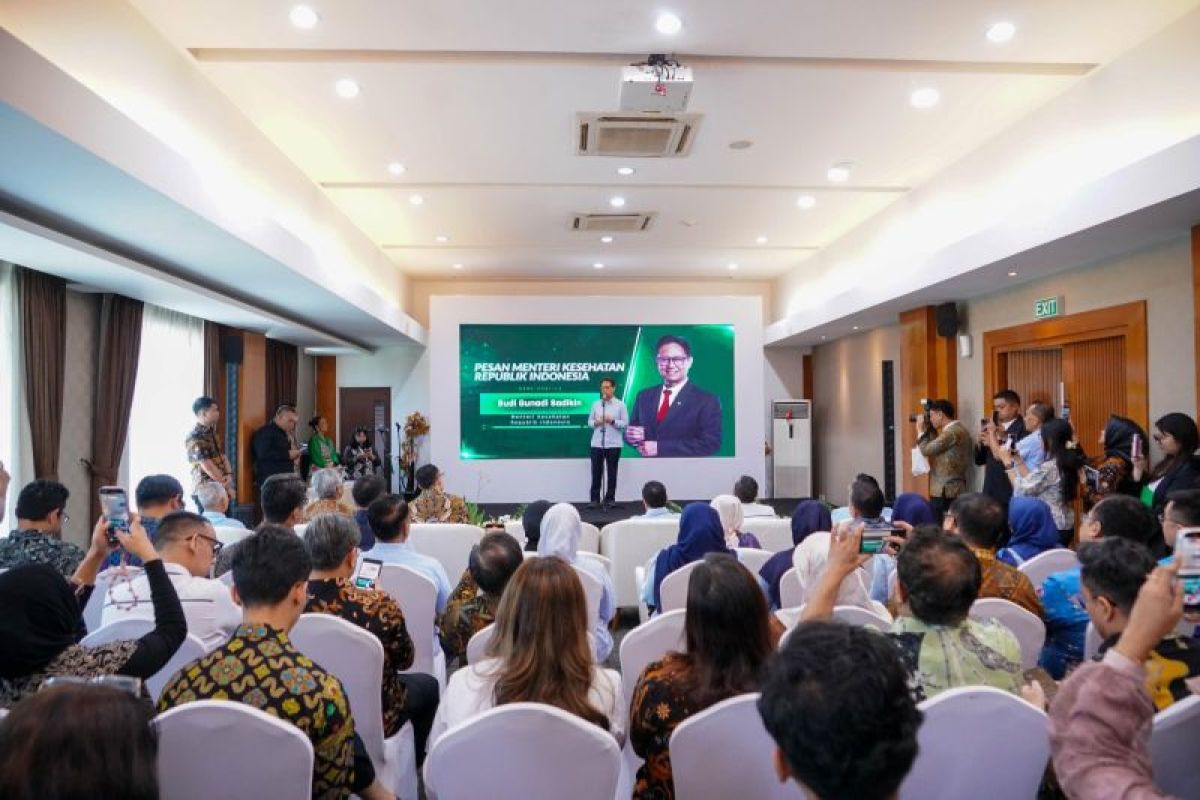
The Indonesian Ministry of Health is continuing to accelerate the transformation of healthcare services through the development of robotic surgery technology as part of the health technology transformation pillar, via a series of national policies. “Robotics is a global trend. This technology provides better quality services for patients, more precise operations, milder pain, and shorter hospital stays. The government’s task is to ensure this service is increasingly accessible, of high quality, and more affordable,” said Health Minister Budi Gunadi Sadikin in Jakarta on Tuesday. In addition to preparing the procurement of 40 surgical robots for government hospitals, the Ministry of Health is building an artificial intelligence (AI) ecosystem, expanding doctor training, and encouraging technology transfer to make the national medical device industry more self-sufficient. The commitment was conveyed by Minister Budi Gunadi Sadikin while attending the commemoration of nearly 1,000 robotic surgical procedures at Bunda Hospital Jakarta, alongside the launch of a strategic collaboration between the Ministry of Health, Bunda Hospital, and the Bandung Institute of Technology (ITB). According to him, the utilisation of robotic surgery in Indonesia still lags behind several other countries, including Singapore, Thailand, Malaysia, and even Vietnam. Therefore, the government is taking aggressive steps to accelerate adoption through national policy. One such step is the formation of the Ministry of Health’s Robotics Committee, tasked with formulating the direction of robotic technology development in Indonesia, from technological requirements and service standards to strategies for making services accessible to the public at efficient costs. On the financing side, the Ministry of Health is also evaluating a payment scheme through the national health insurance, BPJS Kesehatan, so that robotic surgical procedures can be included in the national financing system, allowing more people to benefit from the technology. As a foundation for the widespread use of robotics, the Ministry of Health is first strengthening minimally invasive surgery services through a national laparoscopic surgery training programme for surgeons in 514 districts and cities. This programme is expected to broaden public access to modern operations, such as hernia, appendicitis, gallbladder, and other digestive procedures. “We want more Indonesian doctors to have competence in minimally invasive and robotic surgery. This capability should not be limited to certain groups or only available in big cities,” he said. Indonesia is currently building three integrated national databases: population data, clinical data, and genomic data. In the future, data from robotic surgical procedures will also be collected nationally so it can be used to develop AI that helps doctors improve surgical precision. The openness of surgical operation data will enable Indonesia to develop an AI-based learning system that can improve the quality standards of surgical procedures while keeping clinical decisions in the hands of doctors. In the procurement of surgical robots, the government will also mandate technology transfer, particularly for the domestic production of consumable components. This policy is expected to reduce the cost of robotic surgical procedures, making them more affordable for the public while strengthening the national medical device industry. Additionally, the Ministry of Health will expand robotic surgery training centres across various regions in Indonesia so that access to education is not concentrated in just one area or institution. ITB Rector Tatacipta Dirgantara stated that Indonesia has strong research capacity in biomedical engineering, biomechanics, robotics, and artificial intelligence. However, the success of innovation depends on close collaboration between academics and medical professionals. “Facilitation from the Ministry of Health is crucial so that researchers and doctors can work together to develop health technology suited to Indonesia’s needs. With this collaboration, we are optimistic that Indonesia can produce globally competitive medical device innovations,” he said. President Commissioner of PT Bundamedik Tbk, Dr. Ivan Rizal Sini, conveyed that the achievement of nearly 1,000 robotic surgical procedures is the result of more than a decade of consistency in developing minimally invasive surgery services in Indonesia. His party is ready to support government programmes through the development of training centres, sharing experiences, and expanding knowledge transfer to doctors from various regions. “We believe experience must be shared. The more Indonesian doctors who master robotic surgery, the greater the benefits the public can feel,” he said.