
Health Ministry: 64 per cent of community health centres can provide mental health services
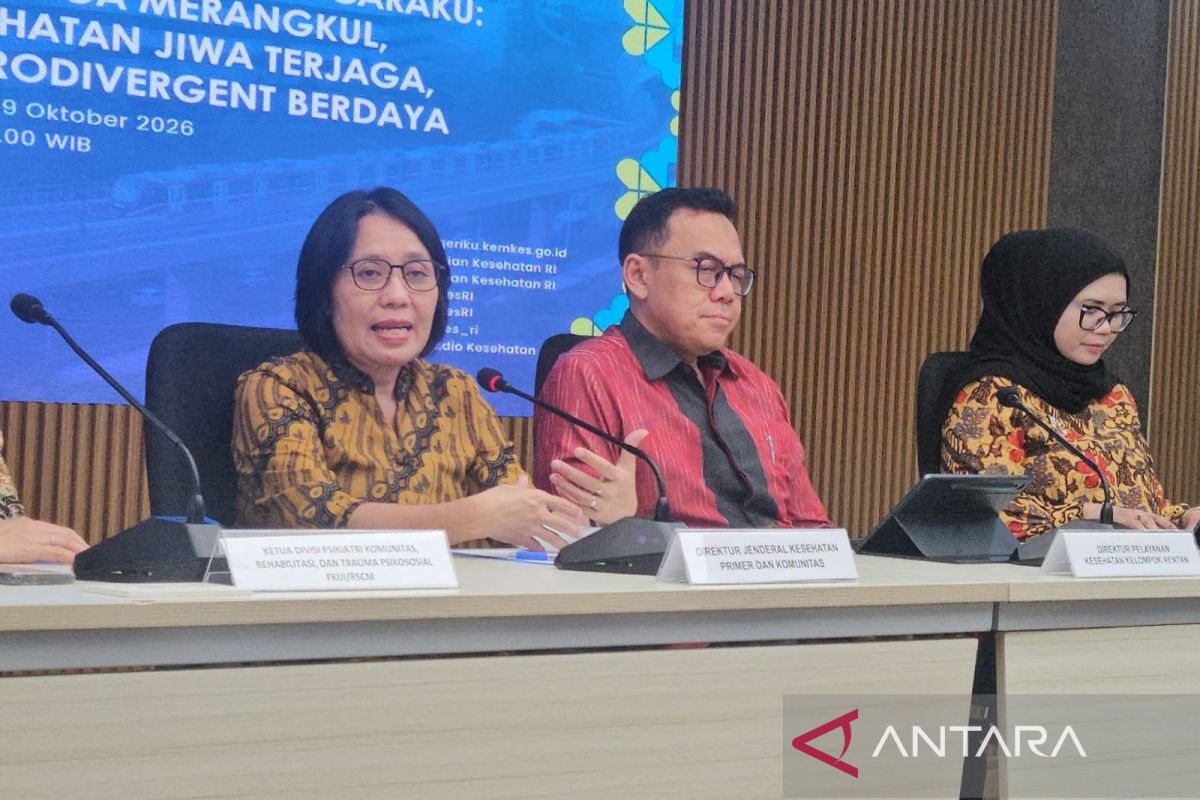
Jakarta (ANTARA) – The Health Ministry said about 6,549 community health centres (puskesmas), or 64 per cent of the total in Indonesia, can provide mental health services. It aims to ensure that all centres offer these services within two years, making them more inclusive.
Maria Endang Sumiwi, the ministry’s Director-General of Primary and Community Health, made the remarks in Jakarta on Friday during events marking World Mental Health Day, World Dyslexia Awareness Day and Attention Deficit Hyperactivity Disorder (ADHD) Awareness Month.
“We have also begun providing services for people with disabilities at community health centres. The number is still very small because the programme has only just started. There are 932 centres, or 9 per cent, that are disability-friendly,” she said.
She said the number of centres able to provide mental health services had risen from about 3,800 in 2022–23.
She described the expansion as an effort to improve access to healthcare. According to the 2023 Indonesian Health Survey (SKI), nine out of 10 people with depression have not been reached by health services.
The ministry also provides a mental health crisis helpline at healing119.id, which has been accessed by 284,916 people by phone or chat.
Endang said mental disorders were the second-largest cause of years of healthy life lost due to disability in Indonesia.
“This is also among the three leading health burdens for people from adolescence to adulthood. That means mental health is not a peripheral issue; it is a core issue in health development,” she said.
The 2023 SKI also found that four in every 1,000 families have a member with acute psychosis or schizophrenia, and 6.6 per cent of those individuals have been shackled.
She also cited World Health Organization estimates that ADHD affects about 2.7 per cent of children aged 10–14 and 2.2 per cent of adolescents aged 15–19. Research published internationally in 2020 put the prevalence of dyslexia at about 5–20 per cent.
She stressed the importance of family support and acceptance, saying these provide people who are neurodivergent with a foundation to grow and thrive.