
Health Minister: UI-Tsinghua cooperation can expand Indonesia's antigens to 16
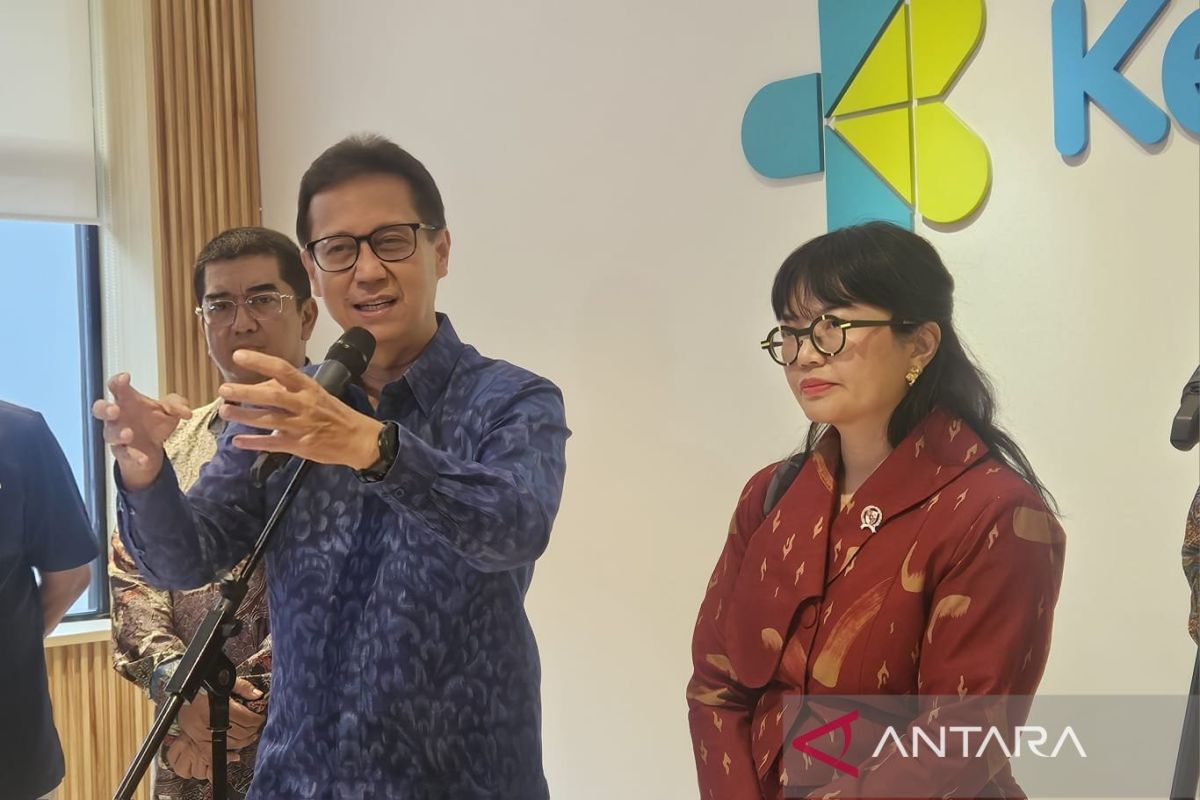
Jakarta (ANTARA) - Health Minister Budi Gunadi Sadikin said the cooperation between the Universitas Indonesia and Tsinghua University in developing an mRNA-based dengue vaccine could expand the number of antigens used by Indonesia from 15 to 16.
“Hopefully, once this is completed, it can become one of the new vaccines produced in Indonesia. As I said earlier, we need 15 antigens, and only 4 can so far be produced from the start in Indonesia. If this materialises, it will be the 16th antigen using the very latest technology,” said Budi.
Budi said in Jakarta on Wednesday that around 151,000 people contract the dengue virus each year. According to Ministry of Health data, dengue ranks fourth among infectious diseases.
“Number one is TB, number two HIV, number three malaria, number four dengue. Vaccines for all four have not yet been produced in Indonesia. Vaccines already exist for malaria and dengue, but they are produced by other countries,” said Budi.
In terms of deaths, he said tuberculosis ranks first with 126,000, followed by HIV at 25,000, dengue at around 630, and malaria at 132.
“If children receive too many injections, mothers also feel uncomfortable. So we will select new vaccines to be administered based on those with the highest incidence and mortality,” he said.
Budi expressed appreciation to those who have helped the collaboration, including the Ministry of Higher Education, Research and Technology, the National Research and Innovation Agency (BRIN), and the Education Fund Management Institution (LPDP) as sponsor.
On the same occasion, Deputy Minister of Higher Education, Research and Technology Stella Christie said the vaccine cooperation has been running since 2023. At that time, she had not yet been appointed deputy minister, but was a professor at Tsinghua University.
“At the time there was indeed a budget from the Ministry of Science and Technology to get it started. So back then we mapped Indonesia’s needs and China’s capacity to provide support,” she said.
Subsequently, she said, support came from industry, namely PT Etana, to consolidate the research so it could be implemented and produced. Stella also accompanied the researchers to Indonesia to see the facilities at UI in support of the cooperation.
She explained that the world’s best vaccines were born from university research, making research extremely important.
“As to the earlier question about what we will do going forward, this is the best model. Rather than signing an MoU first, we work together first, in earnest,” she said.
Stella assessed that research needs budgetary support, memoranda of understanding, and backing from the government, such as from Health Minister Budi Gunadi Sadikin.
“So at that time I also brought Tsinghua here, and the Minister was always willing to meet. That kind of support is also important,” she said.
Source: jawawa.id (https://jawawa.id/newsitem/health-minister-ui-tsinghua-cooperation-can-expand-indonesias-antigens-to-16-1783533116)
Originally published by Antara (Indonesian) (https://www.antaranews.com/berita/5641467/menkes-kerja-sama-ui-tsinghua-dapat-perluas-antigen-indonesia-jadi-16), translated from Indonesian