
Health Minister: Some Doctors Earn Billions, Others Earn Like Parking Attendants
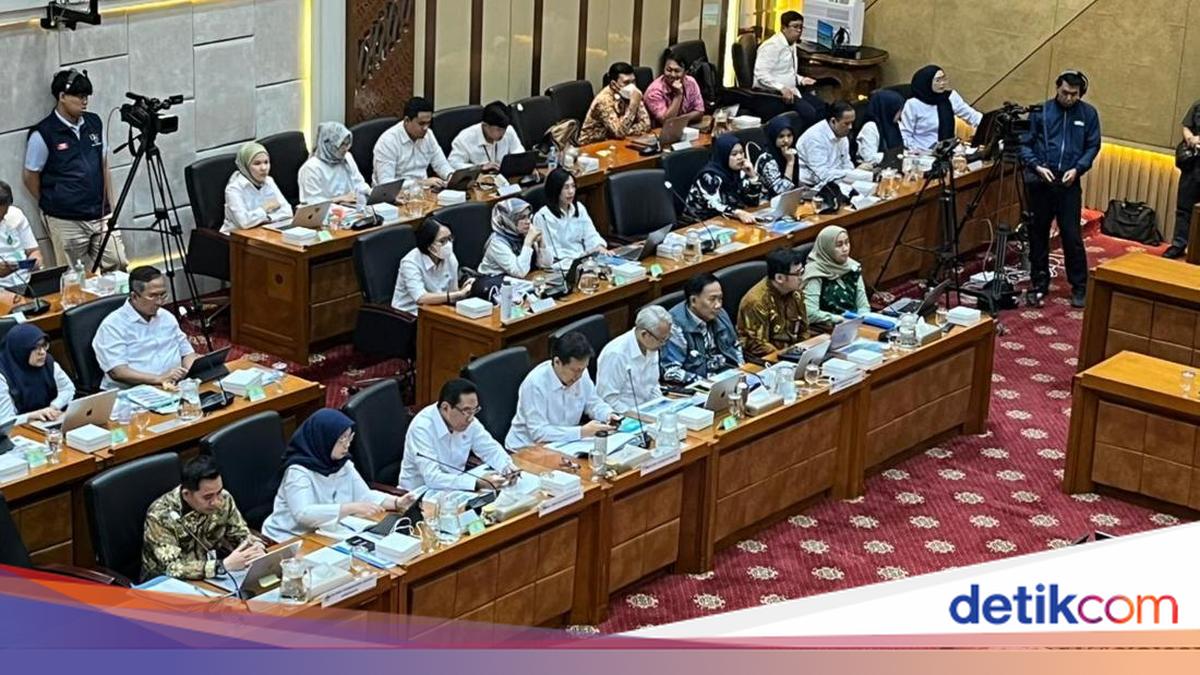
Health Minister Budi Gunadi Sadikin has revealed a significant income gap among doctors. He noted that some doctors earn up to billions of rupiah per month, whilst others earn only a few hundred thousand. “Indeed, the variation in income levels is vastly different, extremely so. I am uncomfortable saying this, but in Jakarta itself, you surely know. There are those whose monthly orders amount to billions, and there are those we often hear earn like parking attendants, just a few hundred thousand,” Budi said during a working meeting with House of Representatives Commission IX at the parliament complex in Senayan, Central Jakarta, on Thursday. “This is one of the fields where the gap is extremely high. It could be thousands of times between the highest and the lowest,” he continued. Budi stated that this income inequality must be addressed. He said there are many complaints from medical personnel with low incomes. “Let me give an example. This is the allowance for specialist doctors. In Bone Regency, it is Rp 3 million; in Mahakam Ulu, it is Rp 80 million,” he said. Additionally, Budi mentioned dentists in Indragiri who receive an allowance of Rp 1 million, whereas in Cianjur the allowance reaches Rp 30 million. According to him, this gap is severely unequal. “I realise that, no matter what, fellow specialist doctors with the same qualifications and the same degrees will surely be saddened by this gap. Why can my colleague there get Rp 80 million, whilst I get Rp 3 million? There are dentists in Indragiri, Riau, with an allowance of Rp 1 million, and in Cianjur, West Java, it is Rp 30 million,” he said. He admitted to having coordinated with the Ministry of State Apparatus Empowerment and Bureaucratic Reform and the Ministry of Home Affairs to find a solution, as not all authority rests with the Ministry of Health. Budi also highlighted the uneven distribution of doctors. According to him, there are still doctors who hold three practice licences, whilst young doctors struggle to find a place to practise. “In fact, those senior doctors may not work full-time at the hospital and yet earn perhaps 3,000 times more than the new doctors trying to enter the profession,” he said. He stated the government will address these issues, adding that income disparities should not be too large. “We are also observing these inequalities, and we must gradually address them. Unfortunately, not all authority lies with the Ministry of Health. But we have started to see this; for instance, a gap between the income of the House Speaker and a faction member of 3,000 times is strange. It should not be that large a difference,” he said. Budi also noted that Indonesia still lacks doctors. He mentioned that many community health centres do not have a doctor. “There are many community health centres without a doctor,” Budi said. He admitted to receiving reports that in Mamberamo Raya, Papua, there is not a single specialist doctor. Moreover, its community health centres lack dentists. “Recently, we received a visit from the Regent of Mamberamo Raya; there is not a single specialist doctor there. The number of dentists at the community health centres is zero. Out of perhaps 17, 12 do not have a doctor,” he said. Budi stated that this shortage of doctors has led to an increasingly heavy workload for existing doctors. In fact, according to him, some doctors work extremely long hours. “So we often hear that interns are employed as substitutes for doctors under the national health insurance scheme at regional public hospitals, working until the early hours of the morning. The workload of doctors keeps them working late into the night. The core issue is the problem faced on the ground,” he said.