
Health Minister Says Indonesia Has Achieved Blood Downstreaming
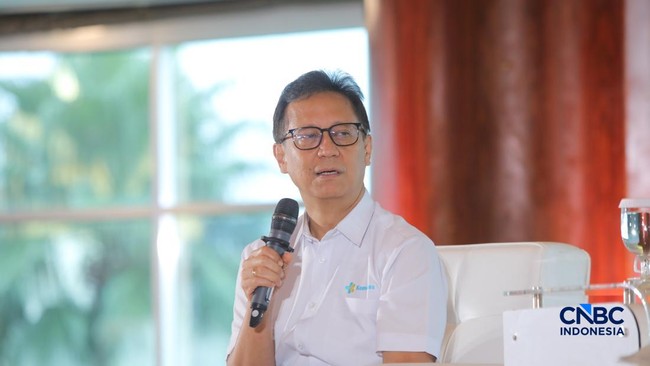
Health Minister Budi Gunadi Sadikin (BGS) has said Indonesia has now succeeded in downstreaming its blood resources, extending the government’s downstreaming drive beyond mining into the health sector.
He explained that one of the main problems facing the health sector is the heavy reliance on imported medical equipment and medicines. Among the most expensive and most heavily imported drugs are albumin and IVIG, both of which are derived from blood plasma.
Although Indonesia has the fourth-largest blood reserves in the world, it still depends on imports of albumin and IVIG. The minister therefore sees the need to promote downstreaming in the health sector.
“Why don’t we just do downstreaming? … Downstreaming is not only about natural resources in the form of ore, nickel ore. Downstreaming can also come from blood,” the minister said at the Health Summit organised by CNBC Indonesia in Jakarta on Thursday (8/10).
According to Budi, after a long period of relying solely on imports, Indonesia will soon be able to produce its own albumin following an investment of US$300 million from a Korean company to build the country’s first plasma processing ecosystem. Given the high domestic demand, blood downstreaming is essential.
He hopes the programme will attract other investors to contribute to developing Indonesia’s health industry.
The minister acknowledges that the government cannot rely solely on the state budget to build all of these facilities. He has therefore promised regulations that provide incentives to the private sector so that businesses are not hesitant to invest in Indonesia.
Source: jawawa.id (https://jawawa.id/newsitem/health-minister-says-indonesia-has-achieved-blood-downstreaming-1791438954)
Originally published by CNBC Indonesia (https://www.cnbcindonesia.com/lifestyle/20261008104500-33-774345/menkes-ungkap-ri-berhasil-hilirisasi-darah-ini-produknya), translated from Indonesian