
Health Minister Says BPJS Kesehatan Will Receive Another Fund Injection Next Year
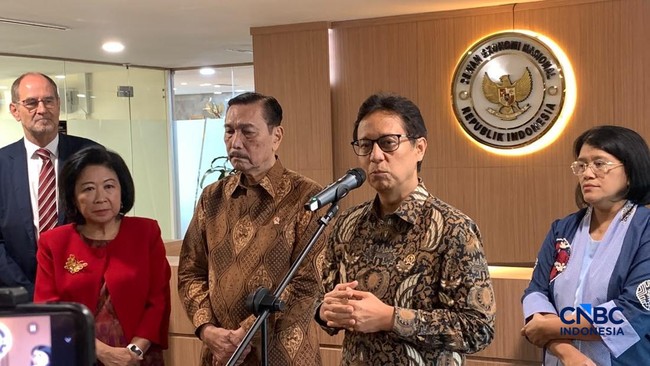
Minister of Health Budi Gunadi Sadikin has stated that the government will inject more funds into BPJS Kesehatan next year to strengthen the national health insurance scheme. Speaking at the Economic Update 2026, he argued that BPJS Kesehatan should ideally cover 60-80% of healthcare expenditure to prevent medical inflation from rising, noting that its current coverage is only around 20%.
“Because it has negotiating power so that health inflation does not rise. All over the world, health inflation rises faster than GDP growth,” Minister Budi Gunadi said. He explained that inflation is difficult to control without adequate health insurance, hence the need to bolster BPJS Kesehatan’s finances. The government has already agreed to inject Rp 20 trillion this year, with further funding planned for next year, though he stressed the need to calculate its sustainability.
The Ministry of Health is also pushing for stronger governance of BPJS Kesehatan based on the principle of mutual cooperation (gotong royong) regarding premiums. Minister Budi Gunadi urged wealthier individuals to pay higher premiums compared to ordinary citizens to fulfil this principle. “Indeed, the richer must pay more expensive premiums than the poor, so that the gotong royong effect occurs. It’s the same as tax, the rich pay more tax,” he said.
The Minister emphasised that the protection or claims system within BPJS Kesehatan will not differentiate between classes when providing healthcare facilities, asserting that all citizens are entitled to proper healthcare services. He clarified misconceptions about the programme, stating, “There are still many people who mistakenly think that BPJS Kesehatan has Class 1, Class 2, Class 3. Actually, there isn’t. BPJS Kesehatan truly covers 280 million Indonesians fairly. So whoever they are, rich or poor, if they fall into ill health, they will not fall into poverty from healthcare spending because there is coverage.” He reiterated that underprivileged communities must receive good health services, while those who are wealthier can contribute by paying higher premiums.