
Health Minister: SATUSEHAT EMR to Simplify Services and Boost Healthcare Quality
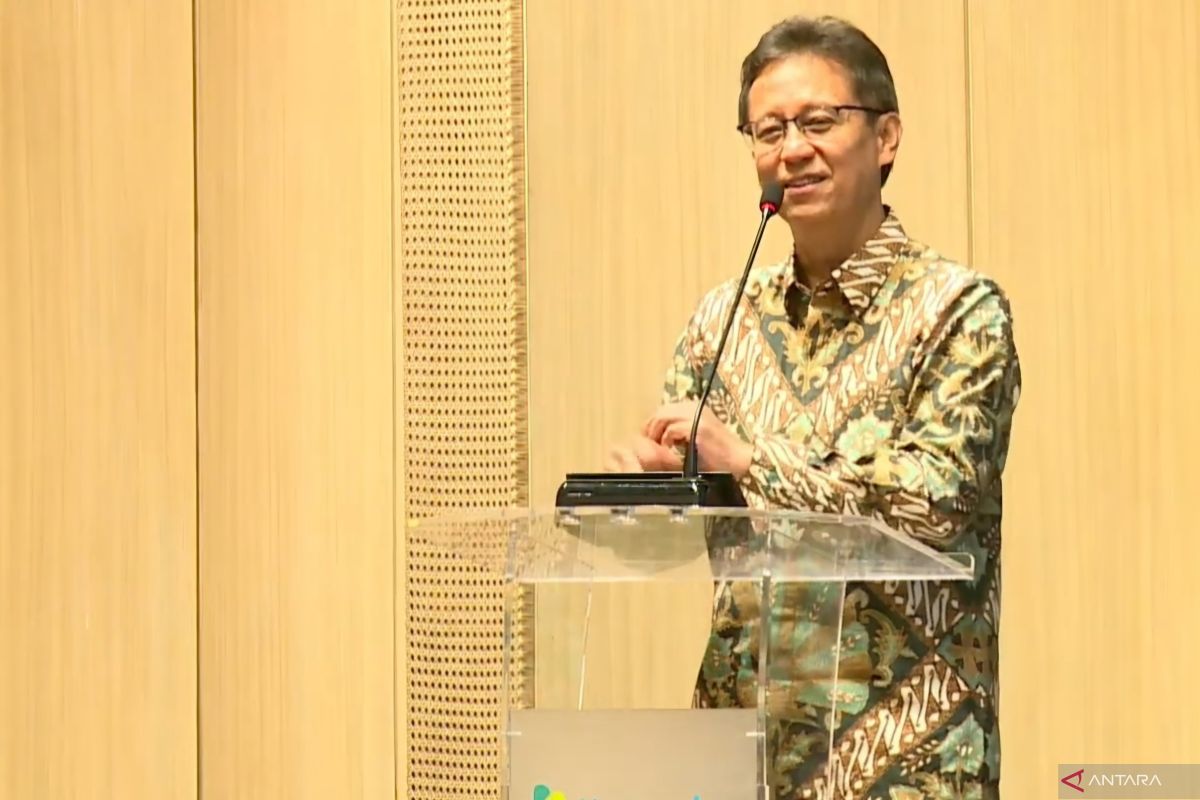
The Minister of Health, Budi Gunadi Sadikin, stated that the launch of the SATUSEHAT Electronic Medical Record (EMR) is intended to simplify healthcare services through the recording of individual health data. This allows healthcare facilities to provide precise treatments and streamlines the BPJS Kesehatan claims process.
“The primary goal of the SATUSEHAT system is for patients to know their health condition at any time. Ideally, if integrated with AI, it could even provide recommendations—such as suggesting a visit to a community health centre or purchasing cough medicine,” he said in Jakarta on Tuesday.
Budi Gunadi noted that with SATUSEHAT EMR, individuals can view their medical records as easily as checking a mobile banking account. His department is working to integrate comprehensive data from nearly 100,000 healthcare facilities across Indonesia, including diagnoses, laboratory results, and radiology data.
With SATUSEHTAT EMR, services provided by healthcare facilities become easier and more accurate. He cited an example where a patient undergoes a complete blood test at a clinic and requires further treatment at a hospital; the hospital can provide the appropriate service based on those results, provided the patient grants access to their medical records.
“If Hospital A refers a patient to Hospital B, there is no need to carry physical documents or manually enter data into our SISRUTE system. Because the data is automatically connected, the doctor in the Emergency Department will already know the patient’s condition before they even arrive,” he explained.
He mentioned that SATUSEHAT EMR also enables regulators to monitor the quality of healthcare services during patient transfers.
Furthermore, Budi stated that SATUSEHAT EMR will assist BPJS Kesehatan in detecting anomalies in referrals, ensuring that claims submitted to BPJS are for procedures that strictly follow established protocols and indications.
“BPJS can easily identify such anomalies. For instance, why is a Caesarean section being performed if there was no indication from a community health centre’s ultrasound a week prior? BPJS can use this online to verify whether the clinical pathway has been correctly followed,” he said.
Budi noted that this system is part of the sixth pillar of the Health Transformation agenda: health technology transformation.
The Health Minister will endeavour to socialise SATUSEHAT EMR with hospitals to encourage openness to a results-based healthcare system and a willingness to be measured by service quality.
“This is how it is done abroad. If a patient’s condition is severe, they won’t be penalised as long as they have followed the clinical pathway. However, if a patient undergoes surgery and is readmitted a week later because a piece of gauze was left inside, we know that is a frequent error and it is wrong. This should indeed result in a penalty based on clinical outcomes,” he added.
His department is also collaborating with the Ministry of Home Affairs to ensure the accuracy of individual data, and with the National Cyber and Crypto Agency (BSSN) to guarantee data security.