
Health Minister Reveals Latest Update on Infant and School-Age Child Immunisation Coverage in Indonesia
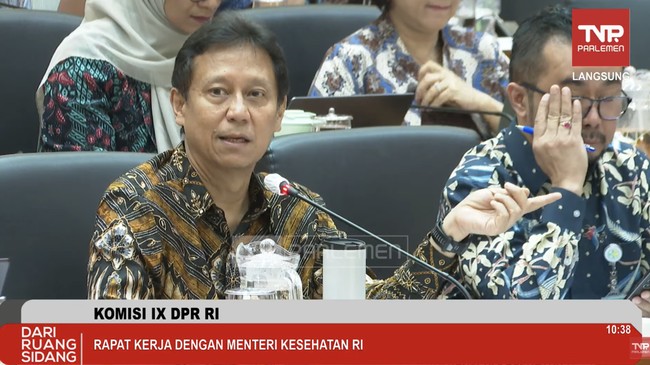
Health Minister Budi Gunadi Sadikin presented the latest developments in national immunisation coverage during a working meeting with House of Representatives Commission IX at the Parliament Complex in Senayan, Jakarta, on Tuesday (23/6/2026). During the meeting, Budi reaffirmed his commitment to continually improving immunisation coverage to prevent the resurgence of various vaccine-preventable diseases. As part of the health transformation in primary services, the government has expanded the scope of mandatory routine immunisations for children and infants. Budi noted that immunisation in Indonesia now covers 14 types of vaccines or antigens administered to infants and children in an effort to protect the younger generation from various dangerous infectious diseases. “Indonesia previously had 11 antigens. Based on expert recommendations, we increased this to 14 antigens. This preventive measure is far cheaper and more effective than treating our children once they fall ill,” Budi stated. He further explained that the government divides monitoring into three main target groups: infants, children under two years of age (baduta), and school-age children. Data for complete infant immunisation coverage in 2025 and 2026 shows 24.3% in 2025 and 30.1% in 2026. “As of May, we have managed to increase coverage by 5.8% compared to the same period in 2025,” Budi said. Coverage for children under two stood at 21.8% in 2025 and 28.2% in 2026. For the school-age group, data from 2024 and 2025 shows coverage of 91.2% and 82.5%, respectively. Budi stressed that this group requires special intervention and closer coordination with schools and parents to ensure protection targets are not missed. Meanwhile, awareness among adults for follow-up immunisations or independent vaccination programmes is showing a positive and steadily rising trend. In his presentation, Budi also conveyed that the government continues to encourage regional administrations, health facilities, and healthcare workers to pursue immunisation coverage targets so that all Indonesian children receive equitable protection. He emphasised that low immunisation coverage in some areas could increase the risk of extraordinary outbreaks of infectious diseases such as measles and other illnesses that are actually preventable through immunisation. “The Ministry of Health will continue to strengthen public education so that parents do not hesitate to bring their children for immunisation according to schedule. Prevention through immunisation is far better than treatment once disease has occurred,” Budi concluded.