
Health Minister Reveals Intern Doctors Now Receive BPJS Coverage
Health Minister Budi Gunadi Sadikin has revealed that doctors currently undergoing internship programmes are now receiving BPJS Kesehatan and Ketenagakerjaan coverage. He stated the move is an effort to strengthen protection for medical and healthcare workers.
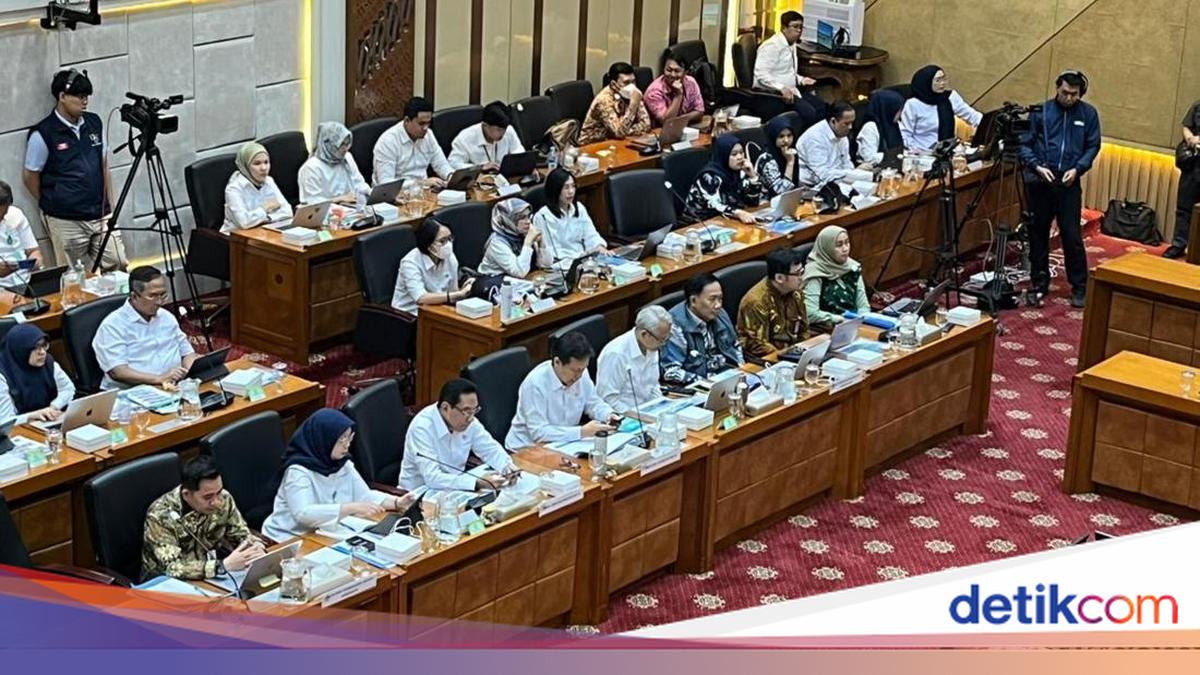
“All medical and healthcare workers, at the very least, have their social security and occupational health and safety covered, and this includes internship doctors. So, even though they are still interning or on assignment, we cover their BPJS Ketenagakerjaan and BPJS Kesehatan,” Budi said during a working meeting with House of Representatives Commission IX at the parliament complex in Senayan, Jakarta, on Thursday (25/6/2026).
Budi said the Ministry of Health has also opened a complaints channel for medical and healthcare workers who experience pressure or violence while on duty. He noted that such pressure includes physical violence, threats from patients, and bullying perpetrated by fellow healthcare workers. “Surprisingly, based on the data we have received, the most common complaints are about bullying from seniors or colleagues,” he said.
Furthermore, Budi stated that the Ministry of Health is providing an incentive of Rp30 million per month to 1,370 specialist doctors. The government is currently reviewing the possibility of providing a similar incentive for general practitioners and dentists serving in underdeveloped, border, and island regions (DTPK). “We have successfully provided a Rp30 million monthly incentive for 1,370 specialist doctors. We are now reviewing whether we can do the same for general practitioners and dentists in DTPK areas,” he said.
The Ministry of Health is also providing special assignment incentives and affirmative scholarships for doctors from regions lacking healthcare workers. He said this measure is being taken to reduce the disparity in the distribution of doctors across various regions. “We also continue to provide affirmative scholarships and fellowships. The hospital-based programme is entirely affirmative for doctors from underserved regions. This way, the workload problem in those areas is not unbalanced,” he explained.
“In Jakarta, there are enough doctors, so the workload can be shared among a sufficient number of doctors. But in a place like Mamberamo, for instance, one doctor might handle 1,000 or 2,000 patients because there is a shortage of doctors. Therefore, we provide affirmation; if someone from Mamberamo wants to become a doctor or a specialist, we allocate more slots to them,” he continued.
On a separate note, Budi disclosed that the Ministry of Health, together with the Ministry of Administrative and Bureaucratic Reform (PAN-RB), is drafting a consolidation of several presidential regulations governing the functional positions of healthcare workers. According to him, there are currently several different presidential regulations for each profession, which has led to career and allowance disparities.
“Apparently, in the past, each professional organisation lobbied on its own, resulting in separate presidential regulations. So, each professional organisation could issue a presidential regulation for its own profession, which was regulated at the PAN-RB ministry regarding functional positions and allowances,” he clarified. “When I came in, I saw, ‘Oh, there are seven presidential regulations here,’ and for example, nurses, because their regulation was issued earlier, ended up with lower positions and allowances compared to those whose regulations came later. So, we saw this messiness.”
He expressed hope that the consolidation would make the career paths and allowances for healthcare workers more uniform and equitable. Consequently, he said, professional organisations would no longer need to lobby individually. “So, finally, we have sat down with the PAN-RB Minister, and we will tidy this up into a single presidential regulation. Thus, all healthcare workers will be organised under one regulation, so their treatment is uniform and does not depend on the lobbying of each type of healthcare worker,” he concluded.