
Health Minister Reveals Age-Specific Health Issues in Children Through Free Health Screening Programme
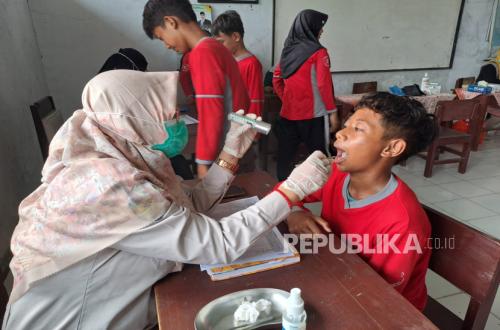
Health Minister Budi Gunadi Sadikin stated that the Free Health Screening Programme (CKG) is demonstrating a tangible impact in strengthening early disease detection to enable prompt treatment. Budi noted that CKG can reveal health issues within each child age group. As of 5 July 2026, a total of 59.6 million people have undergone health examinations through the CKG Programme. With the start of the new academic year across Indonesia, the Ministry of Health is optimistic that participant numbers will continue to rise, keeping the target of 130 million participants by the end of 2026 on track. Budi said CKG is not only the largest screening programme ever conducted in Indonesia but also serves as the foundation for transforming the healthcare service paradigm from curative to preventive. “The more people who undergo health checks, the earlier diseases can be detected and treated. Our goal is not merely to know who is ill, but to ensure people remain healthy and productive. Therefore, CKG is a long-term investment in the nation’s health,” Budi said in a statement on Saturday (18/7/2026). Data from CKG over the past semester provides an increasingly clear picture of public health challenges across each age group. In the newborn group, Newborn Screening results showed that of the six types of screening conducted, critical congenital heart disease was the condition with the highest potential prevalence. As of 28 June 2026, more than 490,000 babies had undergone screening using pulse oximetry. Of that number, approximately 4.3 per cent, or 20,946 babies, were identified as having indications of abnormalities requiring further examination. “These findings reinforce the importance of paediatric cardiac service readiness, from early detection and referral systems to hospital capacity in treating congenital heart disease,” Budi said.