
Health Minister Reveals 80% of Indonesia's Pharmaceutical Raw Materials Still Imported, Offers Solutions
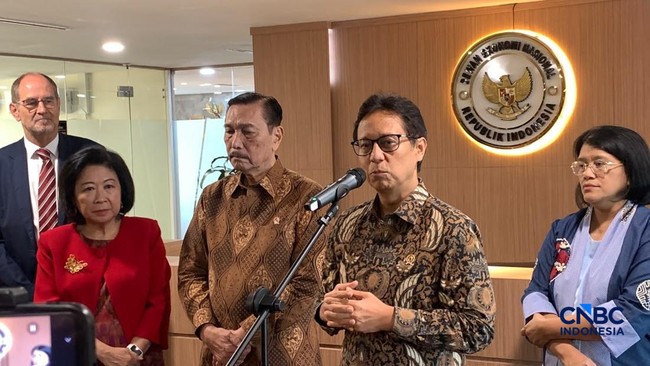
The Minister of Health, Budi Gunadi Sadikin, has revealed that Indonesia still relies on imports to meet the majority of its national pharmaceutical raw material needs. Currently, approximately 70-80% of pharmaceutical raw materials or active pharmaceutical ingredients (API) are still sourced from abroad.
Nevertheless, this figure has improved compared to several years ago when dependence on imported raw materials exceeded 9t0%.
“When we started, imports were above 90%. Now, we are importing around 70 to 80%,” said Budi after attending the ‘Building Regional and Global Health Resilience in ASEAN: Vaccine Manufacturing and Pandemic Preparedness and Response (PPR)’ forum at the National Economic Council (DEN) office, Jakarta, on Wednesday (24/06/2026).
Budi stated that while the national pharmaceutical industry is capable of producing various types of finished medicines, the primary raw materials are still largely sourced from abroad, meaning Indonesia has not yet fully realised the added value of the healthcare industry.
Consequently, Budi noted that the government is now encouraging the downstreaming of the pharmaceutical industry so that the entire drug production chain, from upstream to downstream, can be conducted domestically.
“Earlier, Ms Rizka mentioned that 35 APIs are already being produced in Indonesia. We will continue to increase this so that more and more are made in Indonesia,” he said.
He cited the production of paracetamol, which still relies on imported raw materials, as an example. In reality, some of the basic materials for this industry are already available in Indonesia through the national petrochemical industry.
“That is what we are currently arranging—building a healthcare industry so that GDP growth and employment growth can truly occur in Indonesia,” said Budi.
In addition to strengthening the production of pharmaceutical raw materials, the government is also beginning to develop a domestic blood plasma processing industry. Currently, Indonesia still imports various blood plasma derivatives, including immunoglobulin, which is used for the therapy of several diseases.
According to Budi, Indonesia possesses abundant raw material sources due to its large population.
“Indonesia has a vast amount of blood. However, we cannot produce immunoglobulin, so we import it,” he said.
To address this issue, the government, alongside the Indonesia Investment Authority (INA) and SK Plasma, is constructing a blood plasma processing plant in Karawang. The investment value is estimated to reach between Rp3 trillion and Rp4 trillion.
The factory is targeted to begin operations in early 2027, following regulatory approval. The presence of this facility is expected to reduce dependence on imported plasma products while strengthening national health resilience.
Budi admitted that he has personal experience that reinforces his conviction regarding the importance of building a domestic plasma blood industry. He shared that a member of his family passed away during the Covid-19 pandemic due to difficulties in accessing immunoglobulin, which had to be imported.
“My aunt passed away during Covid because she could not get access. There is a medicine called Gamaras, the generic name of which is immunoglobulin. This is produced from blood plasma,” he revealed.
According to Budi, the development of the pharmaceutical raw material and blood plasma industries is part of the government’s strategy to reduce import dependency while ensuring that national healthcare spending can create jobs and drive domestic economic growth.
Source: jawawa.id (https://jawawa.id/newsitem/health-minister-reveals-80-of-indonesias-pharmaceutical-raw-materials-still-imported-offers-solutions-1782305529)
Originally published by CNBC Indonesia (https://www.cnbcindonesia.com/lifestyle/20260624170457-33-745443/menkes-ungkap-80-bahan-baku-obat-ri-masih-impor-ini-solusinya), translated from Indonesian