
Health Minister prioritises early detection to reduce heart disease mortality
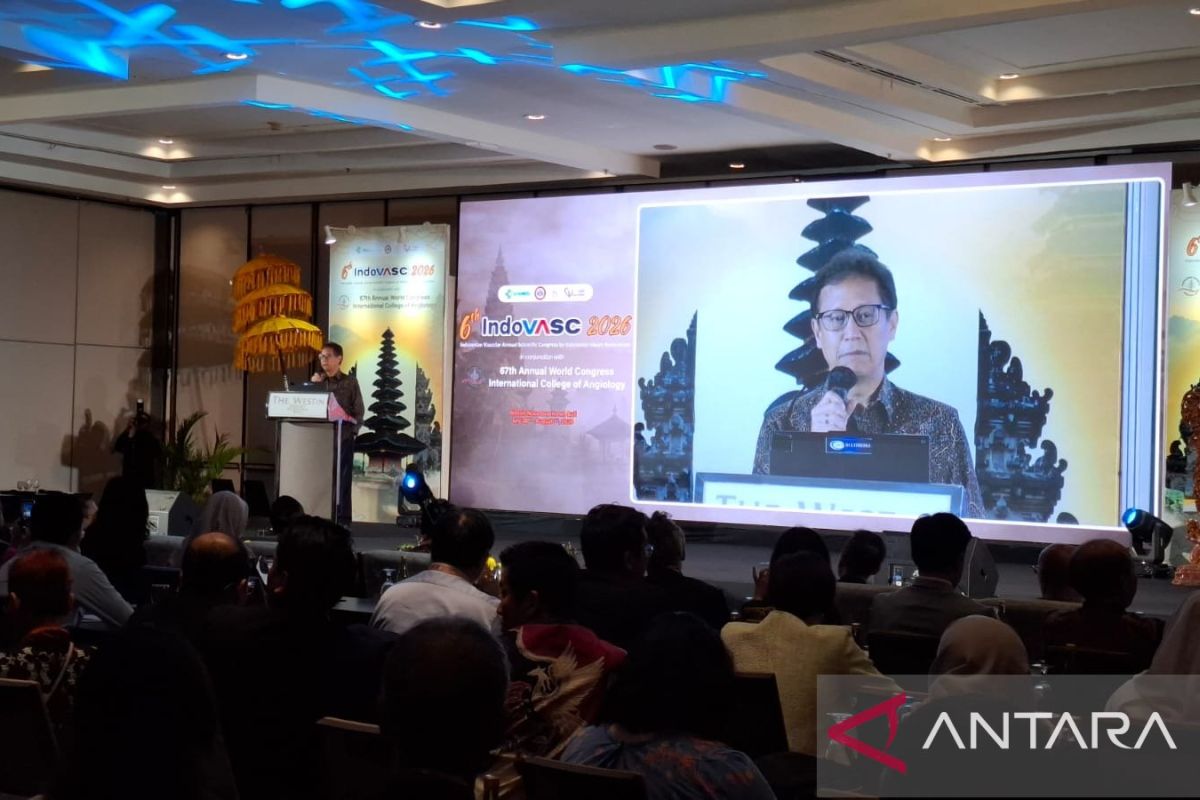
The Minister of Health, Budi Gunadi Sadikin, is prioritising screening and early detection as a primary measure to curb the high mortality rate caused by inadequate treatment of heart disease. Speaking in Badung, Bali, the Minister emphasised that improving screening is his most critical task. Since last year, mandatory screening has been implemented for 280 million Indonesians, though only 70 million, including newborns, have been reached so far.
During the 67th Annual World Congress of the International College of Angiology (ICA) 2026, held alongside the 6th Indonesian Vascular Annual Scientific Congress (IndoVASC), the Minister noted that 260,000 Indonesians die annually from heart attacks. The target for this year is to achieve early detection for 136 million people, with the ultimate goal of ensuring all 280 million citizens have their clinical data screened annually by 2029. He noted that because these early detection services are currently free, citizens can identify health issues before it is too late, despite the current shortage of hospitals and specialists.
Following the focus on early detection, the Ministry of Health’s next mission is to expand access to Percutaneous Coronary Intervention (PCI), or heart stent procedures. The Minister observed that a lack of PCI intervention is a primary reason for heart disease deaths in Indonesia. He highlighted that at the start of his tenure, only 43 out of 514 cities and regencies provided PCI services. He compared the situation to being in Los Angeles and needing to travel to San Francisco for treatment, noting that many Indonesian cities still lack essential CT scans and catheterisation laboratories.
The government’s broader objective is to increase the average life expectancy of Indonesian citizens from 72 to 76 years. This is particularly urgent as cardiovascular diseases remain the primary and secondary causes of death for Indonesians before reaching the age of 76. Iwan Dakota, the organiser of IndoVASC, added that the congress, attended by 600 experts globally, aims to strengthen scientific collaboration and enhance the competence of Indonesian healthcare professionals in managing heart and vascular diseases. He estimated that over 50 per cent of heart disease cases in Indonesia are coronary heart disease, with 20–30 per cent involving heart valve disease, and the remainder stemming from hypertension or congenital heart disease.
Source: jawawa.id (https://jawawa.id/newsitem/health-minister-prioritises-early-detection-to-reduce-heart-disease-mortality-1785506481)
Originally published by Antara (Indonesian) (https://www.antaranews.com/berita/5674873/menkes-prioritaskan-deteksi-dini-tekan-kasus-meninggal-akibat-jantung), translated from Indonesian