
Health Minister: Key to Indonesia Becoming a Developed Nation is Staying Healthy, Not Just Building Hospitals
Health Minister Budi Gunadi Sadikin has asserted that the key to Indonesia becoming a developed nation is not simply building more hospitals, but keeping the public healthy to boost productivity. He stated that health is the primary capital for Indonesia to capitalise on its demographic bonus and escape the middle-income trap.
“The correct and primary health strategy is to keep people healthy, not to treat sick people. Treating sick people is the fourth or fifth strategy,” Budi said at the opening of the Leimena Conference 2026 at the BRIN Widya Graha Building in South Jakarta on Monday (27/7/2026).
Budi reminded that Indonesia has a limited window to utilise the demographic bonus, making it essential to prioritise primary healthcare, including in the frontier, outermost, and underdeveloped (3T) regions. “If we don’t, we sin against our children and grandchildren. They will live forever in a middle-income country,” he said.
He cited examples of countries that successfully became developed nations shortly after reaching their demographic bonus peak. Japan achieved this three years after its peak, Singapore five years, South Korea five years, and Taiwan roughly two years. In contrast, Thailand remains trapped at the middle-income level despite passing its demographic bonus peak in 2009.
Budi estimates Indonesia only has until around 2035-2040 to increase its Gross National Income (GNI) per capita from the current US$5,000 to US$14,000, the threshold for developed nation status. He urged all parties not to waste this golden opportunity. “Don’t waste your time. This is a brief golden opportunity. Don’t spend time attacking each other, causing us to lose the energy needed to pursue Indonesia’s developed status. This chance will not come again,” he stated.
Budi emphasised that health is a critical factor in increasing public productivity. A nation cannot advance if its productive-age population is unhealthy. He revealed the government’s target in the National Medium-Term Development Plan (RPJMN) is to increase life expectancy from 72 to 76 years and healthy life expectancy from 60 to 65 years. “A healthy society will remain productive into old age, enabling them to continue contributing to national economic growth,” he said.
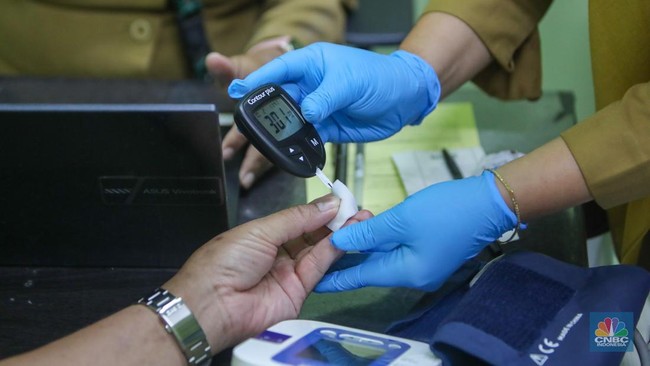
He confirmed the government is strengthening promotive and preventive approaches through healthy lifestyle education, immunisation, and health screenings to detect diseases early before they become severe. Budi outlined several steps taken to bolster primary healthcare services, including distributing 300,000 modern anthropometric tools to Posyandu over two years, sending 10,000 ultrasound devices to community health centres (Puskesmas), and expanding the national immunisation programme from 11 to 14 vaccine types.
Furthermore, the government is reforming Puskesmas services from a disease-based orientation to a people- and life-cycle-based approach. Budi acknowledged the implementation is not yet perfect but described the change as one of the largest transformations in Indonesia’s primary healthcare system. He also called on researchers to produce studies that genuinely benefit the community, stating, “I never care about titles. I care about contributions to society.”
Source: jawawa.id (https://jawawa.id/newsitem/health-minister-key-to-indonesia-becoming-a-developed-nation-is-staying-healthy-not-just-building-hospitals-1785235948)
Originally published by CNBC Indonesia (https://www.cnbcindonesia.com/lifestyle/20260727130957-33-754100/menkes-ungkap-kunci-ri-jadi-negara-maju-bukan-bangun-rumah-sakit), translated from Indonesian