
Health Minister emphasises four essential capabilities for future health leaders
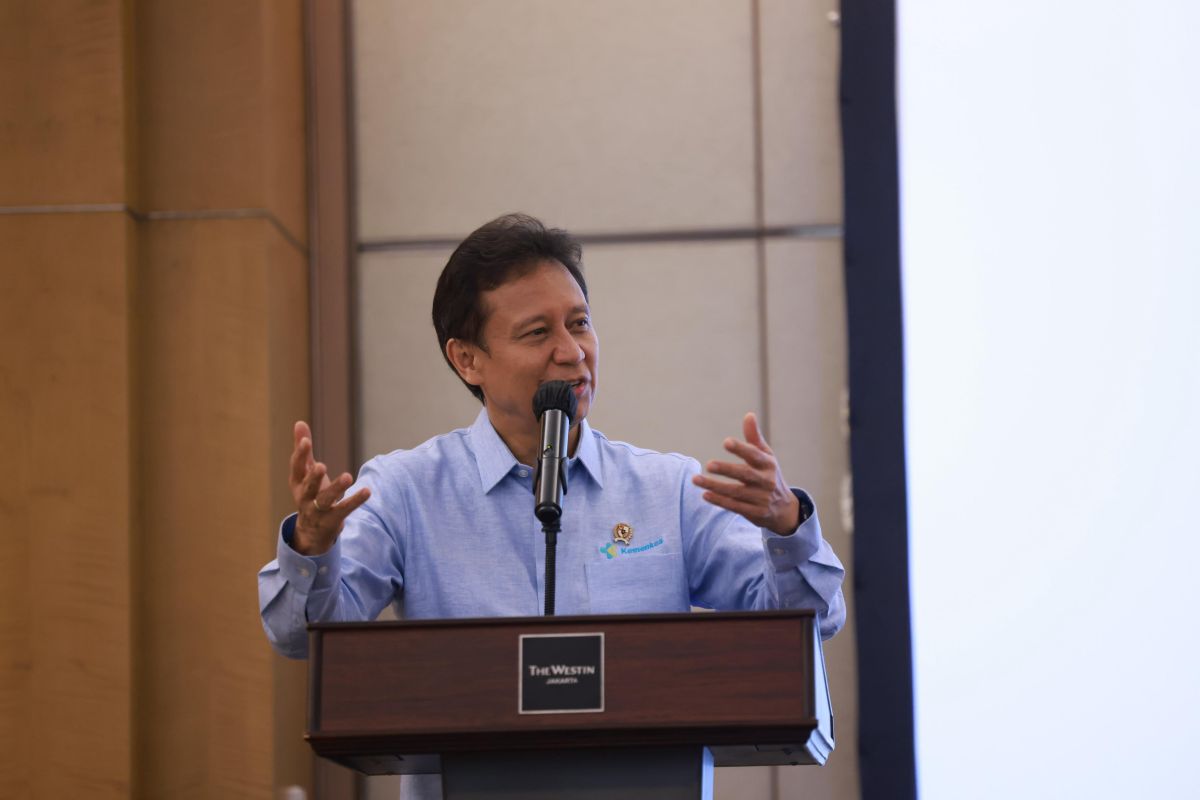
Jakarta (ANTARA) - Minister of Health Budi Gunadi Sadikin has underscored the importance of future health leaders possessing the ability to execute goals, maintain integrity, communicate effectively, and utilise storytelling to ensure health development objectives are met.
Budi made these remarks during the Health Leadership Course organised by the Asian Development Bank (ADB) in Jakarta on Monday. The training, attended by over 60 participants from seven Southeast Asian nations, aims to strengthen leadership capacity in facing challenges and driving health system reforms across the region.
“First, the best superior I have ever met is someone who possesses integrity. To ensure that they will not deceive you or your country, they must be a person of integrity,” he stated.
He emphasised that a leader must also be able to convey objectives simply so they can be understood by all members of an organisation.
“As a leader, you must have the ability to explain your goals clearly and simply so that everyone can understand them,” he said.
According to the Health Minister, these goals must subsequently be translated into clear operational methods. To this end, the Ministry of Health is implementing a health reform agenda through six pillars: primary care reform, secondary care or hospital services, health system resilience, health financing, health human resources, and health technology.
He noted that these six pillars serve as the mechanism to achieve the goals of increasing life expectancy and healthy life expectancy. One example is the strengthening of primary care through ADB funding support for the procurement of 10,000 ultrasound machines and 10,000 X-ray machines.
He assessed that the ability to use storytelling—conveying a goal through narrative—is a vital part of leadership. Leaders must be able to articulate the why, the how, and the what regarding the actions taken to achieve those goals.
Furthermore, leaders must possess execution capabilities. According to the Minister, targets and plans are meaningless without the ability to realise them.
“If you only speak and have targets but do not demonstrate how to execute and achieve them, you will lose credibility in front of your members,” he said.
Eduardo Banzon, Director of the ADB Human and Social Development Sector Office, stated that developing member countries need to play a leading role in directing health reforms within their respective nations.
“We are not the type of institution that comes and dictates to a country to ‘do this’ or ‘do that’. Our primary role is to assist with financing and provide technical support for matters that have been decided by the country itself,” said Eduardo.
Therefore, he noted, strengthening leadership capacity is a crucial part of facing evolving health changes and reforms. International cooperation is necessary to strengthen health reforms.
Meanwhile, the ADB Indonesia Resident Mission Country Director, Bobur Alimov, noted that Southeast Asia still faces numerous health challenges, ranging from an ageing population and the rise of non-communicable diseases to the impact of climate change on health.
“None of these challenges can be solved by the health sector alone, nor by a single country. This requires leaders to work across sectors and across countries, building partnerships and directing change,” said Bobur.
Bobur assessed that the implementation of the Health Leadership Course in Indonesia provides an opportunity to exchange experiences in facing health challenges.
Indonesia, he said, is currently undertaking a health transformation agenda, including the strengthening of primary healthcare, the expansion of digital health through SATUSEHAT, and the National Health Insurance (JKN).
“Indonesia’s experience provides many valuable lessons for all of us,” said Bobur.
Over the course of five days, participants will discuss several critical issues in health systems, including governance, health delivery and financing, climate change and One Health, prevention, preparedness and pandemic response, as well as digital health and innovation. Participants will also visit the National Brain Centre Hospital and several primary healthcare facilities in Jakarta.
Source: jawawa.id (https://jawawa.id/newsitem/health-minister-emphasises-four-essential-capabilities-for-future-health-leaders-1790614699)
Originally published by Antara (Indonesian) (https://www.antaranews.com/berita/5762312/menkes-tekankan-empat-kemampuan-pemimpin-kesehatan-masa-depan), translated from Indonesian