
Health Minister: E-cigarettes as dangerous as conventional cigarettes
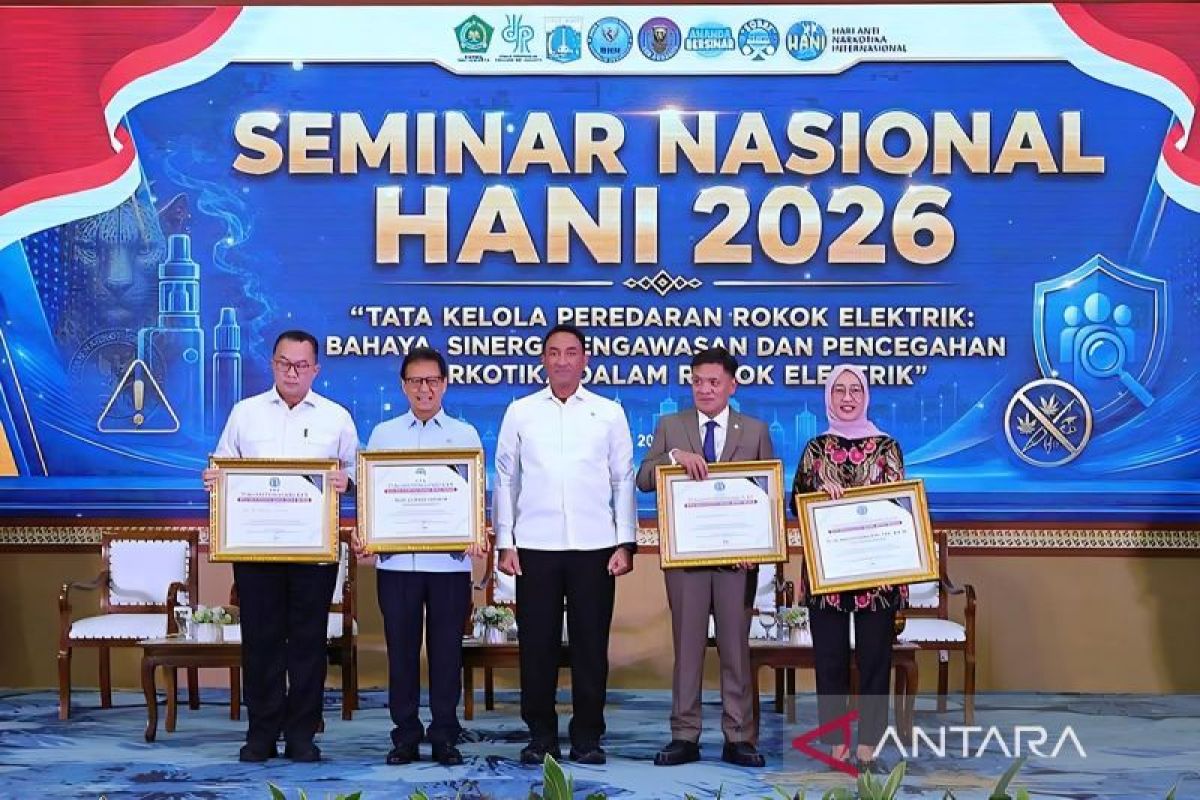
Jakarta (ANTARA) - Health Minister Budi Gunadi Sadikin has affirmed that electronic cigarettes are not a safer alternative to conventional cigarettes, as they potentially increase the risk of non-communicable diseases whilst also opening the door to narcotics abuse, particularly among children and adolescents.
The minister made the remarks while speaking at the 2026 International Anti-Narcotics Day (HANI) National Seminar, themed “Governance of Electronic Cigarette Circulation: Dangers, Synergy, Oversight, and Narcotics Prevention in Electronic Cigarettes”.
Speaking in Jakarta on Tuesday, the Health Minister explained that one of the government’s main mandates in the health sector is to increase life expectancy whilst extending healthy years of life.
“Our target is not only for people to live longer, but also to live healthier lives. That is why we must control the main risk factors causing disease, one of which is smoking,” he said.
He reminded the audience that stroke, heart disease, and cancer remain the leading causes of death in Indonesia, and all three are strongly linked to smoking habits.
Indeed, he added, a number of countries have already banned the circulation of electronic cigarettes as a public health protection measure.
Beyond the health risks, e-cigarettes are also drawing increasing concern because they can be misused as a medium for consuming narcotics.
This situation, he said, is dangerous, especially because the devices are popular among young age groups.
To strengthen public protection, the Ministry of Health continues to develop and implement various policies to control tobacco products and electronic cigarettes.
At the same event, the head of the National Narcotics Agency (BNN), Commissioner General of Police Suyudi Ario Seto, said the abuse of electronic cigarettes for narcotics consumption is a new threat that must be anticipated together.
According to him, the rising use of e-cigarettes among teenagers, combined with the ease of modifying the liquid with various psychoactive substances, poses a serious challenge to narcotics prevention efforts in Indonesia.
He stressed that oversight of e-cigarette circulation cannot be done piecemeal, but requires cross-sector collaboration between the government, law enforcement, health workers, academics, business operators, and the wider community.