
Health Minister: Digital Transformation Key to Equitable Healthcare Services in Indonesia
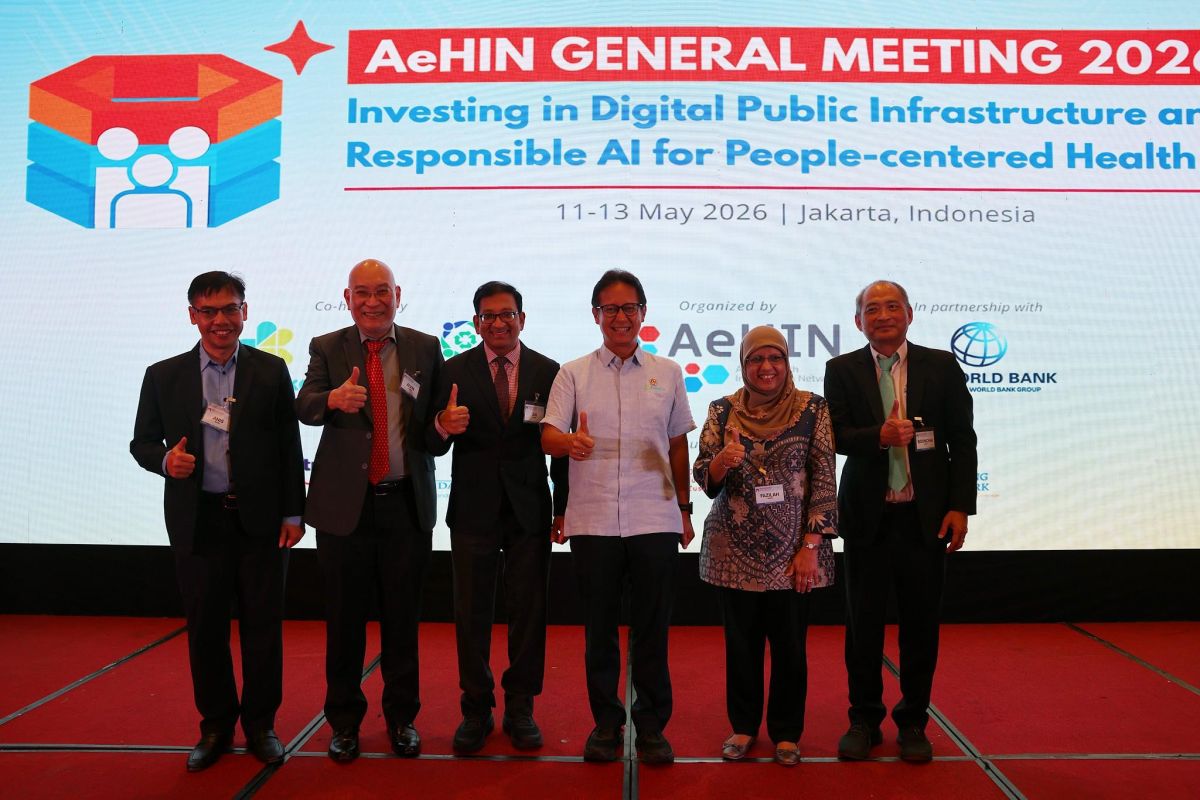
Jakarta (ANTARA) - Health Minister Budi Gunadi Sadikin stated that digital transformation is a necessity to strengthen the national health system, as integrating the health system is the main key to providing equitable services for the people of Indonesia.
“Without digitalisation, it is impossible to provide accessible, quality, and affordable services for 280 million people. We are building population, clinical, and genomic databases to support evidence-based policies,” Budi said in Jakarta on Wednesday.
Budi emphasised that digitalisation is now the main foundation of health reform in Indonesia. The experience of handling the COVID-19 pandemic in 2020–2021 became an important momentum for the Ministry of Health.
Therefore, the Ministry of Health is now strengthening the SATUSEHAT platform as the backbone of national interoperability, connecting hospitals, community health centres, laboratories, and pharmacies in one digital health ecosystem.
Technically, the Ministry of Health is now integrating millions of Electronic Medical Records (EMR) into the government cloud.
Not only focusing on data, the Ministry of Health is also preparing Artificial Intelligence (AI) technology to support clinical decision-making, disease surveillance, and operational efficiency of health services.
According to him, AI is utilised to strengthen early detection and real-time outbreak prediction, with strict oversight through the Ministry of Health’s AI Committee, which regulates aspects of ethics, law, and data security through the Ethical, Legal, and Social Implications (ELSI) framework.
This transformation strategy also includes strengthening cybersecurity and personal data protection in accordance with global standards.
In addition, they are actively building an innovation ecosystem involving academics, startups, and industry to ensure that digital solutions can be scaled and reach all levels of society, even to the remotest areas.
Meanwhile, the Director of Information Technology at BPJS Kesehatan, Setiaji, expressed support for the digital transformation in the health sector.
However, he emphasised the importance of technological innovation that remains grounded in humanitarian values. According to him, no matter how sophisticated the system built, technology remains a supporting tool for services.
“The benchmark for innovation is not the sophistication of algorithms, but the real impact on public trust and inclusion,” Setiaji said.
This cross-country collaboration spirit is also facilitated by the Asia eHealth Information Network (AeHIN). As a forum for more than 2,700 digital health practitioners from 85 countries, AeHIN serves as a space for knowledge exchange in promoting health system interoperability in Asia.
Through this network, Indonesia not only adopts global best practices but also strengthens its position as one of the main drivers of digital health system transformation in the Asian region.