
Health Minister Budi Outlines Three Steps to Restore Health Services After NTT Earthquake
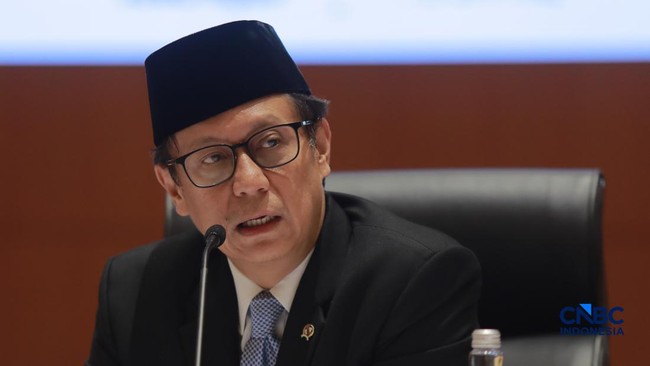
Health Minister Budi Gunadi Sadikin has outlined three main steps for handling the health of communities affected by the earthquake in Flores, East Nusa Tenggara (NTT). The measures range from medical services for victims to mental health recovery for residents experiencing post-disaster trauma.
Budi said the Ministry of Health’s first priority is to ensure all patients affected by the earthquake are identified promptly and receive health services according to the severity of their condition. “First, we must ensure that all patients are identified and served quickly,” Budi said while inspecting Lengkosambi Community Health Centre, as quoted from his official Instagram account @bgsadikin on Monday (24/8/2026).
He said health workers must carry out triage to determine treatment for patients. Patients in serious condition or classified as red category must be immediately referred to hospital, while patients with milder conditions can be treated at the community health centre. “If the triage category is severe, red, they must be referred to hospital. We must think about how to refer them. If they can be treated at the community health centre, we treat them there,” he said.
Budi is targeting the identification and service process for affected communities to be completed within the next three to five days. “I hope that task can be completed within the next 3-5 days, so that no one in NTT is left without health services,” he said.
Once patient services are confirmed to be running, the Ministry of Health will move to the second step: repairing health facilities damaged by the earthquake. Starting next week, he explained, the government will identify and record all damaged health facilities, including their repair needs. Budi is targeting the revitalisation process to be completed within eight to twelve months. “We must identify and list what repairs are needed, so that within 8-12 months it can be completed. All these health facilities can fully serve the community again,” he explained.
Beyond addressing physical injuries and damage to health facilities, Budi stressed the importance of mental health recovery for communities after experiencing a disaster. He said psychiatric rehabilitation is one aspect of disaster response that has not been widely implemented at community health centres in Indonesia. Yet, he said, disasters can leave trauma that makes people continually fearful of the possibility of aftershocks. “Many residents feel afraid. With just a slight tremor, or trees blown by the wind, they become scared because they are traumatised, thinking ‘what if there is another earthquake’,” Budi said.
To that end, the Ministry of Health plans to cooperate with the college and professional organisations in the field of mental health to bring counsellors to the affected areas. “We must work with the college of psychiatry and also with professional organisations that handle mental illness so that counsellors can be brought in immediately to improve the mental health of the people of NTT,” he said.
Source: jawawa.id (https://jawawa.id/newsitem/health-minister-budi-outlines-three-steps-to-restore-health-services-after-ntt-earthquake-1787557910)
Originally published by CNBC Indonesia (https://www.cnbcindonesia.com/lifestyle/20260824114721-33-761841/3-jurus-menkes-budi-pulihkan-kesehatan-pascabencana-gempa-bumi-di-ntt), translated from Indonesian