
Health Minister Budi Gathers Donors, Reveals Indonesia's Health Investment Needs
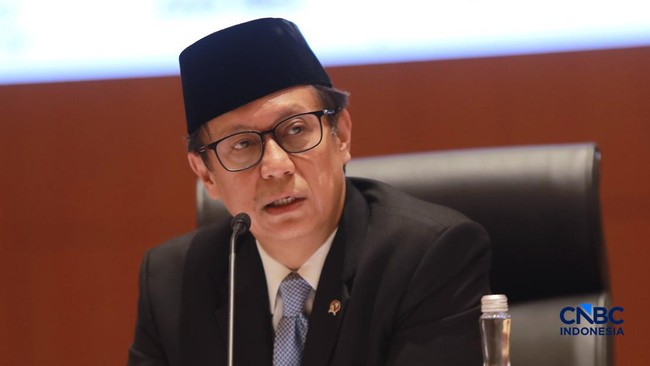
Jakarta, CNBC Indonesia - Health Minister Budi Gunadi Sadikin has gathered a number of development partners and donors to support Indonesia’s health transformation over the next five years. This was one of the focal points of the fourth Indonesia Health Partners Meeting (IHPM), held by the Ministry of Health in Jakarta on Tuesday (15/9/2026).
The meeting brought together the government with development partners, donors, philanthropic institutions, development and finance agencies, as well as the private sector. Budi said Indonesia has drawn up a strategic health plan for the next five years and calculated the financing required to implement it.
That funding will not rely solely on the Ministry of Health’s budget. Budi revealed that sources of financing also include the government, BPJS Kesehatan and the private sector.
“Indonesia has prepared a five-year strategic plan with the government. And we determined the amount of money we need. The total amount of money. Not only coming from the Health Minister, from the government, but also from BPJS and the private sector,” said Budi.
Budi put the funding requirement to support the health system transformation at around US$233, while financing already available stands at about US$177. He then noted there remains a gap of around US$36 to US$37 that needs to be found over the next five years. However, the units of these figures were not clearly captured in the automatic transcript of the event.
Budi stressed that health development funding can come in various forms, ranging from grants and loans to technical assistance. He said that although international development funding has declined, there are still financing sources Indonesia can tap, provided the government can demonstrate clear programmes and needs to its partners.
“The money can come in different formats. Sometimes the money can be a grant, sometimes it can be a loan, sometimes it can be assistance, but the money is there,” he said.
Budi revealed that the value of donor assistance for Indonesia’s health sector has now reached around US$1 billion. That figure has risen compared with when he first became Health Minister, when it stood at between US$200 million and US$300 million.
“When I came in it was around 200-300 million, now it has risen to 1 billion dollars, so the order size is quite substantial,” said Budi.
He said the total assistance provided so far is equivalent to more than Rp18 trillion. Donor funding typically follows a cycle of around three to four years, so new programmes come in to replace those that have ended.
However, the government does not want these various forms of assistance to proceed in isolation. Budi said experience during the Covid-19 pandemic showed Indonesia received many donations from abroad, but that assistance was not optimally coordinated.
The Ministry of Health subsequently established a donors’ office to help coordinate the various funding streams.
“Now it is helped by Mr Asnawi; we set up a donors’ office so that when donors come, their entry can be well coordinated. Not everything has to go through the government; it can also go directly to other implementing agencies. But we arrange it so that the outcomes are the same,” he explained.
Under this scheme, donors can still choose which health areas they wish to support. Some may focus on tuberculosis (TB), maternal and child health, cancer or other health issues.
Assistance also does not have to be channelled through the central government. According to Budi, funding can enter through regional governments or civil society organisations. What matters most is that all programmes are recorded and move towards the same targets.
“Because there are donors who like to help with tuberculosis, there are donors who like to help mothers and children, there are donors who like to help with cancer and so on. Well, this becomes a means of communication for them,” he said.
Meanwhile, during the IHPM discussion, Budi emphasised that the government cannot possibly improve the health of 280 million Indonesians on its own. He said achieving health targets requires the involvement of many parties, including development partners and society.
He also assessed that health programmes cannot simply be government programmes. People need to have the desire to look after their own health, while the government and partners provide the necessary support.
Budi stressed that trust is also an important factor in attracting funding. The government, he said, needs to show partners how the funds provided are used and what the results are.
“We need to give you feedback, reports on what we have done, what your money has become, and hopefully you can add more money,” said Budi.
Source: jawawa.id (https://jawawa.id/newsitem/health-minister-budi-gathers-donors-reveals-indonesias-health-investment-needs-1789473256)
Originally published by CNBC Indonesia (https://www.cnbcindonesia.com/lifestyle/20260915180533-33-768178/menkes-budi-kumpulkan-donor-ungkap-kebutuhan-investasi-kesehatan-ri), translated from Indonesian