
Health Insurance Claims Surge, Forcing Insurers to Rethink Business Models
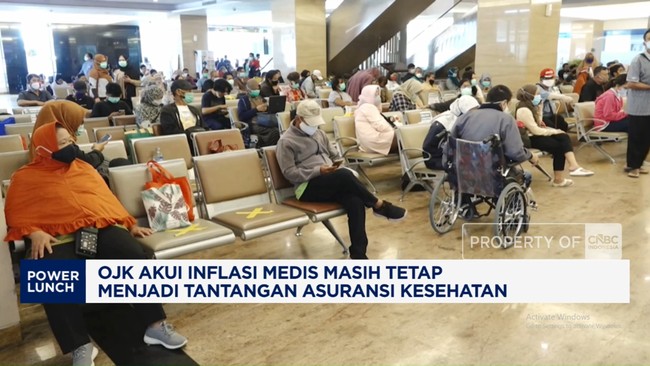
Jakarta, CNBC Indonesia - Indonesia’s health insurance industry enters 2026 in a paradoxical condition. On one hand, public demand for health protection continues to rise, driving premium growth.
Yet on the other, surging healthcare costs, rising hospital utilisation and high medical inflation are placing ever heavier pressure on the industry’s profitability.
The latest findings in the Insurance Quarterly Report for Q1/2026 published by IFG Progress show that the health insurance business has become one of the fastest-growing lines while simultaneously being the greatest source of pressure on the national insurance industry. Premiums continue to grow, but that growth has not kept pace with claims, which are rising far more quickly.
This phenomenon shows that the industry’s challenge today is no longer merely selling more products, but safeguarding the sustainability of the health insurance business model.
Since the end of the Covid-19 pandemic, public demand for health protection has continued to rise as people become increasingly aware of the importance of having health cover.
IFG Progress data show that in Q1/2026, health insurance premiums in the life insurance sector reached around Rp7.9 trillion, with claims of about Rp6.1 trillion.
In nominal terms, premium growth remains fairly good. In terms of business quality, however, the situation is less encouraging because nearly all additional premium income is immediately absorbed by rising claims.
Individual Loss Ratio Nearly 185%
The indicator drawing most attention in the report is the individual health insurance loss ratio at life insurers in Q1/2026, which reached 184.8% - a significant increase from 129.8% in the same period of 2025.
Put simply, this means that for every Rp100 of premium received, a company must pay out roughly Rp185 in claims. That figure does not even include operating costs, agent commissions, marketing or administrative expenses. In other words, if this condition persists over the long term, the individual health insurance business will continue to generate underwriting losses.
Meanwhile, in the general insurance sector, health premiums also showed relatively strong growth from Q4/2024 through Q1/2026. That premium increase indicates repricing efforts by insurers to adjust to rising healthcare costs, in line with medical inflation reaching 16.9%.
Health insurance claim ratios in general insurance are also very high, approaching 100% in some periods. However, entering 2025 and early 2026, there has been a fairly significant improvement in claim ratios, indicating that premium adjustments and stronger claims management are beginning to have a positive impact on underwriting performance in the health line.
Why Do Claims Keep Rising?
The IFG Progress report identifies several main factors behind the increase in claims. First, rising healthcare utilisation, as more people use healthcare facilities once they have insurance cover. Both outpatient and inpatient frequencies have increased compared with previous years.
Second, medical inflation remains high. Indonesia still faces medical inflation far exceeding general inflation. Costs of medical procedures, medicines, diagnostic tests and hospital charges continue to rise, so claim values rise automatically.
The report also links this condition to Aon’s 2026 Annual Medical Trend Rates Report, which estimates Indonesia’s medical inflation at 16.9% - among the highest in Asia.
Third, changing disease patterns. The burden of chronic diseases such as diabetes, hypertension, cancer and heart disease continues to grow. These cases require high treatment costs over long durations, making them the primary driver of rising claims.
Fourth, moral hazard and overutilisation. Although not explicitly discussed in the report, high utilisation also signals the need to address overutilisation of health services, medically unnecessary procedures, potential fraud and excessive use of healthcare facilities. Insurers are therefore beginning to strengthen cost-containment mechanisms and claims oversight.
Over the past two years, nearly all insurers have repriced their health products. The IFG Progress report shows that health premiums are indeed still growing strongly; in general insurance, the health line grew around 23% year on year.
This growth is believed to reflect premium tariff adjustments, revised policy benefits, changed underwriting and tighter risk selection. Yet premium increases have still not caught up with the surge in claims costs.
Even so, repricing policy is now tightly regulated. Under POJK Number 36/2025, the Financial Services Authority (OJK) limits repricing to a maximum of once a year, and insurers must give written notice 30 days in advance. Insurers are prohibited from raising profit margins arbitrarily beyond initial base assumptions, and consumers may choose to accept or refuse.
In the report, IFG Progress also cites a statement by the Global Asia Insurance Partnership (GAIP), which warns of a potential crisis in Asia’s commercial health insurance industry within the next two to three years unless there is a coordinated response from governments, regulators and industry players.
This risk is driven chiefly by medical cost inflation consistently outpacing premium growth over the past three years. The pressure is also reflected in Asia-Pacific medical trend rates, which have remained in double digits for three consecutive years.
This continues to erode the combined ratios of health insurers and pressurises profitability. Singapore, Malaysia and the Philippines - the three countries with the region’s highest medical trends - have begun introducing cost-sharing mechanisms such as co-payments and deductibles to curb healthcare utilisation and reduce potential claims fraud.
Major Trends
Looking at these indicators, CNBC Indonesia Research predicts five major trends will shape the health insurance business throughout 2026. First, repricing will continue, with companies adjusting premium tariffs again to chase medical inflation.
Second, underwriting will become more selective, with companies accepting risks more stringently, particularly in individual health products. Third, cost containment will become the primary strategy. Cooperation with hospitals will increasingly focus on cost efficiency through managed care, digital claims management, pre-authorisation and stronger fraud detection.
Fourth, claims digitalisation will increase, with AI, machine learning and data analytics becoming vital instruments for detecting abnormal claims patterns and controlling overutilisation.
Fifth, profitability will become the main KPI. Whereas insurers in recent years raced to chase premium growth, from 2026 the industry’s focus is expected to shift towards improving underwriting profit quality and business sustainability.
Going forward, an insurer’s success in the health insurance business will no longer be determined by how much premium it collects, but by its ability to balance business growth with sustainable profitability.
Stronger underwriting, claims cost control, use of technology, and closer collaboration with hospitals and the regulator will be the decisive factors in the industry’s competitiveness in the new era of Indonesian health insurance.
Source: jawawa.id (https://jawawa.id/newsitem/health-insurance-claims-surge-forcing-insurers-to-rethink-business-models-1783583488)
Originally published by CNBC Indonesia (https://www.cnbcindonesia.com/research/20260709111448-128-749388/klaim-asuransi-kesehatan-melonjak-perusahaan-perlu-ubah-model-bisnis), translated from Indonesian