
Health Department Reveals Preliminary Analysis of Cause of 72 Students' Poisoning from Free Nutritious Meals in East Jakarta
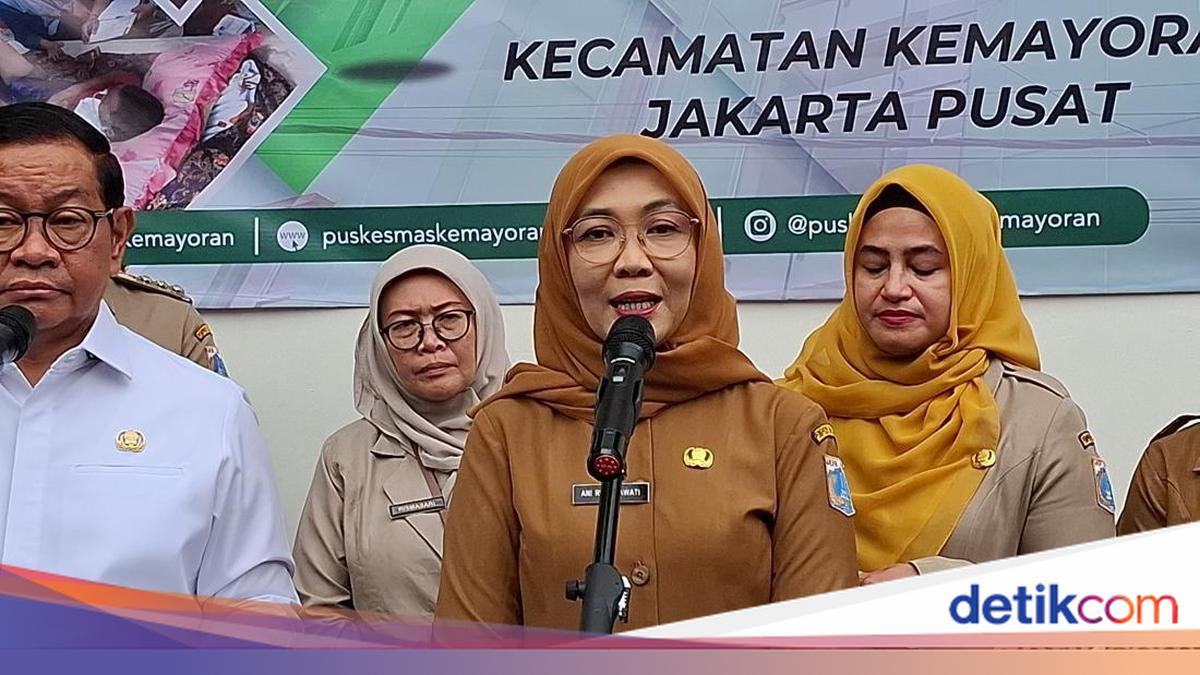
As many as 72 students in Pondok Kelapa, East Jakarta, are suspected of suffering food poisoning after consuming free nutritious meals (MBG). The Head of the Jakarta Health Department (Kadinkes) DKI Jakarta, Ani Ruspitawati, revealed the suspected cause of the dozens of students’ poisoning due to the time gap between meal preparation and distribution being too long.
“But from what we’ve seen preliminarily, it’s possible that there was a sufficiently long interval between preparing the cooked food and its distribution. Because, looking at the percentage of victims, most were those who arrived in the afternoon. That’s the preliminary analysis,” Ani told reporters at Jakarta City Hall on Wednesday (8/4/2026).
Ani stated that the Jakarta Health Department has already descended to conduct checks. She mentioned that the checks are being carried out as material for evaluation and improvement by the nutritional service fulfilment units (SPPG).
“But all teams have been deployed from the start, re-checking to ensure where the problem lies so that the SPPG can also evaluate and make improvements,” she said.
Ani revealed that her side always assists in supervising newly opened SPPGs. The form of supervision involves ensuring that SPPG staff receive free training.
“Basically, as soon as there’s a new SPPG, we immediately invite them for training. Then, in the environmental health inspection (IKL) process, we supervise whether the flow, location, water source, and everything else complies. We inspect that, and if anything doesn’t comply, we provide forms indicating what needs to be fixed,” she said.
“It goes through the process, and once everything is processed and the cooking results are checked in the laboratory and confirmed negative for bacterial contamination, then the SLHS permit is issued. After an SPPG has an SLHS, we conduct periodic IKLs, but not every day, of course. Because in Jakarta, there are more than 400 SLHS facilities based on data,” she continued.
Ani conveyed that the DKI Health Department conducts periodic checks on SPPGs. The checks are done every 3 to 6 months.
“Yes, if I’m not mistaken, we conduct periodic checks every 3 to 6 months. But actually, every day there should be organoleptic checks. So at the SPPG and at the school before distribution, the food should be physically checked for smell, whether there’s slime, whether it’s chewy, that sort of thing. And that can be done independently, and we’ve trained the SPPG teams to perform those checks,” she explained.
Furthermore, she stated that the laboratory test results for the food samples have not yet come out. Thus, the exact cause of the dozens of students’ poisoning is not yet known.
“Not yet, later we’ll investigate, gather everything, look at the field conditions including interviews with the staff, the owner, and the victims. We’ll combine all that with the laboratory results, and then there will be a complete report,” she added.
Previously, BGN assured that it would investigate the cause of the poisoning of 72 students after consuming the spaghetti MBG menu in Pondok Kelapa, East Jakarta. BGN stated that around 50 students are still receiving treatment due to the poisoning case.
“Yes, it’s been checked, there are the Head of SPPG, the Regional Coordinator, and the Regional Head. I will also check,” said Deputy Head of BGN for Public Communication and Investigation, Nanik Sudaryati Deyang, when contacted on Sunday (5/4).
However, Nanik did not detail any findings or issues at the Pondok Kelapa SPPG. For that, BGN will make a decision after a thorough check.
“Regarding suspension, we’ll see how it develops,” she said.