
Head of Traffic Police Reveals 'Operasi Patuh' Will Prioritise Humanism, but Severe Violations Will Face Strict Action
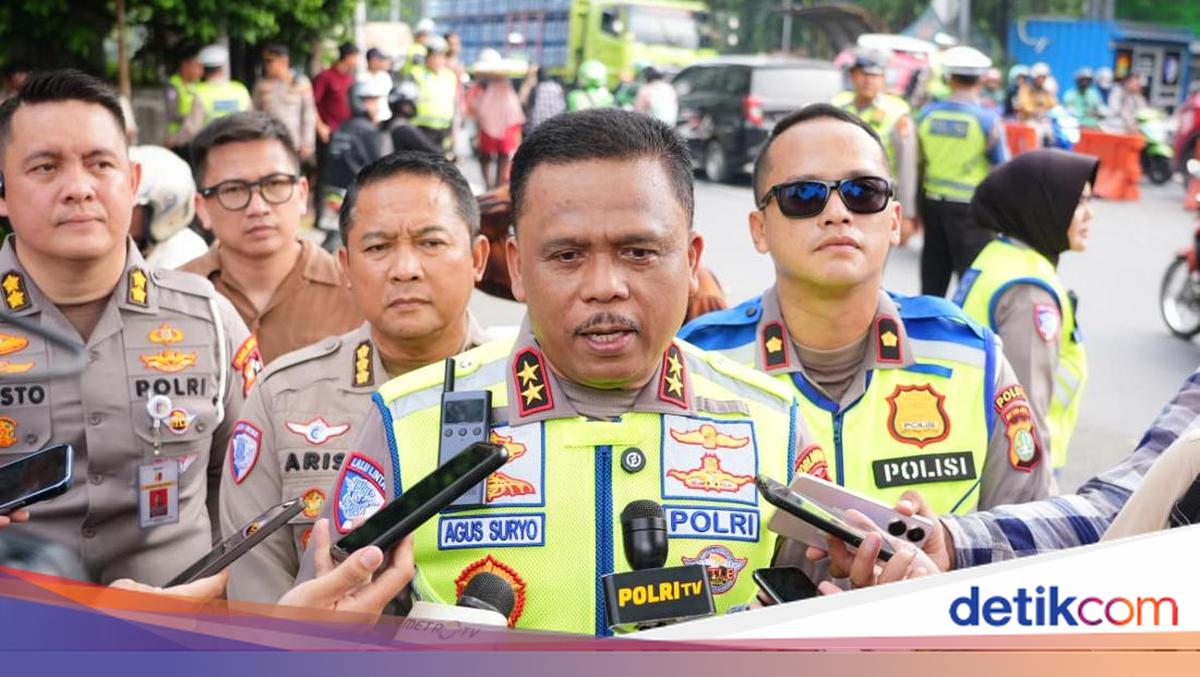
The Head of the Indonesian National Police Traffic Corps, Inspector General Agus Suryonugroho, has emphasised that preventive measures and education remain the primary pillars for officers in the field. However, legal enforcement will remain strict for specific types of violations that have the potential to cause fatal accidents.
“The principle of our activities is to prioritise humanism through prevention and education. But for certain violations, we must also be firm,” stated Inspector General Agus. He made these remarks to journalists during an inspection of road excavations causing congestion on Jalan TB Simatupang, East Jakarta, on Thursday (4/6/2026).
Inspector General Agus outlined several examples of severe, visible violations that will be the focus of strict enforcement, including driving against the flow of traffic, failure to wear helmets, and operating mobile phones while driving. “Examples include driving against the flow, not wearing a helmet, using a mobile phone, and so on,” the two-star general explained.
A notable change in the law enforcement scheme for the upcoming 2026 ‘Operasi Patuh’ is a significant increase in the proportion of manual traffic tickets (non-ETLE) compared to previous operations. “In addition to using ETLE—including drone, handheld, and static ETLE—we will also conduct manual ticketing. This portion is quite high; what was previously 5% has now been increased to 30% for this operation,” said Agus.
Overall, Korlantas Polri is implementing a measured enforcement formula: 60% electronic-based enforcement (ETLE), 30% manual ticketing (non-ETLE), and 10% preventive education and sympathetic warnings. This increase in manual enforcement is intended to cover areas not yet reached by electronic surveillance cameras and to penalise visible violations intended to evade ETLE sensors.
Despite the tightened enforcement, Inspector General Agus emphasised that the core essence of ‘Operasi Patuh 2026’, leading up to Bhayangkara Day, is not about the number of motorists fined, but about fostering genuine awareness within the community. “The most important thing is that we hope road users do not always have to be penalised or fined. We hope for compliance in traffic,” he stated. Through this shared commitment to compliance, Korlantas Polri aims to minimise road fatalities. “The goal is to reduce violations and perhaps even eliminate them, thereby reducing the number of accidents,” concluded Agus.