
Head of PRR Task Force Urges Local Governments to Continuously Update Recipient Data, Post-Disaster Aid to Flow Gradually
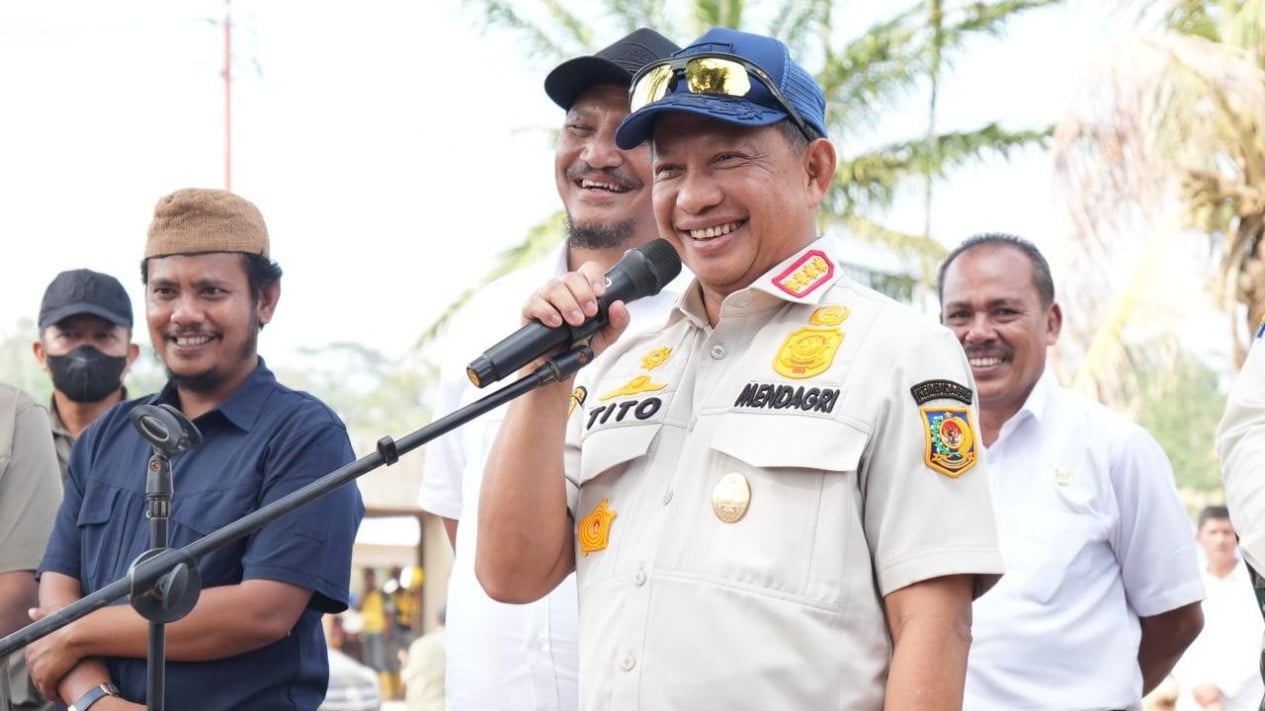
The Post-Disaster Rehabilitation and Reconstruction Task Force for Sumatra has reaffirmed its commitment to ensuring that all survivors of hydro-meteorological disasters in Aceh, North Sumatra, and West Sumatra receive aid quickly, accurately, and sustainably.
In its implementation, the PRR Task Force applies a phased aid distribution model based on data provided by the affected local governments. This scheme is chosen so that aid can be immediately felt by the community without waiting for the entire data collection process to be completed.
The Head of the PRR Task Force for Sumatra Post-Disaster, Muhammad Tito Karnavian, explained that field conditions during the disaster make the data collection process take longer because affected residents are scattered to remote and inland areas.
According to Tito, if aid distribution must wait for the entire data collection to be fully completed, the community’s recovery process will run much more slowly. Even, houses in the categories of minor and moderate damage have the potential to experience more severe damage due to delayed repairs.
“If we wait for the local government’s data collection to finish because the affected victims are widely scattered, the data collection will be very slow. What happens is that minor and moderate damaged houses will become more damaged because they are not repaired while waiting for aid from the centre,” said Tito in his statement on Thursday (7/5/2026).
He emphasised that the central government can only disburse cash aid if the data from local governments has been verified. Therefore, the PRR Task Force decided to carry out aid distribution in phases according to the available and validated data.
“That’s why I decided that aid is given gradually. Whatever data on affected residents is already available from local governments is immediately verified by BPS and the aid is directly disbursed both by BNPB and the Ministry of Social Affairs,” he said.
Tito added that local governments are still given room to continue updating data on affected communities if more residents are found who are not yet on the recipient list. This additional data will then be re-verified by the Central Statistics Agency (BPS) before aid is disbursed by the relevant ministries/institutions.
“If there are more that are missed by the local government, please propose again, re-verified by BPS, then aid is disbursed again by BNPB and the Ministry of Social Affairs,” said Tito.