
Head of Government Communications Body Presents Research Showing Improved Child Nutrition After Free Nutritious Meals Programme
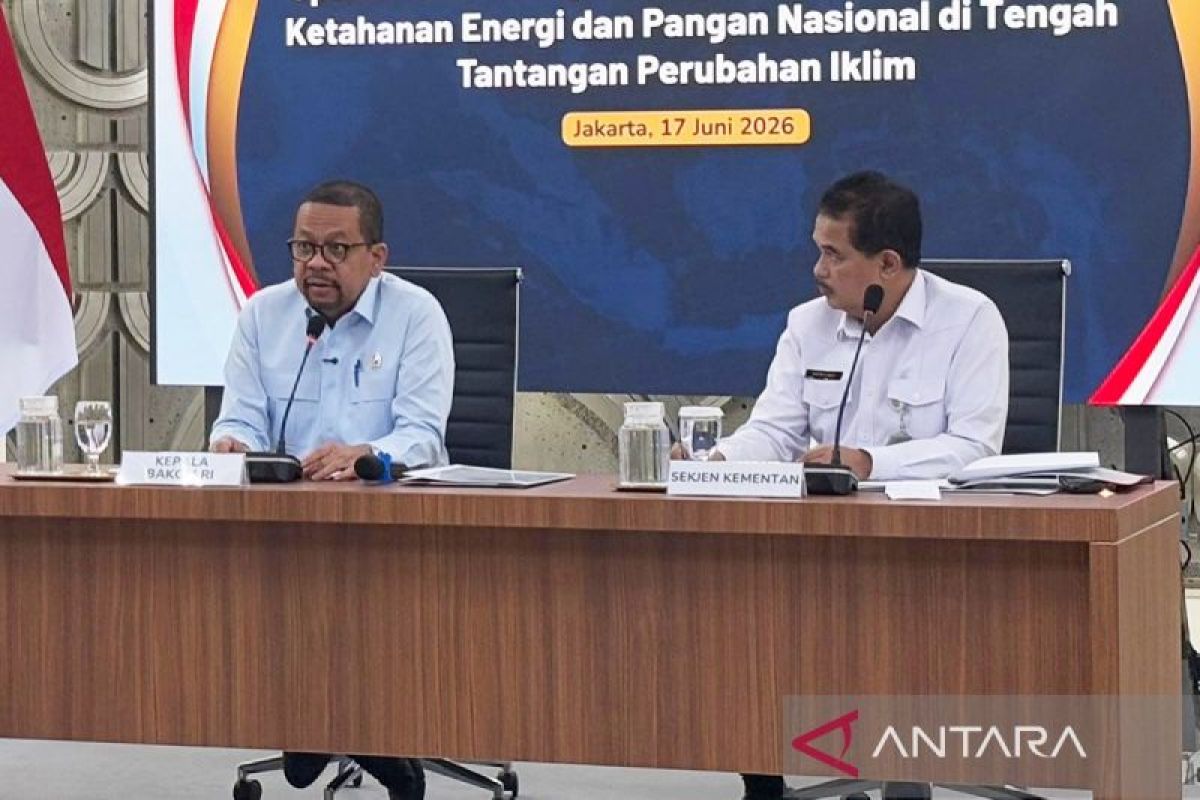
Jakarta (ANTARA) - The Head of the Indonesian Government Communication Agency (Bakom), Muhammad Qodari, has presented research findings from the National Development Planning Agency (Bappenas) demonstrating several benefits of the Free Nutritious Meal (MBG) programme, including improved nutritional intake for school children following its implementation.
Qodari noted that, according to the Bappenas research, the consumption of fruit—which contains various vitamins and fibre—among school children has increased, particularly after they became beneficiaries of the MBG programme.
“When we talk about Vitamin C and fruit that is good for digestion, it turns out that previously, very few of our children ate fruit. The majority did not eat fruit, but now it has risen from 26 per cent to 84 per cent,” Qodari told reporters in Jakarta on Thursday.
Qodari continued that improvements in nutritional intake are also evident in the protein consumption of school children receiving MBG. From the same research, the consumption of animal protein among school children rose from 65 per cent to 90 per cent.
“This is good. We want Indonesian football to progress; we want them to be big and tall like Japanese players, with large, tall bodies and intelligent brains, supported by good nutrition. We should no longer be called a nation with low IQ. Where does that come from? It comes from protein,” said Qodari.
Furthermore, Qodari stated that thanks to the free nutritious meals, many school children are no longer experiencing hunger while attending lessons. Before the MBG programme, Qodari explained, many children were hungry while studying in school, a condition he believes can disrupt student concentration.
“It turns out that before MBG, many of our students were hungry during school. The number of students who were hungry at that time, while in class listening to teachers, was 56 per cent,” Qodari said, conveying the Bappenas research results.
However, following the introduction of MBG, the number of hungry students has decreased significantly. “That decrease is substantial,” said Qodari.
Meanwhile, the number of students who are satiated during school activities increased after the implementation of MBG, rising from 43 per cent to 84 per cent. “This is a benefit that people do not yet realise,” he added.
Qodari continued by noting that the free nutritious meal programme does not only benefit school children; it also has a positive impact on MSMEs (Micro, Small, and Medium Enterprises) acting as raw material suppliers for the MBG programme. Qodari mentioned that 86 per cent of programme suppliers reported an increase in turnover following the programme’s launch.
Qodari further explained that the majority of MBG raw material suppliers are local MSMEs, accounting for 62 per cent, followed by cooperatives at 18 per cent, and provincial-level MSMEs at 14 per cent.
“So, there are actually many positive aspects to this MBG programme. Do not only look at the negative side. We should correct the negative aspects and continue to improve the positive ones,” said Qodari.