
Head of BSKDN Reminds that Innovation Must Be Planned and Sustainable
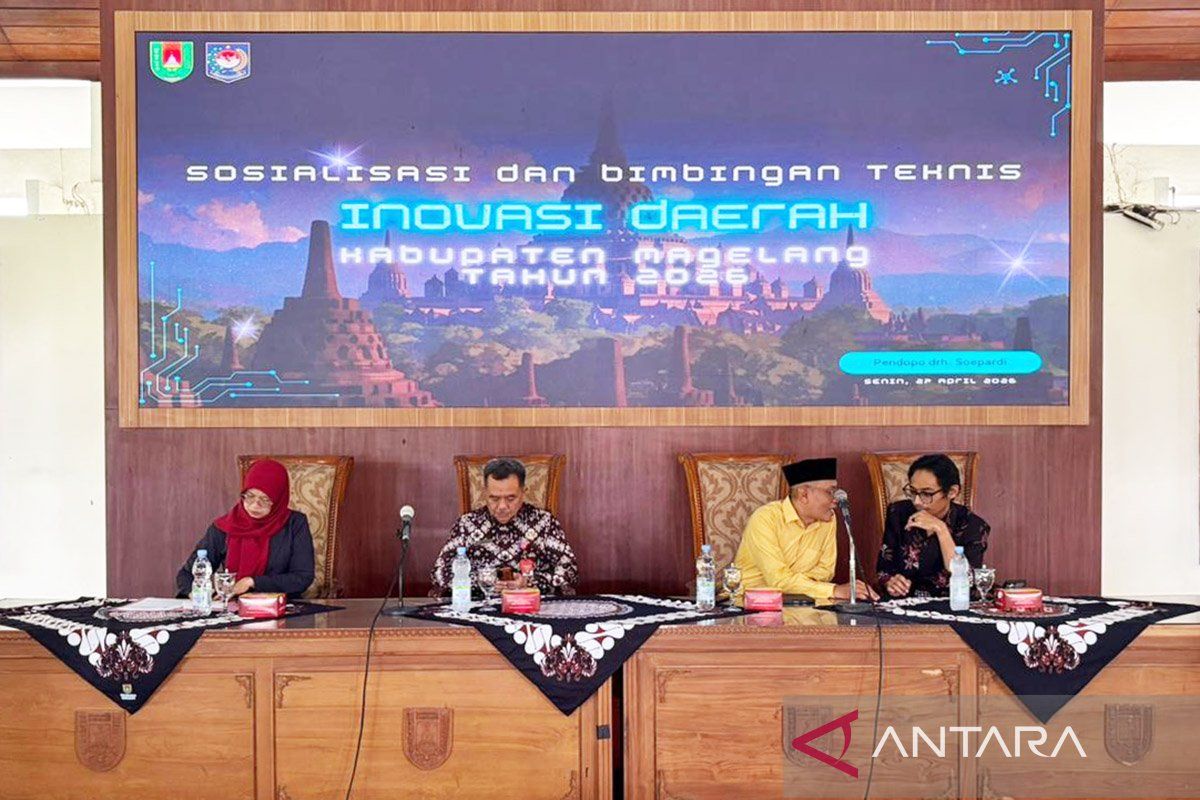
Jakarta (ANTARA) - Yusharto Huntoyungo, Head of the Domestic Policy Strategy Agency (BSKDN) of the Ministry of Home Affairs (Kemendagri), has reminded that regional innovation development should not be carried out sporadically but must go through thorough and sustainable planning.
“The innovations we create cannot be left just like that. There must be innovation management starting from planning, then implementation, evaluation, and ensuring its sustainability,” said Yusharto in his statement in Jakarta on Monday.
He conveyed this while serving as a speaker at the Socialisation of Technical Guidance (Bimtek) for Regional Innovation in Magelang Regency for 2026, held at the Pendopo drh. Soepardi.
In his presentation, Yusharto emphasised that innovation is a crucial instrument for improving the quality of public services as well as regional competitiveness. However, innovation cannot be allowed to run without a clear direction.
He explained that the success of regional innovation is highly determined by the local government’s ability to manage the full innovation cycle.
This includes strengthening planning, targeted implementation, data-based evaluation, and programme sustainability to deliver real impacts for society.
Yusharto also stressed the importance of cross-regional apparatus work unit (OPD) collaboration in creating innovations.
“Innovations that we produce should not come from just one OPD alone, but are expected to be collaborations from several OPDs. For that reason, we need to carry out management to ensure the sustainability of innovations,” he stated.
In addition, he encouraged the utilisation of technology and data as the foundation for innovation development, and digitalisation is seen to improve the quality of public services while providing convenience for the public in accessing government services.
Yusharto also touched on the importance of utilising integrated population data with data from other sectors, such as health, to support more targeted policies.
He exemplified that in the future, public services will increasingly be based on individual data, including family history, so that the resulting policies can be more precise.
On that occasion, Yusharto also outlined several innovation challenges in Indonesia, including funding limitations, weak downstreaming of research results, and the suboptimal cultivation of an innovation culture.
One of them is through the role as an offtaker for research and invention results from universities, so they can be transformed into applicable and beneficial innovations for society.
“Magelang has four universities that at the very least have carried out the tridharma of higher education, one of which is research. This research may already be an invention that will be transformed into innovation,” said Yusharto.
Yusharto also appreciated the steps taken by the Magelang Regency Government in promoting innovation culture, one of which is through organising regional innovation competitions.
According to him, such efforts are an important part of building a conducive innovation ecosystem.
In line with that, he also hopes that through this socialisation and technical guidance activity, the quality of innovation in Magelang Regency can continue to improve and provide real impacts for society.
“For example, forums like this are also part of innovation, Sir/Madam, (aimed at) improving the quality of innovation in Magelang Regency,” he said.