
Head of BPJPH Meets Trade Minister to Discuss Halal Certification for Export-Import Products
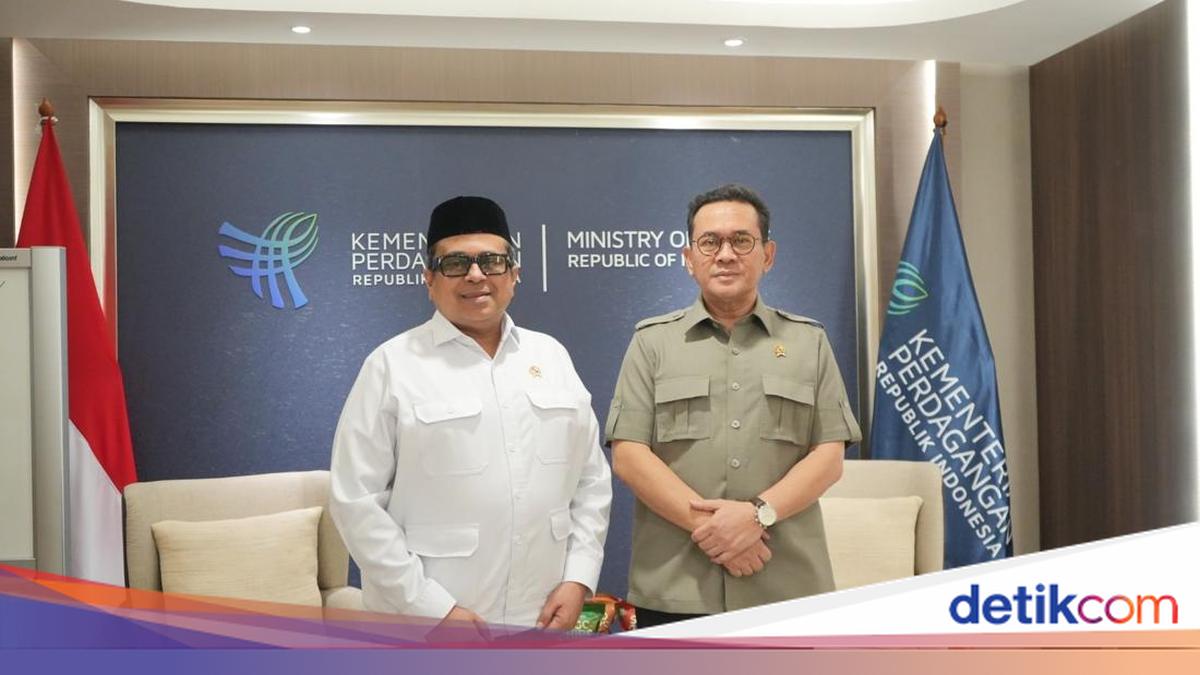
This step is taken to ensure cross-sectoral readiness in facing the increasing flow of global trade while supporting the approaching mandatory halal implementation.
Haikal emphasised that in this crucial phase of mandatory halal certification implementation, coordination across ministries and agencies is key to ensuring effective policy execution. According to him, such synergy is also vital to provide certainty for business actors, particularly those involved in export and import activities.
“Strengthening coordination is key to ensuring the effective implementation of the halal ecosystem and providing certainty for business actors,” Haikal stated in his remarks on Wednesday (29/4/2026). He conveyed this during a meeting held at the Ministry of Trade office in Jakarta on Monday (27/4/2026).
During the meeting, the two parties also discussed several strategic issues, ranging from policy readiness, regulatory harmonisation, to the governance of export and import product data that must comply with halal product assurance provisions. Additionally, the meeting addressed the importance of system integration and accelerating services to support the smooth flow of cross-border products.
Meanwhile, Budi stated that the national trade sector is currently in a momentum of acceleration. Therefore, halal certification becomes an important part in enhancing the quality and trust in Indonesian products in the global market.
“Strengthening the national halal ecosystem must be able to drive Indonesia’s competitiveness in the global market. The mandatory halal certification on export and import products must become an instrument that strengthens Indonesia’s position as a global halal industry centre,” he asserted.
In this meeting, BPJPH and the Ministry of Trade agreed that the implementation of mandatory halal should not become a trade barrier, but rather provide added value for Indonesian products in the international market.
Therefore, concrete steps are needed in the form of increasing business actors’ literacy, accelerating halal certification services, and strengthening integrated supervision.
As a follow-up to the meeting, BPJPH and the Ministry of Trade will strengthen technical coordination in regulatory harmonisation, data exchange, and simplifying service processes related to halal certification for export and import products.
This step is aimed at ensuring that the implementation of mandatory halal certification can run more integratedly, as well as supporting the smooth flow of goods in international trade activities.