
Head of Bappenas pushes for knowledge-based economic transformation
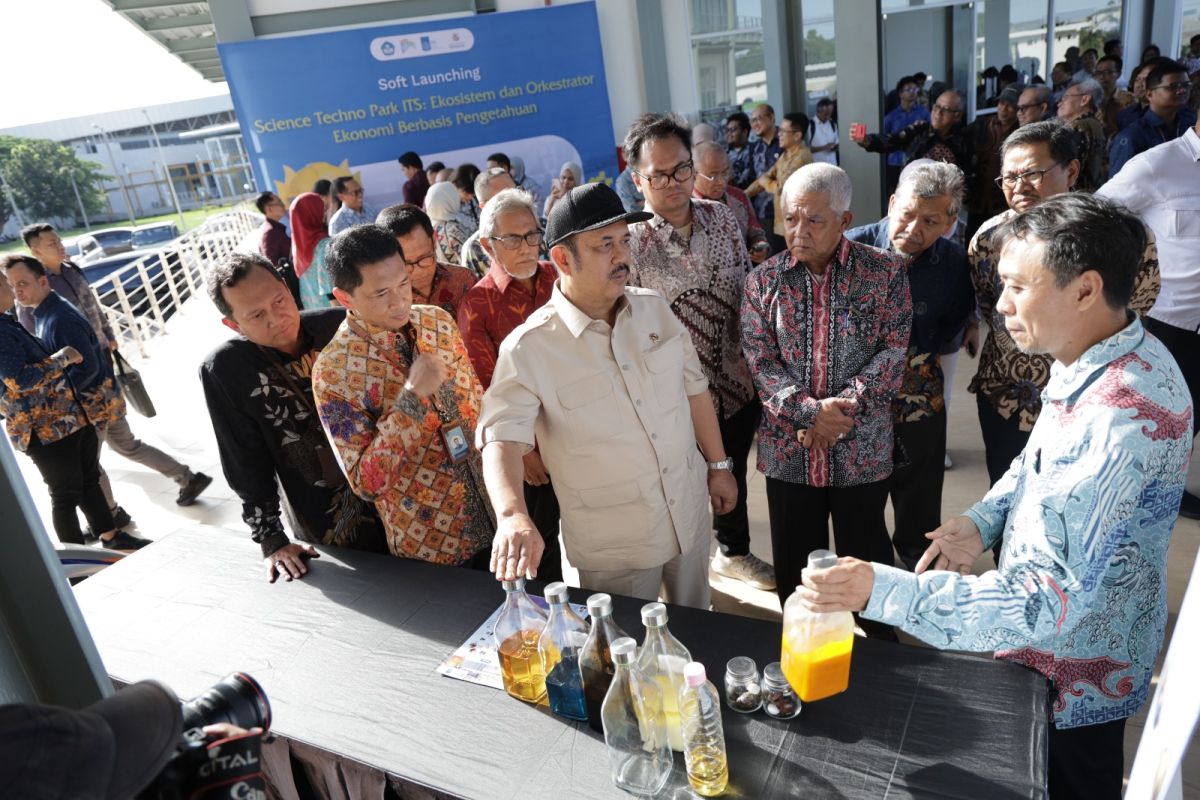
Jakarta - The Minister for National Development Planning/Head of the National Development Planning Agency (PPN/Bappenas), Rachmat Pambudy, is pushing for an economic transformation based on scientific knowledge. “It is time for us to build a knowledge-based economy and a technology economy ahead. The operationalisation of the STP (Science Techno Park at Institut Teknologi Sepuluh Nopember/ITS) must be understood as a fundamental stimulus in escalating the quality of human capital,” he stated during the soft launching of STP ITS Nopember, according to an official statement in Jakarta on Tuesday. ITS has developed various innovations, ranging from bandwidth development, high-precision skull repair simulations, to early stroke detection equipment, as well as carbon capture technology. On that occasion, Minister Rachmat Pambudy emphasised that the development of strategic sectors such as robotics, automotive, and shipping should not only produce creative works but also encourage the birth of patents as part of strengthening the intellectual property of higher education institutions. His side is also encouraging the emergence of innovation-based startups that not only grow in valuation but have real and sustainable products. “In the future, we want to build impactful research (impact university) and encourage entrepreneurship. This Science Techno Park is expected not only to produce new technologies but also to give birth to real new companies,” said the Head of Bappenas. In line with that, ITS Rector Bambang Pramujati stated that STP ITS is designed as a collaboration space between innovation, industry, and startups, so that the downstream ecosystem can grow and develop sustainably. The development of this STP is part of ITS’s efforts to strengthen financial independence through the commercialisation of research results. The ITS STP has been built since 2022 through the Higher Education for Technology and Innovation (HETI) programme with funding support from the Asian Development Bank (ADB). This area stands on a 10-hectare plot of land and consists of four flagship centres, namely maritime, automotive, Information and Communication Technology (ICT), robotics, and the creative industry. These four flagships are expected to support national development priorities for 2026–2029, including energy and water independence, food sovereignty, downstreaming and industrialisation, as well as strengthening infrastructure and disaster resilience. The Minister for National Development Planning hopes that the ITS Science Techno Park can produce technological innovations and also give birth to startups and new companies that have a real impact, and provide benefits for the academic community and Indonesia’s development towards Golden Indonesia 2045.