
Haze from Forest Fires Poses Danger, Lung Specialist Warns Vulnerable Groups at Highest Risk
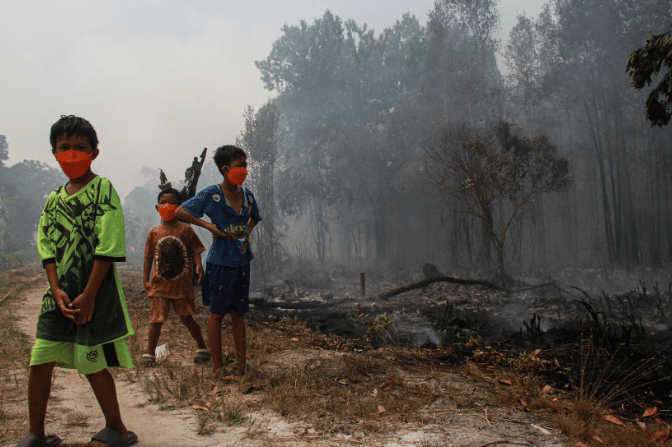
Respiratory and lung specialist Dr dr Feni Fitriani Taufik, Sp.P(K), M.Pd.Ked, has urged the public to increase vigilance against the impact of haze from forest and land fires (karhutla), especially for vulnerable groups.
Feni said groups classified as vulnerable or most easily affected by karhutla haze include pregnant women, children, toddlers, the elderly, and people with chronic respiratory and heart diseases such as asthma, chronic obstructive pulmonary disease (COPD), heart disease, and heart failure.
“These groups are very easily affected both by short-term and long-term effects of forest fires. So families that have these vulnerable groups must be more alert,” Feni said, quoted from Antara, Wednesday (26/8).
Feni said acute symptoms that the public should watch for if exposed to karhutla haze include respiratory tract irritation, cough, runny nose, and eye discomfort. If complaints persist and interfere with daily activities, especially if accompanied by fever, she advised seeking medical attention at the nearest health facility immediately.
“If there is a worsening or a condition that does not improve from the daily condition in people who have these risk factors, or in healthy people who become visibly sicker than usual, they must be taken to a health facility immediately,” she said.
The lecturer in the Department of Pulmonology and Respiratory Medicine at the Faculty of Medicine, University of Indonesia, said karhutla haze is dangerous to health because it contains many harmful substances, including gases and particles.
In this regard, the gases contained include carbon monoxide, sulphur dioxide, ozone, and particulate matter (particles measuring less than 2 microns). When forest fires occur, the concentration of these gases is much higher, exceeding the threshold values considered safe for the body.
“So of course, with these dangerous gases at high levels, it will cause effects or disease risks for people in the surrounding area,” she said.
According to Feni, people living near karhutla sites are at risk of various health problems, both in the short and long term.
For acute effects, karhutla haze can worsen the condition of asthma sufferers and disrupt heart disease patients due to reduced oxygen supply in the body. Meanwhile, long-term impacts can occur when acute effects do not recover.
For example, acute respiratory infection (ARI) that is prolonged and does not heal immediately because the sufferer remains in a highly polluted area or their respiratory tract has not recovered. This condition can cause persistent coughing, frequent illness, and the need for hospital care.
“Then there can also be a decline in lung function if it continues. Patients with asthma or COPD or heart disease become increasingly uncontrolled, so morbidity rates and hospitalisation rates will increase,” Feni said.