
Haze from Forest and Land Fires: Disaster Risk Mitigation Needed to Avert Health and Social Crisis
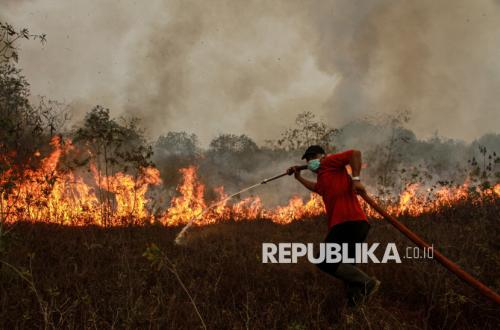
JAKARTA — Medical Emergency Rescue Committee (MER-C) Indonesia has highlighted the serious effects of haze from forest and land fires on public health and residents’ socio-economic conditions. The situation requires an integrated response that prioritises public safety.
Exposure to fine particulate matter (PM2.5) and pollutants in the smoke can cause respiratory problems, and irritation to the eyes and skin. Children, older people, pregnant women and those with chronic illnesses are the groups most vulnerable to becoming ill.
Restrictions on outdoor activity can slow economic activity and increase vulnerability to a social crisis. In response, MER-C Indonesia has called for the following measures:
First, an integrated approach to controlling forest fires, with personnel provided with relevant knowledge, personal protective equipment and measurable strategies.
Second, temporary restrictions on public activity in areas at greatest risk of dangerous haze exposure.
Third, risk-based mask use: surgical masks to reduce exposure to coarse carbon particles, and respirators such as N95 or KN95 masks to reduce exposure to smaller particles such as PM2.5.
Fourth, strengthening hospital supplies in preparation for a surge in medical cases related to the haze.
MER-C Indonesia has urged its volunteers and other volunteers in areas affected by haze from forest and land fires to prioritise their own safety and coordinate with the government, health workers and humanitarian organisations to ensure health protection and meet the basic needs of affected residents.
Source: jawawa.id (https://jawawa.id/newsitem/haze-from-forest-and-land-fires-disaster-risk-mitigation-needed-to-avert-health-and-social-crisis-1792385467)
Originally published by Republika (https://news.republika.co.id/berita/tn4zvf430/kabut-asap-karhutla-perlu-mitigasi-risiko-bencana-kesehatan-dan-krisis-sosial), translated from Indonesian