
Haze Envelops 20 Regions in North Sumatra, Visibility Drops to 1 Kilometre
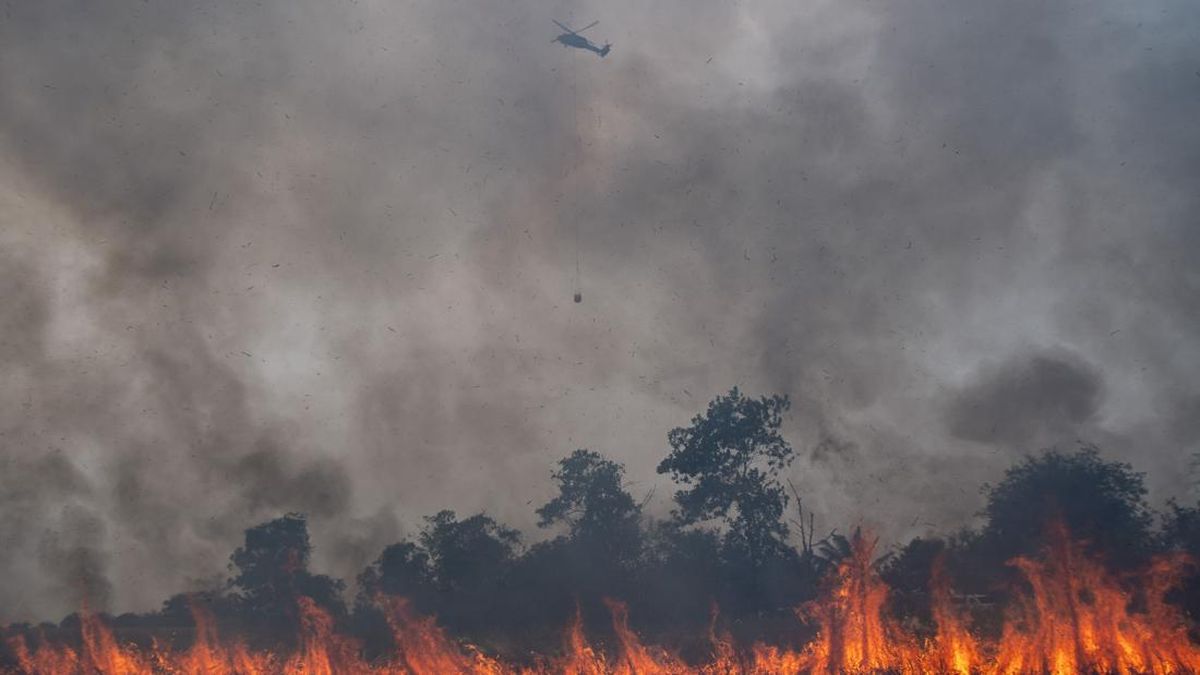
Haze from forest and land fires (karhutla) enveloped 20 regencies and cities in North Sumatra on Monday (14/9). This condition has caused visibility in several areas to drop to between 1 and 4 kilometres.
The Head of BMKG Region I, Hendro Nugroho, stated that based on satellite imagery monitoring of smoke distribution in the Sumatra region on 14 September 2026, smoke was detected in South Labuhanbatu, North Labuhanbatu, Labuhanbatu, Padang Lawas, and North Padang Lawas.
Additionally, smoke was observed in Deli Serdang, Serdang Bedagai, Medan, South Tapanuli, Padang Sidimpuan, Mandailing Natal, Toba, North Tapanuli, Central Tapanuli, Sibolga, Asahan, Tanjung Balai, Batubara, Simalungun, and Samosir.
“The spread of smoke is moving towards the northwest, following the wind pattern blowing from the southeast,” he said.
Monitoring of Hotspot distribution imagery in North Sumatra on 13 September 2026 identified 4 hotspots with medium confidence levels, specifically 3 in South Tapanuli Regency and 1 in North Tapanuli.
“Observations from the Silangit Meteorological Station and the Aek Godang Meteorological Station show that on 14 September 2026, visibility decreased to 1 - 4 km,” he explained.
This reduction in visibility was observed alongside foggy and hazy conditions. Based on air quality monitoring, the concentration of PM2.5 (fine particulate matter) in North Sumatra is currently in the moderate category.
“Members of the public in areas with low visibility due to fog and haze are urged to be cautious when driving, maintain safe distances, and use appropriate equipment,” Hendro emphasised.
Hendro also urged regional heads to coordinate with the local Disaster Management Agency (BPBD), the TNI (Indonesian National Armed Forces), and the Polri (Indonesian National Police) to continuously follow the information provided by BMKG Region I Medan.
“Such coordination is necessary to monitor the development of forest and land fire conditions and smoke distribution, and to ensure that the public receives the latest information regarding weather conditions and air quality,” he added.