
Haze and a State Slow to Learn
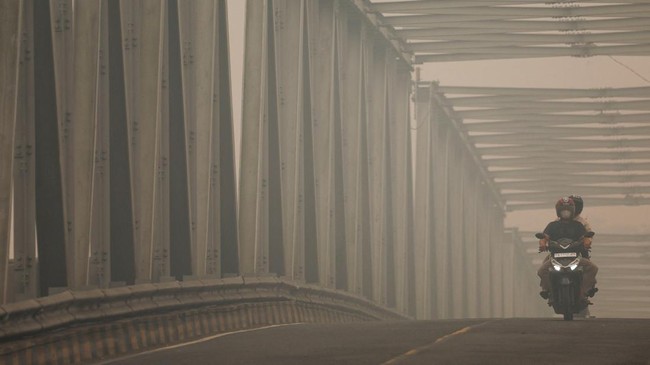
Whenever forest and land fires occur, people once again face the same threat. The air is polluted, children are at risk of respiratory problems, school activities are disrupted, and people who depend on daily work must contend with the risk of losing their income.
For them, forest fires are not merely news about environmental damage. Their effects reach into homes, harm health and disrupt lives that should be able to proceed normally.
More troubling still, forest and land fires are not a problem the government has only just encountered. Indonesia has a long history of dealing with forest fires and haze, including their impacts across national borders.
That experience should provide a basis for improving policy. Yet whenever fires spread again, public attention is once more consumed by firefighting, mask distribution and advisories urging people to reduce outdoor activities.
All these emergency measures are necessary. But people surely expect more than a response once the fire has grown. They need assurance that the state is genuinely committed to preventing the same disaster from recurring.
An Unequal Burden
Haze reveals a reality that does not always appear in economic growth calculations. Land use can generate profits for businesses and stimulate economic activity in a region. But when fires occur, the burden of damage spreads to communities that may not have received a commensurate share of the benefits.
Residents have to breathe polluted air without ever having a say in how the land is managed. Children face disruption to their education. Small traders, farmers, drivers and daily workers risk losing income when activity declines. People with limited financial means also find it harder to avoid exposure to smoke or obtain healthcare when they need it.
This imbalance deserves firm scrutiny. The benefits of exploiting natural resources may accrue to particular parties, while the costs of environmental damage are borne much more widely. This cannot be accepted as a reasonable price of development.
The state has an obligation to protect people from this threat. Protection cannot consist solely of healthcare services once smoke has blanketed residential areas.
The government must ensure that the sources of fires are addressed, risks in vulnerable areas are reduced, and affected communities receive proper assistance and recovery support.
Blurred Accountability
Forest and land fires have a range of causes. Dry weather, peatland conditions, changes in land cover and human activity can combine to heighten the risk of fires. Each incident must therefore be investigated carefully. Drawing conclusions about causes without evidence is as wrong as allowing possible violations to go unexamined.
Areas at high risk of fire and land managed by companies must be monitored consistently. Where violations are found, the government must hold those responsible to account on the basis of evidence and the law.
Administrative sanctions, criminal proceedings and civil lawsuits must each be pursued in accordance with their respective legal grounds. Compliance with environmental restoration obligations must also be monitored until the work is genuinely completed.
Law enforcement should not attract serious attention only when haze becomes national news. Weak monitoring before fires break out is just as dangerous as a slow response after they have spread.
Without transparent investigations and clear accountability, people will continue to struggle to establish whether the state is addressing the source of the problem or merely dealing with its consequences. The government should also disclose information about affected areas, investigation findings, the status of legal cases and follow-up action against parties found to have violated the law.
Such transparency is no threat to businesses that comply with the law. Moreover, consistent enforcement is necessary to ensure that companies meeting their obligations are not disadvantaged by those that disregard their environmental responsibilities.
Development and Destruction
We must acknowledge that the use of natural resources plays a role in the economy. Jobs, regional revenue and production are legitimate interests that deserve consideration.
But economic interests cannot justify disregarding the environment’s capacity to sustain life and the safety of communities. The costs of forest destruction far exceed the value of the land that has burned.
When smoke harms people’s health, schools have to restrict activities and residents lose opportunities to work, the public also pays costs that do not appear in company profit reports. There are further consequences for ecosystems and emissions that worsen the climate problem.
Development policy must therefore take account of who benefits and who bears the risks. The polluter-pays principle should be applied to parties found responsible for pollution or environmental damage. Restoration costs should not simply be shifted to the state and the public after the benefits of economic activity have already been enjoyed.
Prevention also requires the central and regional governments to improve monitoring, strengthen preparedness and involve communities living around fire-prone areas.
Local residents have knowledge of their environment. That knowledge should be incorporated into policy, rather than used only when the government needs help putting out fires.
A State with a Short Memory
Every disaster leaves communities with experience. But that experience is useful only if it changes the way the government makes decisions. In managing forest and land fires, change should be evident in better prevention, consistent monitoring, law enforcement open to public scrutiny and genuine environmental restoration.
We need not wait for all the annual data to be compiled to understand that public health and forest conservation must not be put at risk. Even so, the government must demonstrate its results through open data, measurable assessments and accountable explanations.
People have the right to know what has been improved after fires in previous years. Burned forests may lie far from centres of power. But their smoke can enter classrooms, homes, markets and workplaces. Geographic distance does not diminish the state’s responsibility.
For residents who once again shut their doors and windows to keep smoke out of their homes, explanations about the difficulty of controlling fires do little to change their circumstances. They need safe air, lives free from disruption and assurance that the harm they have suffered will not simply be forgotten once the flames are out.
The state has accumulated ample experience in dealing with forest and land fires. What remains to be demonstrated is whether that experience truly changes policy, or merely adds to the long list of disasters that have occurred.