
Hazards Scattered Across Toll Roads Lead to Fatalities; KNKT Issues Recommendations
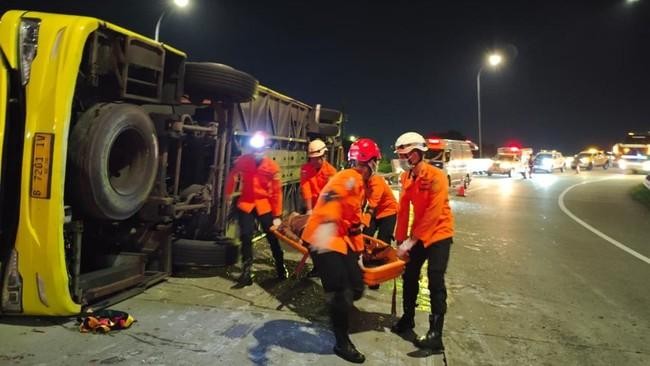
The Chairman of the National Committee for Transportation Safety (KNSK), Soerjanto Tjahjono, has presented a series of recommendations aimed at addressing triggers for fatal accidents on toll roads.
First, regarding ‘clear zones’, the KNKT noted that hazards exist where buildings or poles are located within these safety areas. During a hearing with Commission V of the Indonesian House of Representatives (DPR RI), Soerjento recommended that no rigid structures or pillars should be placed in clear zones. If they must exist, they must be accompanied by semi-rigid guardrails and energy-absorbing cushions. The goal is not to prevent vehicle damage, but to ensure that if a collision occurs, the impact speed is reduced to a level that prevents fatalities.
He also criticised the draft Ministerial Regulation (PermenPU) regarding Toll Road Service Standards (SPM), noting it lacks clear prohibitions against obstructions in clear zones.
Secondly, the KNKT addressed the need for improved rest areas (TI) and service areas (TIP), specifically regarding parking availability for heavy vehicles (Class V). Recommendations include providing sufficient parking for heavy vehicles, specialised rest facilities for truck drivers, and dedicated parking for vehicles transporting hazardous and toxic materials (B3), alongside enhanced security at rest areas.
He cited a pilot project on the Cipali Toll Road (KM 130 A) where providing hot showers and resting areas led to a decrease in accidents locally, though he noted that fatigue-related accidents had simply shifted to other toll road segments.
Furthermore, the KNKT recommended that all Type A intercity service areas (TIP) should provide workshops for minor vehicle repairs. Currently, many Type A facilities only offer tyre puncture services, which often forces drivers to continue journeys with minor mechanical issues that eventually lead to collisions.
Regarding road design, Soerjanto revealed that operational speeds at interchanges and on/off ramps are currently identical to design speeds. Citing several fatal bus accidents in Semarang, Krapyak, and Cikampek, the KNKT recommends that operational speeds at these points should be set at 75-85% of the design speed, following the ‘forgiving road’ concept.
Addressing the issue of standing water, the KNKT highlighted a lack of regulation regarding maximum allowable water depth and insufficient drainage on certain stretches, which causes vehicles to skid. They recommended cleaning road shoulders to prevent water obstruction.
Additionally, the KNKT noted that emergency escape ramps are currently too steep and use sandy soil materials that are ineffective at braking, increasing fatality risks. There is currently no detailed legal framework regulating the design and radius of these emergency lanes.
Road equipment, such as signs, markings, and controllers, was also criticised for being poorly installed or overlapping, which confuses drivers. Furthermore, guardrails often fail to meet safety standards, and there is a lack of an accountable unit to oversee and evaluate these installations.
Safety at toll gates was also a concern. Soerjento noted that toll gates located at the end of descents pose a hazard for vehicles with brake failures. He suggested that toll gates should be located on flat ground, ideally with a 1-2 degree incline leading towards the gate from both directions.
Regarding electric vehicles (EVs), the KNKT highlighted the lack of emergency handling protocols for EV fires and the transport of hazardous goods. Toll road operators (BUJT) currently lack the necessary infrastructure and equipment for EV-related emergencies. This is particularly dangerous as EV fires are harder to extinguish than conventional fuel fires and carry the risk of high-voltage exposure and explosions, which could electrocute bystanders, especially in rainy conditions.
Finally, regarding Overdimension and Overload (ODOL) trucks, Soerjanto recommended…
Source: jawawa.id (https://jawawa.id/newsitem/hazards-scattered-across-toll-roads-lead-to-fatalities-knkt-issues-recommendations-1788256486)
Originally published by CNBC Indonesia (https://www.cnbcindonesia.com/news/20260901150819-4-764048/sumber-petaka-bertebaran-di-jalan-tol-bawa-maut-knkt-beri-rekomendasi), translated from Indonesian