
Haunted Houses in Japan Attract Bargain Property Hunters
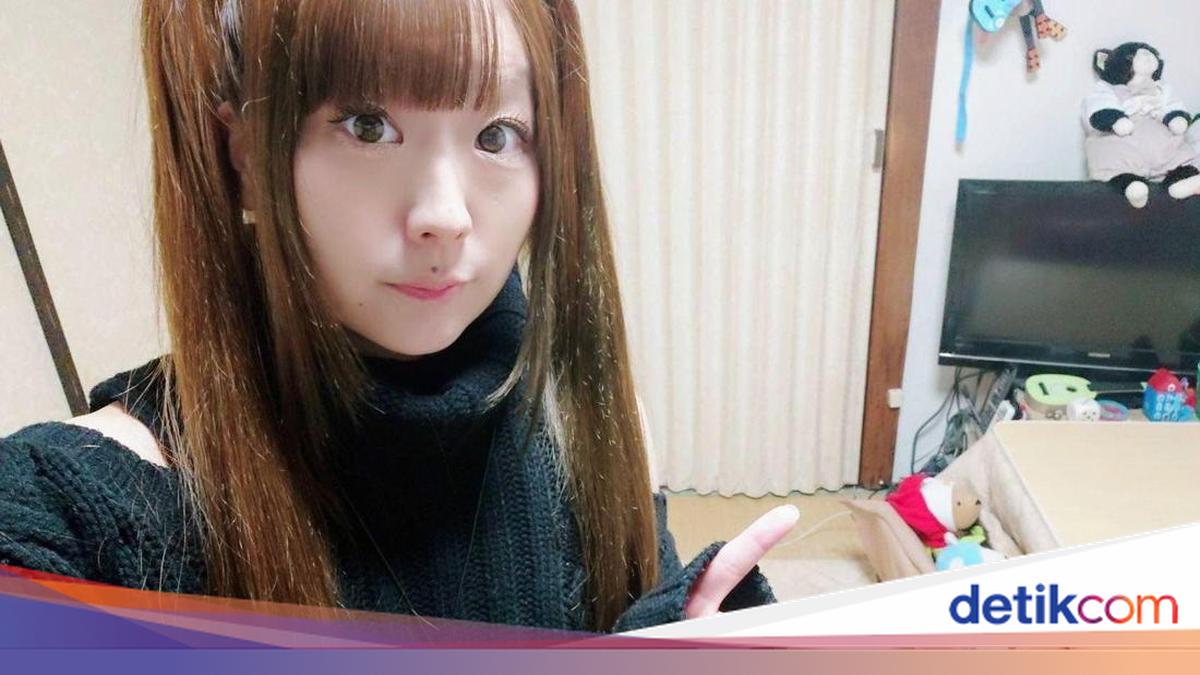
From the moment she first set foot in her rented apartment in Tokyo, Ryua believed it was haunted.
“When I came to view this apartment, there was a man standing there, staring intently at me,” she said. “Because the estate agent couldn’t see him, I realised he must be a ghost.”
While someone more easily frightened might have left immediately and never returned, Ryua decided to move in.
“I do like going against the grain a bit, so I decided I wanted to be friends with the ghost man who kept staring at me,” added Ryua, who works as an aidoru, or young entertainer, and did not wish to give her surname.
Four years on, she is still living in the same apartment. Ryua says she continues to experience paranormal activity almost every day, often hearing incessant footsteps and the ghost speaking.
The previous occupant of Ryua’s apartment, pictured here, is said to have died by suicide.
Although Halloween has become increasingly popular in Japan in recent years, many Japanese people take the existence of ghosts seriously throughout the year.
In Japanese, the term yuurei refers to spirits who remain restless and wander the earth. According to local beliefs, yuurei are the spirits of people who died in tragic or violent circumstances, such as murder victims, those who took their own lives, or people who died alone and without anyone by their side. If they die in their own home, it is believed their spirits remain there.
For home-hunters who are not superstitious or easily spooked, this can present an opportunity to secure a property at a much lower price.
In Japan, such homes are categorised as jiko bukken, meaning properties with a stigma or a history of an incident. Under guidelines issued by the Japanese government in 2021, estate agents must disclose if a home has been the site of a suicide, murder, death in a fire, or a death where the body was discovered only after a long period.
For rental properties, this information must be disclosed for three years. For properties for sale, the history must be disclosed indefinitely.
By comparison, there is no legal requirement in the UK to disclose that someone has died in a property. In the United States, rules vary by state. In California, for example, sellers must disclose if someone died in the property within the previous three years, while no such requirement applies in Arizona or Oregon.
Ryua was told that a man had taken his own life in the apartment where she now lives. That history earned her a discount of almost 30% on the rent for her 25-square-metre studio in Setagaya, a popular Tokyo neighbourhood.
She says she pays 45,000 yen (about US$285) a month, compared with the usual rate of 62,000 yen.
Although homes where a murder or suicide has taken place may be harder to sell or rent anywhere in the world, Tokyo estate agent Erik Oskamp says Japanese people tend to be more superstitious and more reluctant to live in properties with this kind of stigma.
“Even apartments next to a cemetery can be difficult to rent, especially if the gravestones are visible from the kitchen,” Oskamp explained.
“The worst is if there has been a suicide in the apartment. Even if someone jumped from the roof of the building, many tenants would choose to move. Other factors include serious crime or the death of someone living alone.”
The latter category—a person dying alone at home and being found some time later—would generally not affect property prices in countries such as the UK or the US. But in Kagoshima, a rural area in south-western Japan, it enabled Diane Tincher to buy a large, three-bedroom house for about half its expected value.
‘If there is a ghost, I’m grateful to it’
The 79-year-old American has lived in Japan for nearly 40 years and works as a tour guide. She says the estate agent was upfront from the outset: the house was being sold at a steep discount because an elderly woman had died alone there, leaving the property with a stigma.
Tincher bought the house for 20 million yen, in an area where similar properties usually sell for up to 45 million yen.
“I don’t believe in ghosts. But I know Japanese people are very superstitious,” she said. “If there is a ghost in this house, I thank it every day… because I can live in such a beautiful home at an affordable price.”
Diane Tincher says she received a 50% discount when she bought her home in rural Japan.
While researching the house, Tincher found it listed on a website called Oshimaland, which records jiko bukken properties and details of incidents that have occurred at them.
The site was launched in 2005, initially focusing on the Tokyo area, before expanding across Japan and then internationally in 2011. Oshimaland relies on crowdsourced contributions, allowing members of the public to add property records and information about incidents at those locations.
Oshimaland founder Teru Oshima said that, in the past, such properties “were not a particularly attractive option” for Japanese people.
But with house prices surging in recent years and the cost of living generally rising, attitudes have begun to change. A 2025 survey found that more than half of Japanese people would now be willing to rent a jiko bukken if the rent were lower.
Back in Setagaya, Ryua says she is happy living with the “housemate” she believes is a ghost.
“I believe ghosts were once people who lived just like us, so they deserve respect,” she said.
Source: jawawa.id (https://jawawa.id/newsitem/haunted-houses-in-japan-attract-bargain-property-hunters-1793274852)
Originally published by detikcom (https://news.detik.com/bbc-world/d-8729944/rumah-rumah-berhantu-di-jepang-menarik-pemburu-properti-murah), translated from Indonesian