
Harvesting Melons in Bekasi, Deputy Minister Encourages Social Centres to Become Empowerment Hubs
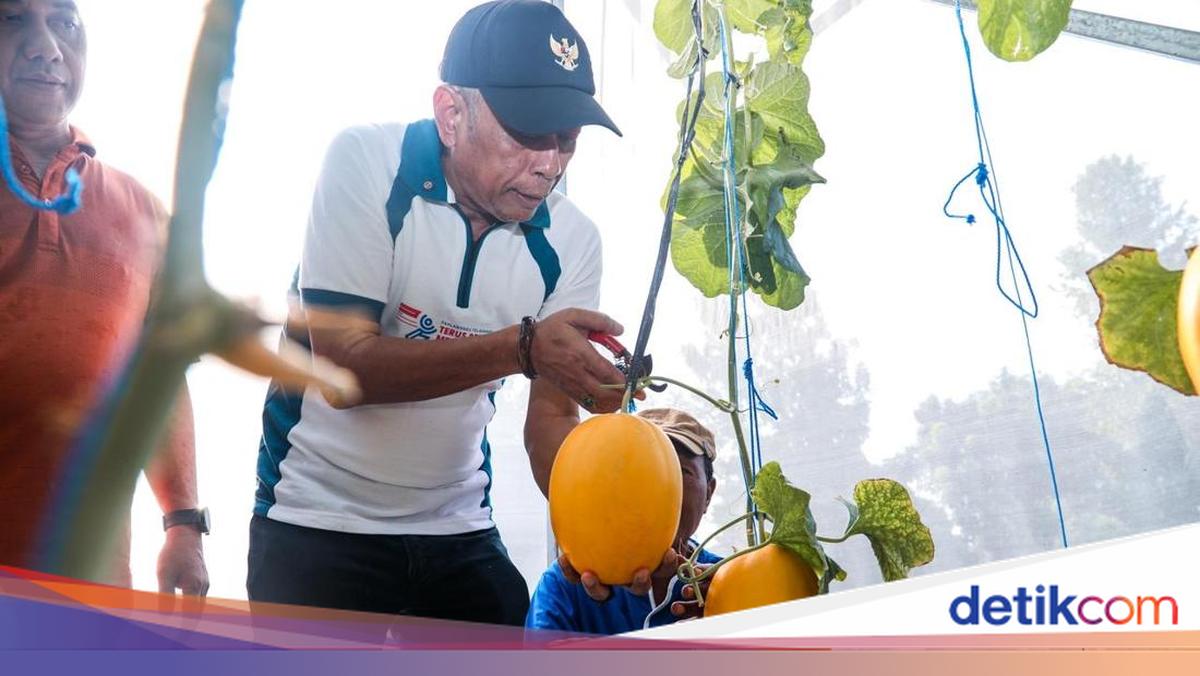
The Ministry of Social Affairs’ centres have expanded their scope to become empowerment hubs in addition to providing services for vulnerable groups. At the Pangudi Luhur Integrated Centre (STPL) in Bekasi, for instance, the centre is developing the agricultural and plantation sectors. This development is carried out through the cultivation of 400 melon trees in a greenhouse, 85 avocado trees, 14 longan trees, 12 grapevines, 8 mango trees, 15 banana trees, 19 eggplant trees, as well as guava and orange trees.
Deputy Minister of Social Affairs Agus Jabo Priyono stated that this transformation follows a paradigm shift from temporary social assistance to sustainable empowerment. Therefore, centres under the Ministry of Social Affairs must become empowerment hubs. “This is the implementation of the Minister of Social Affairs’ directive that the centres must be made prosperous,” he said in a written statement on Monday (15/6/2026). He made this statement while harvesting melons at the STPL Bekasi on Saturday (13/6/2026).
Agus explained that so far, the Ministry’s centres have been running the Social Rehabilitation Assistance (Atensi) programme for vulnerable groups such as the elderly, persons with disabilities, and people with other social issues. Going forward, this function will be strengthened with a programme to make the centres prosperous through empowerment according to each centre’s potential. “In addition to implementing the Atensi programme for vulnerable groups, we are carrying out empowerment,” said Agus.
At STPL Bekasi, the empowerment programme is developed through the agricultural and plantation sectors. Various commodities are cultivated in the centre’s area, ranging from melons, longans, avocados, mangoes, grapes, bananas, to eggplants. Agus said a similar concept is also being applied at other centres across Indonesia according to their respective regional potentials. “If the potential is agriculture, we plant fruit; if it is livestock, we raise chickens; for instance, if it is fisheries, we do aquaculture,” he explained.
He explained that the empowerment programme is not only aimed at beneficiaries within the centre but is also expected to benefit the surrounding community. “Firstly, we provide benefits to the beneficiaries who have been cared for by the centre. In the future, we hope this will extend to the community around the centre,” said Agus. Through this programme, beneficiaries are equipped with vocational skills so they can be independent after completing social rehabilitation and returning to the community. “So that after they finish rehabilitation and are back in the community, we have already provided them with provisions. Especially vocational knowledge so they can be independent,” he elaborated.
In addition to agriculture, the Ministry of Social Affairs is also encouraging the development of other skills training, such as batik making. Agus hopes the surrounding community can be trained through a training of trainers (TOT) programme so they can develop businesses independently. According to Agus, the programme to make centres prosperous through strengthening empowerment will turn the Ministry’s centres into productive activity hubs that provide broader social and economic impacts. “So the impact will be broad and the centres will be bustling with activities, with benefits for all people in need. I hope other centres will follow the programme that has been implemented at STPL or other places that have already started,” he concluded.
Source: jawawa.id (https://jawawa.id/newsitem/harvesting-melons-in-bekasi-deputy-minister-encourages-social-centres-to-become-empowerment-hubs-1781500810)
Originally published by detikcom (https://news.detik.com/berita/d-8532336/panen-melon-di-stpl-bekasi-wamensos-dorong-sentra-jadi-pusat-pemberdayaan), translated from Indonesian