
Harkitnas: Reviving Nusantara Food Biotechnology Through Keluak
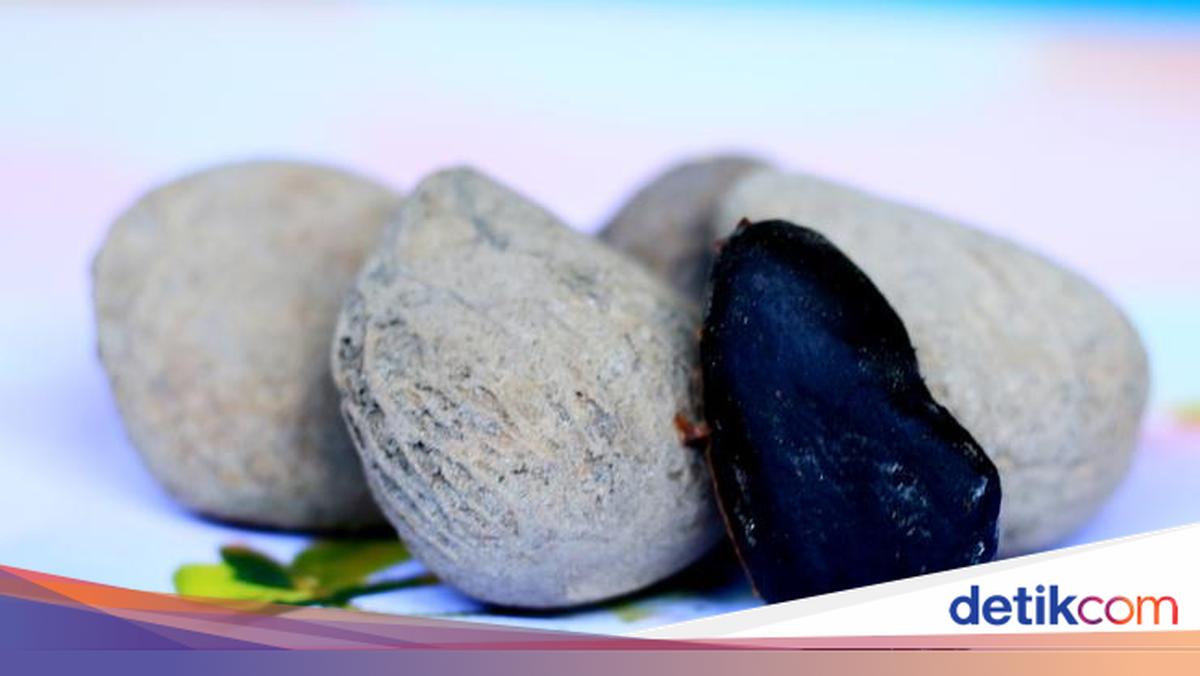
Keluak, or kluwek, is not just an ordinary cooking spice. It is the product of fermentation of the keluak seed (Pangium edule), a tropical plant whose seeds are poisonous when fresh. However, through a long and careful traditional processing, the poisonous seeds are transformed into a food material that is safe to eat, economically valuable, and possesses a distinctive flavour that is irreplaceable.
Keluak and the Heritage of Nusantara Food Biotechnology
Here lies the remarkable aspect of Indonesian traditional food knowledge. The peoples of the Nusantara have long discovered how to convert toxic food ingredients into edible ones through natural biotechnology. This knowledge developed empirically, long before the term ‘food biotechnology’ became widely known.
Scientifically, fresh keluak seeds contain naturally occurring cyanogenic compounds that can generate toxic hydrocyanic acid. Therefore, the seeds cannot be consumed directly.
The processing begins with boiling for several hours to reduce the cyanide content. According to Murtini and Murdianti (2024), the boiling process can reduce cyanide content from 15.18 μg/g (in fresh keluak seeds) to 4.64 μg/g (after boiling).
After that, the seeds are fermented spontaneously for around 40 to 60 days—usually with the help of media such as ash from husk, soil, or charcoal. Ash from husk is more commonly chosen, because it stabilises the fermentation temperature (35°C ± 2°C).
Spontaneous fermentation is highly intriguing from a biotechnology perspective. Without the aid of modern starter cultures, the fermentation process can reduce cyanide content to a safe-to-consume level — namely 0.04 μg/g.
At the same time, spontaneous fermentation also alters the characteristics of the keluak seeds: their colour becomes black, their aroma becomes distinctive, and the flavour develops into the foundation of the rawon delicacy (Andarwulan et al., 1999).
These changes are not merely about flavour. Biochemically, spontaneous fermentation initiates the transformation of metabolites within the keluak seeds. The content of organic acids increases, the pH becomes more acidic, and unwanted microbes can be suppressed. Antioxidant activity also increases after fermentation (Mustaffer et al., 2021).
In other words, the traditional processes in keluak processing, carried out by communities for hundreds of years, indeed have a strong scientific basis.
So, keluak should not be viewed merely as part of traditional cuisine. Keluak deserves to be positioned as a symbol of Indonesia’s capacity to develop food biotechnology based on local knowledge.
From Rawon to the Culinary Economy
The value of keluak does not stop at the scientific aspect. Keluak also has real economic impacts. Upstream, communities earn income from cultivation, processing, and trade of keluak. Downstream, keluak supports culinary businesses, restaurants, and food tourism based on traditional cuisine.
Rawon is the most tangible example. In East Java, there are rawon eateries that have survived since 1942 and have evolved into a franchise network. This shows that traditional food is not just cultural heritage but also an economic asset. As Rawon expands, demand for keluak increases. Local supply chains move, labour is absorbed, and the regional economy comes to life.
That economic potential could actually grow much larger. Indonesia has historically lagged in food diplomacy compared with other Asian countries. Japan has made sushi a symbol of culture as well as a global economic power. South Korea has successfully promoted kimchi worldwide. Indonesia should also be able to do the same with Rawon and keluak.
Imagine Indonesian restaurants serving Rawon in major cities around the world. Demand for keluak would undoubtedly rise. Derivative keluak products could develop into instant spice mixes, functional food ingredients, and export commodities based on Indonesia’s cultural identity.
Now is the Time for Keluak to Become a Symbol of Awakening
May 20, 2026 is commemorated as National Awakening Day (Harkitnas), the 118th. This is the right moment: to make keluak a symbol of Indonesia’s food biotechnology renaissance. Keluak proves that Indonesia does not lack local scientific knowledge. What needs to be enhanced is the courage to develop, study, and elevate it as part of a national food strategy.
It is time for Indonesia not only to be proud of its culinary wealth, but also to understand the scientific and economic value behind it. For behind a bowl of rawon lies, in fact, a grand story about science, culture, and the future of Indonesia’s food biotechnology.
Boimin. Policy Advocate for Food Policy, Research Fellow at PKSPL IPB, completing a PhD in Food Science at the University of Massachusetts Amherst, Administrator of the United States Alumni Association (ALUMNAS) Education 2026-2031. (rdp/imk)