
Harita Nickel Pursues World-Class Mining Standards — Here's Why
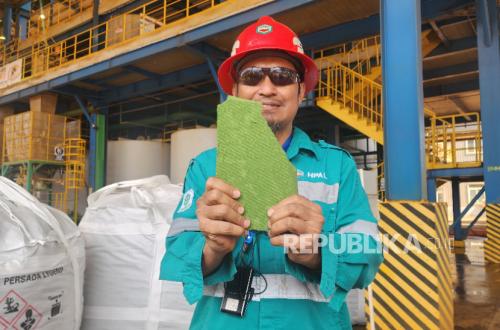
JAKARTA – PT Trimegah Bangun Persada Tbk, better known as Harita Nickel, is awaiting the results of a voluntary audit conducted by the Initiative for Responsible Mining Assurance (IRMA). Earning IRMA certification is no easy feat for a mining company. The body applies the world’s strictest global standards for socially and environmentally responsible mining practices. No mining company in Indonesia has yet to hold an IRMA certificate. This means that if it passes the assessment, Harita could become the first example for mining companies in the country in demonstrating sustainable mining governance in line with IRMA’s high standards.
Joseph Sinaga, Assistant Vice President of Site Corporate Communications at Harita Nickel, explained that the company opened itself to an IRMA audit for several reasons. One of them, he said, is the company’s commitment to continuous improvement.
“We want to realise continuous improvement,” Joseph said at a media editors’ gathering at the Obi Industrial Estate in North Maluku on Tuesday (1/9/2026).
Harita Nickel’s name has indeed risen sharply over the past decade, in step with the rapid development of Indonesia’s nickel industry and its downstream processing. Last year, Harita recorded nickel ore sales of 30.6 million tonnes, up 28.8 per cent compared with 2024. Then, supported by the development of smelters now in operation, Harita recorded ferronickel sales of 188,000 tonnes in 2025, up 49.3 per cent year on year. Ferronickel is a key raw material for the stainless steel industry.
Then, in line with demand from the battery and electric vehicle industries, the company recorded sales of 90,000 tonnes of Mixed Hydroxide Precipitate (MHP), up 43 per cent, and 39,000 tonnes of nickel sulphate, up 3.2 per cent.
From this overall performance, the company booked revenue of Rp 29.63 trillion in 2025, with a net profit of Rp 10.97 trillion, up 42 per cent year on year.
Harita’s solid performance has not come without consequences. As production has risen, waste volumes have grown as well. For instance, hazardous and toxic (B3) waste generation from Harita’s operations reached 40 million tonnes, up 57 per cent from the previous year. This was largely driven by rising volumes of wet tailings as Harita’s HPAL smelter reached full operation.
Beyond that, Harita still faces various challenges across environmental, social and governance (ESG) issues. This is because its operational area sits side by side with residential areas, particularly Kawasi village on Obi Island, as well as coastal and marine environments.
Joseph said the breadth of these ESG aspects led Harita to seek a benchmark for best practices. This is what prompted the company to open itself to an IRMA audit.
The second factor, Joseph said, relates to market access. Harita Nickel is an integrated nickel mining and processing company that is currently growing. At present, Harita and its business partners operate two HPAL refining facilities with six production lines. These smelters process limonite ore into MHP, nickel sulphate and electrolytic cobalt used in electric vehicle batteries.
Battery and electric vehicle producers in the West, particularly in Europe, apply high standards regarding the status of the nickel they use as raw material. Harita therefore judged it necessary to meet those standards with a relevant certification.
“Because their standards are high, we meet them with the IRMA standard,” Joseph said.
Source: jawawa.id (https://jawawa.id/newsitem/harita-nickel-pursues-world-class-mining-standards-heres-why-1788853945)
Originally published by Republika (https://esgnow.republika.co.id/berita/tl16vr490/harita-nickel-kejar-standar-tambang-level-dunia-ini-alasannya), translated from Indonesian