
Harita Nickel Outlines Sustainability Strategy and Green Initiatives at COP31
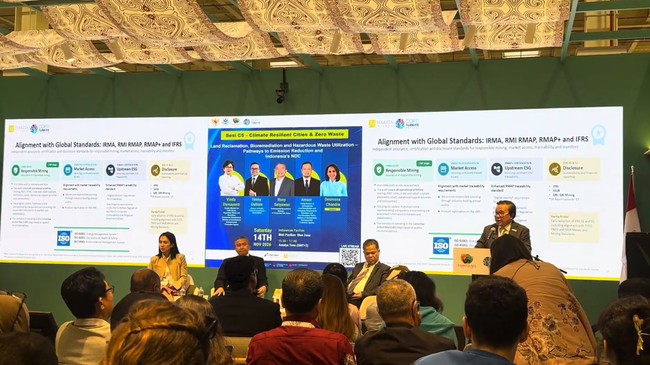
Jakarta, CNBC Indonesia – As global scrutiny grows over how critical minerals are produced, PT Trimegah Bangun Persada Tbk (NCKL), or Harita Nickel, brought the story of nickel downstreaming on Obi Island, North Maluku, to the 31st UN Climate Change Conference (COP31) in Antalya, Türkiye. At the Indonesia Pavilion, the company outlined its approaches to land management, waste, emissions and governance across its operations.
Indonesia is the world’s largest nickel producer, and the industry’s management of its environmental and social impacts is increasingly under scrutiny from buyers and investors. Harita Nickel, which has operated on Obi Island since 2010, says its nickel mining and processing follow Environmental, Social and Governance (ESG) principles. The company employs more than 26,000 people; over 85% are Indonesian citizens, and 45% come from North Maluku.
“Global attention to how minerals are produced continues to grow. For us, that means land, waste and emissions must be managed continuously and reported transparently,” said Tonny Gultom, Harita Nickel’s Director of Health, Safety and Environment.
From smelting to waste
At its smelters, Harita Nickel uses Rotary Kiln Electric Furnace (RKEF) technology. For refining, it uses High-Pressure Acid Leach (HPAL). HPAL waste is managed using the dry-stack tailings method.
Nickel slag from smelting is reused to make bricks, roads and drainage channels, and as a growing medium for rehabilitation. The company reports that more than 958,000 tonnes of slag have been reused to date.
From land rehabilitation to energy: how Harita Nickel manages its impacts
About 2,889 hectares of land have been rehabilitated and replanted, including former mining areas, watersheds and mangrove zones. The company’s nursery produces more than 300,000 seedlings a year.
For biodiversity, Harita Nickel works with Environmental Resources Management (ERM), guided by IFC Performance Standard 6 and IRMA standards. The company has also prepared a Cumulative Impact Assessment in line with IRMA standards and IFC Performance Standards 4, 5 and 6. The assessment covers water, air, marine and land environments, climate, ecosystem services, socio-economic conditions and local culture.
On energy, Harita Nickel says it is reducing emissions through waste heat recovery, coal gasification and B40 biodiesel. It also operates a 40 MWp solar power plant and a 50 MW steam power plant that uses waste heat from the production process.
Independent audit under way
On governance, Harita Nickel is undergoing an audit by the Initiative for Responsible Mining Assurance (IRMA). SCS Global Services conducted the field audit in April 2025, and the company received a draft audit report in October 2025. Harita Nickel has opted to use the optional corrective action period (CAP) before the results are published.
Harita Nickel says its 2024 landscape-level nature risk assessment (LNRA), conducted with reference to the Taskforce on Nature-related Disclosures (TNFD) framework, has a broader scope than IRMA because it assesses the whole of Obi Island. The company says the two processes complement one another.
Agus P. Sari, CEO of The Landscape Group, said one of Harita Nickel’s preparations for the IRMA assessment was the LNRA on Obi Island. Its findings support three aspects of the IRMA standard: environmental and social impact assessment, biodiversity protection and water management.
“On Obi Island, what happens upstream can affect rivers all the way to the coast. By assessing the entire island, Harita can see how the impacts of different activities are interconnected, including those beyond its concession. That is where the LNRA and IRMA complement one another. Harita has a basis for identifying priority risks, and through IRMA the company opens up its management practices to independent assessment,” Agus said.
Under the Responsible Minerals Assurance Process (RMAP), the company says audits of PT Halmahera Persada Lygend (HPL) and PT Obi Nickel Cobalt (ONC) have been completed. The company is also undergoing an RMAP+ audit. Harita Nickel has additionally obtained several certifications and management systems, including ISO standards covering the environment, occupational safety and energy.
The sustainability of the nickel industry continues to depend on ongoing oversight, data transparency and independent assessment. The final IRMA report will be one measure the public can examine.
Source: jawawa.id (https://jawawa.id/newsitem/harita-nickel-outlines-sustainability-strategy-and-green-initiatives-at-cop31-1795665058)
Originally published by CNBC Indonesia (https://www.cnbcindonesia.com/news/20261126095432-4-788605/harita-nickel-ungkap-strategi-keberlanjutan-aksi-hijau-di-cop31), translated from Indonesian