
Hari Santri 2026: Deputy Religious Affairs Minister Says Indonesian Islamic Boarding Schools Must Go Global
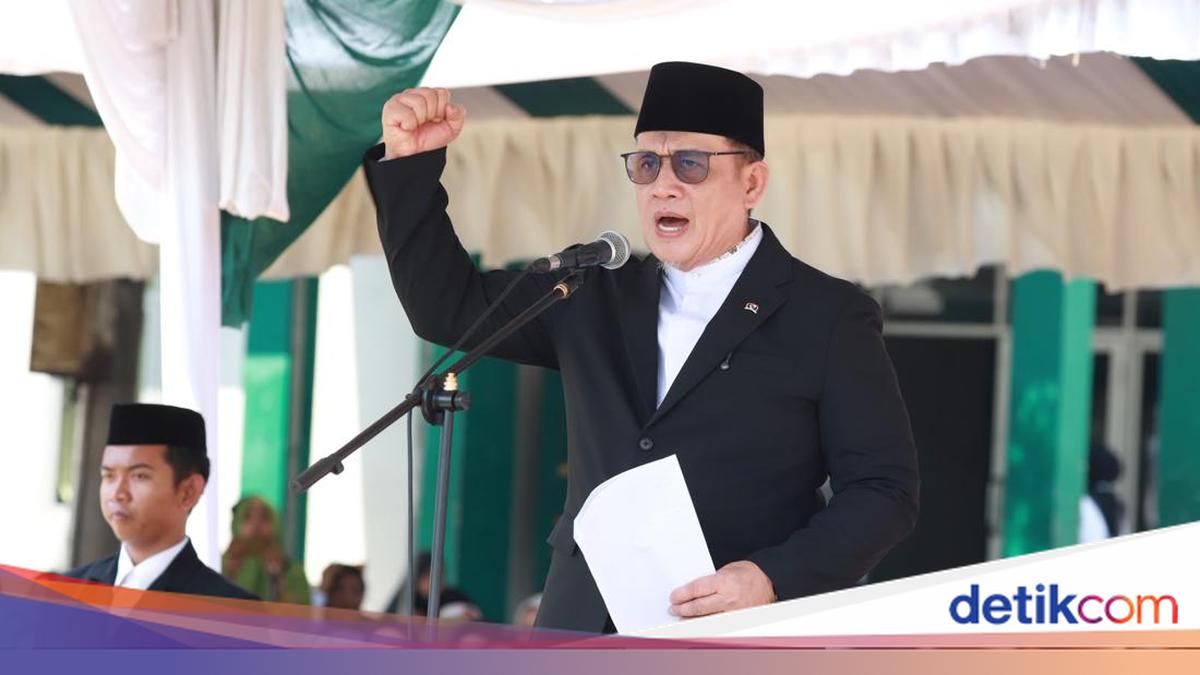
Deputy Religious Affairs Minister Romo Muhammad Syafii is optimistic about the development of pesantren in Indonesia. He said he was confident they would broaden their work, role and contribution not only nationally but also globally.
He made the remarks in a speech at a Santri Day commemoration ceremony at Darul Maarif Islamic boarding school in Kaplongan, Indramayu, West Java. Tens of thousands of students attended, filling the grounds.
He said that while 81 years ago santri strengthened the country by taking up arms to overthrow the colonisers, today they must strengthen it through mastery of science, technological progress, innovation and deep moral values. Times may change and challenges may shift, but the flame of santri devotion to Indonesia must never go out, even for a moment.
“Indonesia’s pesantren must go global,” the deputy minister said in Indramayu on Thursday (22 October 2026).
He said his optimism was based on the growing recognition and affirmation of pesantren, as well as the state’s institutional commitment to them and their students. Seven years after Law No. 18 of 2019 on Pesantren was enacted, a new chapter was written under President Prabowo Subianto with the issuance of Presidential Regulation No. 18 of 2026 on the establishment of the Directorate General of Pesantren.
“Pesantren now have full scope for support to grow in strength and lead civilisation,” he said.
Regulations set out three functions for pesantren. First, as institutions for religious education (tafaqquh fid-din), they must be the safest, most comfortable and welcoming places for students to learn.
“We have launched the RANA programme, meaning ‘Child-Friendly and Comfortable Spaces for Children’. This applies at home, in educational settings, public spaces and digital spaces, and especially in pesantren,” the deputy minister said.
The state is also supporting students’ physical growth and health through the Nutritious Meals programme, he said, adding that the President was giving it close attention.
“I was specifically called in my capacity as deputy minister to ensure that no pesantren in the country has yet to benefit from these free nutritious meals,” he said.
Second, as institutions for religious outreach, pesantren will continue to receive state support to produce voices that enlighten their era. Third, as institutions for community empowerment, the state is making it easier for santri with the necessary skills to start their own businesses.
“State-owned banks have declared their commitment to providing business capital loans, guaranteed by the kyai at pesantren,” he said.
“Pesantren are also expected to produce entrepreneurs in agriculture, livestock, maritime industries and other fields,” he added.
He said he hoped conditions in pesantren would improve, enabling them to produce graduates needed for Indonesia’s development and the development of the Muslim community, and to become beacons of guidance for Muslims around the world.
Those attending included Maman Imanulhaq, a member of Commission VIII; West Java Religious Affairs Office head Dudung Abdurrahman; Religious Affairs Minister’s Special Staff member Nona Gayatri; Director of Muadalah and Formal Diniyah Education Mastuki; and several West Java community figures and pesantren leaders.