
Harganas Warning: Children Need a Father Who Is Present, Not Just Coming Home
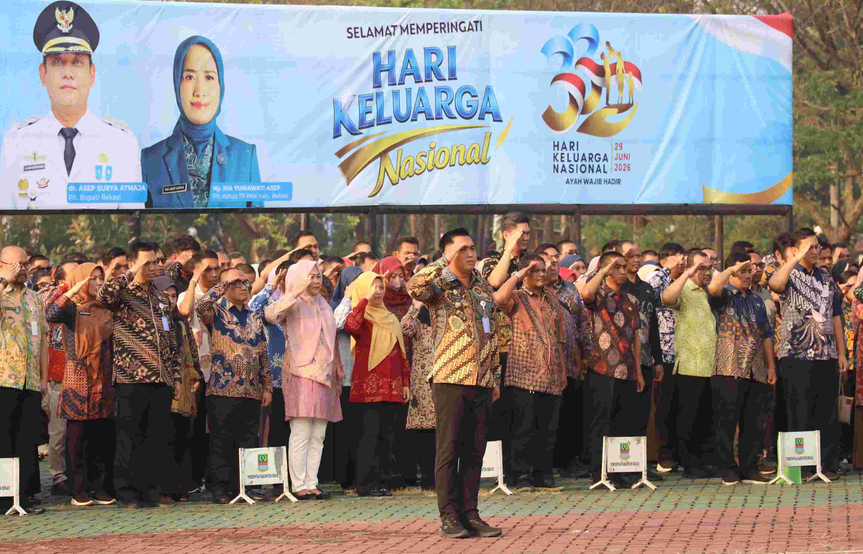
The scene in many households often reveals a stark imbalance of roles. A mother is frequently trapped in a non-stop routine, from preparing breakfast and taking the children to school to assisting with their studies and ensuring they rest on time. On the other hand, many fathers feel their duties are finished after returning from work, choosing to immerse themselves behind a mobile phone screen or simply rest without meaningful interaction with their children. Yet, a father’s presence in the family ecosystem holds irreplaceable value. A father is not merely a breadwinner or an authoritarian figure at home. For a child, a father is a conversation partner, a place to discuss and seek opinions, and a primary window that helps them understand the outside world with a sense of security. This profound message regarding the repositioning of the father’s role was the main highlight of the 33rd National Family Day (Harganas) commemoration at the Bekasi Regency level, held on Monday (29/6/2026). In the mandate of the Minister of Population and Family Development, read by Bekasi Regency Regional Secretary Endin Samsudin, it was emphasised that childcare is a collective responsibility, not a sole burden for the mother. During the commemoration, Endin Samsudin invited fathers to be more caring and actively involved in family dynamics. This involvement is not just about being physically present at home, but being emotionally and communicatively present. ‘This 33rd Harganas invites fathers to also care for the family, especially our children. Do not let these children become solely the mother’s burden,’ Endin said after the commemoration ceremony. According to him, simple moments at home must be optimally utilised to build closeness. The dining table, for instance, should not merely be a place to eat in silence. It is a discussion space where children must be invited to talk, their grievances heard, and given full attention without gadget distractions. One of the biggest challenges for modern families today is the rapid flow of digital information. Endin stated that technology is like a double-edged sword for a child’s growth and development. If not supervised, excessive gadget use can erode social interaction skills and disrupt learning concentration. The Bekasi Regency Government, through the Harganas momentum, reminded parents to have full control over their children’s digital activities. Limiting gadget usage time is a crucial step to ensure children maintain a balance between the virtual world and real activities at home. ‘They must be limited on when to play, when to study, and so on with activities at home,’ Endin stressed. Besides technological supervision, character building for the younger generation is another crucial point. Amidst the onslaught of external values entering via the internet, the family must become the primary filter through the instillation of religious and moral values from an early age. Although general knowledge is very important for a child’s future career, Endin reminded that a religious foundation is the moral compass that will keep them on the right path. This is where the family’s function as the first school (madrasatul ula) is tested for its effectiveness.