
Hardiknas 2026: Deputy Interior Minister Highlights 3 Key Foundations for Quality Education
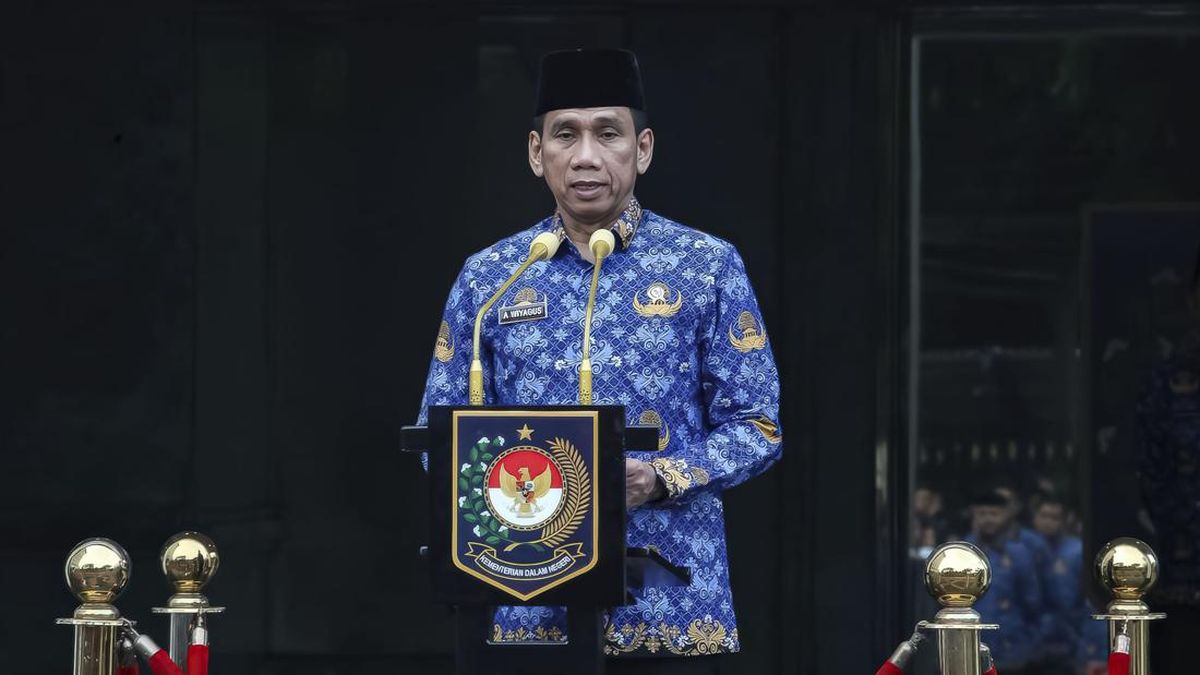
The commemoration of National Education Day (Hardiknas) 2026 serves as a momentum to reaffirm the direction of national education policy. Deputy Interior Minister Akhmad Wiyagus stressed the importance of three main foundations: a change in mindset, mentality, and mission orientation in realising quality education.
“Without these three, all policies will only stop as programmes and formalities merely marked by quantitative achievements,” said Wiyagus while reading the message from the Minister of Basic and Secondary Education (Mendikdasmen) as the Inspecting Officer at the Hardiknas 2026 commemoration at Plaza Building A, Central Office of the Ministry of Home Affairs (Kemendagri), Jakarta, on Monday (4/5).
In the message, he explained that over the past 18 months, the Ministry of Basic and Secondary Education (Kemendikdasmen) has designed strategic foundations titled “quality education for all” through five main policies.
These policies include revitalisation and digitalisation in more than 288,000 educational units; improving qualifications and welfare for 150,000 scholarship-recipient teachers in 2026; strengthening character through the Seven Habits of Great Indonesian Children programme and the ASRI (Safe, Healthy, Clean, Beautiful) school environment.
Additionally, quality measurement through the Academic Ability Test and the literacy-numeracy movement; as well as expanding access to inclusive services for children with special needs.
Furthermore, he asserted that the implementation of the Deep Learning approach as a priority programme can only be realised if the entire education ecosystem moves synergistically.
This ecosystem includes schools, families, communities, and media, which are expected to collaborate in the same spirit.
In line with that, Wiyagus also invited all stakeholders to revive the spirit of national education as pioneered by Ki Hajar Dewantara.
He emphasised that education is fundamentally a process of humanising humanity carried out with sincerity and full of compassion.
At the end of the message, Wiyagus affirmed that the government cannot work alone. Support from the community, business world, international partners, and regional governments is an important factor in driving the success of national education policies.
In that context, the role of Kemendagri is crucial in synergising relations between the central and regional governments.
“Let us strengthen cooperation to realise quality education for all, towards an intelligent, advanced, and dignified Indonesia,” he concluded.