
Hanura's Breakthrough for Its Legislative Candidates in the 2029 Election: Electability and Eligibility to Be Monitored
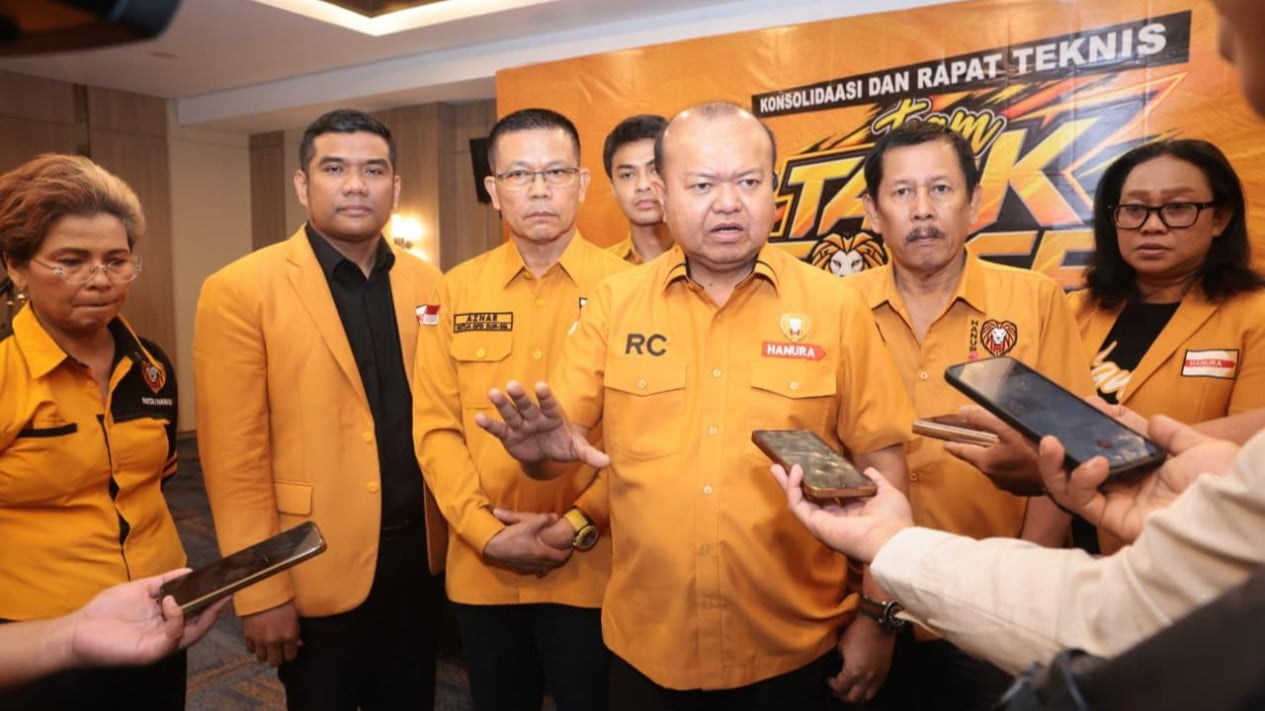
The Hanura Party is preparing a survey-based evaluation mechanism for legislative candidates (caleg) to face the 2029 Election. The Chairman of the Task Force Team of the Hanura Central Executive Board (DPP), Patrice Rio Capella, said that electability and the chances of candidates being elected will be monitored periodically.
“After this consolidation is 100 percent complete, we will measure our strength. We will survey the level of party awareness and the positioning of the party’s electability,” said Rio during the Consolidation and Technical Meeting of the Task Force Team at the DPC level throughout South Sumatra Province at the Aston Hotel, Palembang, on Wednesday, 12 August 2026.
The survey results will then be broken down to the electoral district (dapil) level. Hanura will map areas that have the potential to win seats, while also measuring the strength of each prospective legislative candidate.
Rio gave an example: if a candidate is in ninth place in the survey results, Hanura will provide a programme and a period of about six months to improve their electability. After that, the candidate will be surveyed again to see the development of their electability.
“Work for six months, and we survey again. Has the Chairman risen or not?” said Rio, using the example of the Chairman of the Hanura South Sumatra Regional Executive Board (DPD), Ahmad Al Azhar, running for the Indonesian House of Representatives (DPR RI).
According to Rio, this mechanism will also serve as the basis for providing rewards and punishments to cadres who are projected to run in the election.
“If the Chairman rises, this is seventh place. However, if he remains at ninth and the survey shows him dropping to tenth, we will say, ‘Chairman, do not run for the DPR RI,’” explained the Deputy Chairman of Hanura.
Rio emphasised that Hanura’s preparations are not merely about building the party structure, but also about ensuring that every political machine has a measurable electoral target. “We will start the survey next year, after the management structure down to the sub-district level is 100 percent complete, followed by 83,000 villages,” concluded Rio.