
Hanura Highlights Urgency of Establishing Election Supervisory Board: Ethical Regulator for KPU to DKPP
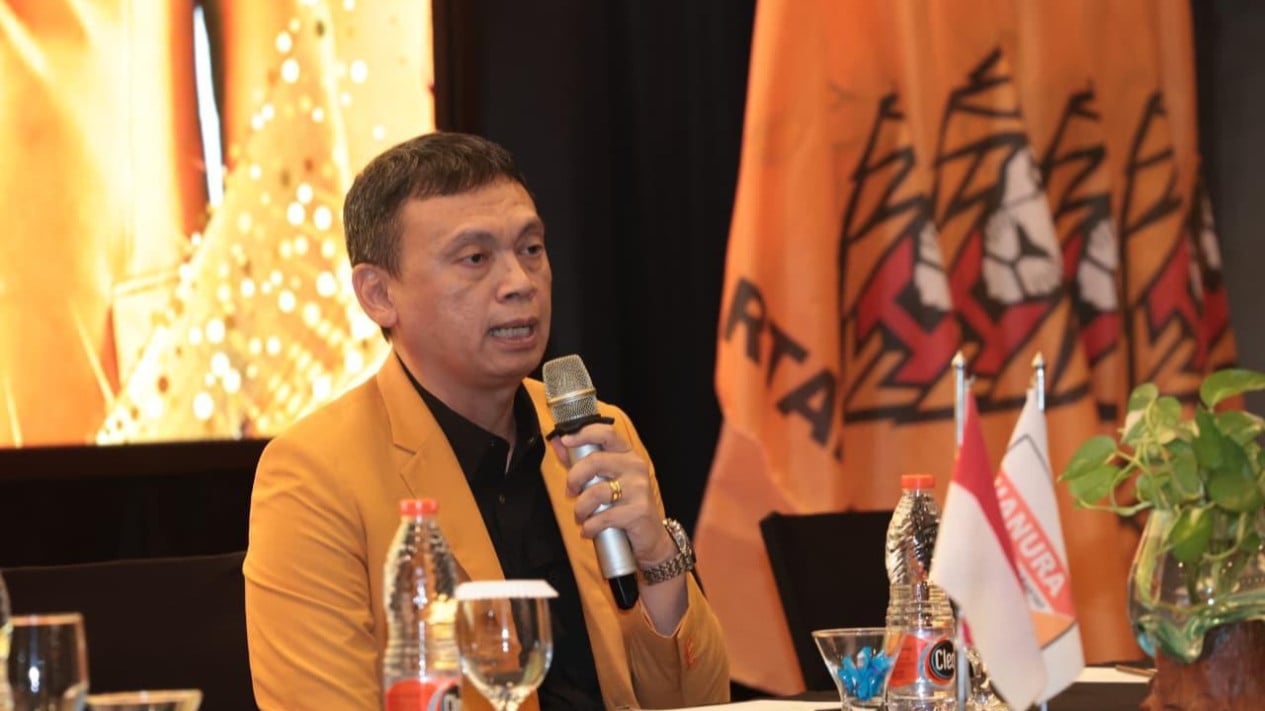
The Deputy Secretary-General of the Hanura Party, Hanurani Prajanto, has expressed the importance of conducting national, stable, and independent elections.
Prajanto explained that the legislature designed the election institutional architecture to be distributed across three pillars: the General Elections Commission (KPU) as the technical implementer, the Election Supervisory Agency (Bawaslu) as the stage supervisor, and the Election Organisers Ethics Council (DKPP) as the enforcer of the code of ethics, based on Law Number 7 of 2017 concerning General Elections.
However, in practice, fundamental questions have arisen regarding the corporatism and independence of these election organising institutions.
“When the KPU, Bawaslu, or even the DKPP council commits ethical deviations, internal mechanisms often become trapped in conflicts of interest or veiled impunity,” said Prajanto in a written statement on Friday (2/10/2026).
“The idea of establishing an Election Supervisory Board, or Dewas Pemilu, as a meta-regulator standing above the KPU, Bawaslu, and DKPP—with a tripartite composition consisting of the government, academics, and election-participating political parties—has become a legal necessity to uphold the principle of checks and balances,” he added.
He explained that the laws and regulations, as well as the election governance in Indonesia, are regulated through layered legal instruments. Article 22E of the 1945 Constitution affirms the principles of democratic, direct, general, free, secret, honest, and fair elections (luber jurdil).
Furthermore, Law No. 7 of 2017 on Elections regulates the position, duties, authority, and obligations of the KPU, Bawaslu, and DKPP (specifically Article 155 paragraph (2) regarding the DKPP’s authority to examine ethical complaints). Additionally, DKPP Regulation Number 3 of 2017 provides guidelines for the ethical proceedings of election organisers (which has been amended several times, most recently through DKPP Regulations).
“However, the current systemic weakness lies in the absence of an independent supervisory organ that comprehensively controls the ethical and administrative performance of these three pillars of organisers. The presence of Dewas Pemilu would fill this legal gap,” he said.
Prajanto stated that the urgent need for a Dewas Pemilu to oversee the KPU, Bawaslu, and DKPP can be evidenced by various precedents of ethical sanctions in Indonesia.
“When members of the KPU or Bawaslu are involved in ethical cases, the ethical trial mechanism is handed entirely to the DKPP. However, what if the integrity of the DKPP commissioners themselves is questioned, or if high-level political pressure is exerted on the DKPP council?” he remarked.