
Hantavirus Causes Global Concern: Is There a Vaccine Available?
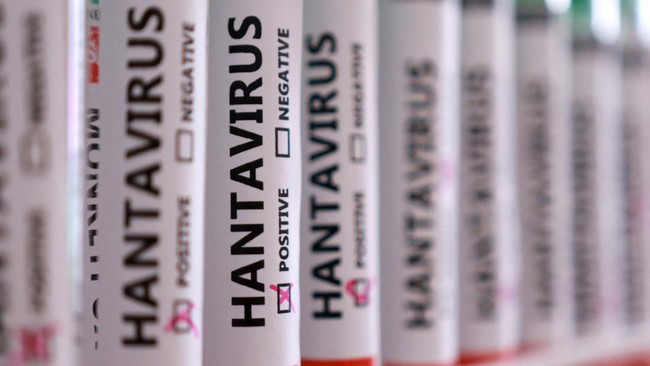
Hantavirus Causes Global Concern: Is There a Vaccine Available?
Jakarta, CNBC Indonesia - Cases of Hantavirus infection have become a global concern. The virus is known to be dangerous because it causes severe respiratory problems that can lead to death.
The virus is also transmitted mainly through rodents such as mice. Transmission to humans can occur when a person inhales particles from the urine, saliva, or droppings of mice exposed to the virus. But is there already a vaccine for this disease?
There is currently no cure or vaccine for this virus, but the British government has tasked researchers with developing the world’s first hantavirus vaccine.
The outbreak that affected passengers on the Dutch-flagged cruise ship MV Hondius was caused by the Andes virus, one of the strains in the broader group of hantaviruses.
Researchers at the University of Bath in England have been working on a new mRNA vaccine for another strain of hantavirus called Hantaan, before the outbreak occurred. The research team said that this vaccine is new, and laboratory tests on animals have shown promising results.
“This is a completely new antigen, and it shows very good immunogenicity against hantaan disease and we hope this will be a good antigen to use in producing hantaan virus vaccines in the future,” said a chemist at the University of Bath and CEO of EnsiliTech, Asel Sartbaeva, quoting Euronews, Saturday (16/5/2026).
The question now is whether the same vaccine technology can eventually help fight the Andes strain that broke out on the cruise ship?
“Currently we don’t know if the antigen we have developed will be useful against the (Andes) strain. We hope so, but clearly, until we actually test it against the Andes virus, we won’t know,” said Sartbaeva.
In 2024, the British government awarded a contract to the research team to develop the world’s first thermally stable mRNA vaccine to fight the hantaan virus. This vaccine uses new technology called ensilication, which allows the vaccine to be transported at higher than usual temperatures. This could be significant for mRNA vaccines that currently need to be stored at freezing temperatures.
“This is a technology that can be applied to many different vaccines, and in this case, we are applying it to this new hantaan virus vaccine,” said Sartbaeva.
“We have successfully moved it from a -70 degree Celsius freezer to a refrigerator with a temperature of 2 to 8 degrees Celsius, which makes it much easier to transport. And our hope is of course to make it thermally stable for room temperature transport in the future,” she added.
As of Tuesday (12/5/2026), the WHO has identified 11 cases, nine of which have been confirmed as the virus, and three have died. All were passengers on the ship.