
Hanoi’s Roar: The Secrets Behind Vietnam Becoming Asia’s New Tiger
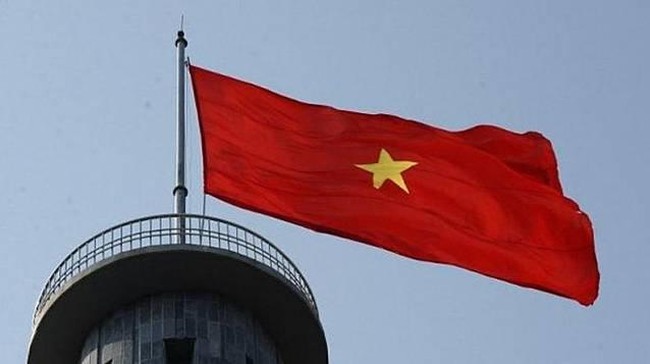
Hanoi’s Roar: The Secrets Behind Vietnam Becoming Asia’s New Tiger
Around a decade ago, on 7 September 2016, Forbes published a report entitled “Vietnam Poised To Be Asia’s Next Economic Tiger”. At the time, Vietnam’s annual economic growth was about 6.68 per cent, far higher than Indonesia’s growth of just 4.94 per cent.
Vietnam’s main asset in becoming a “new Asian tiger” was its population of about 90 million, most of whom were young. The median age was around 30.7, and the population generally had a good education and strong skills.
More than a decade ago, according to the Forbes report of 7 September 2016, Vietnam’s government spending on education amounted to around 6.3 per cent of gross domestic product (GDP). World Bank data, drawing on UNESCO Institute for Statistics figures, put education spending at 4.4 per cent of Vietnam’s GDP in 2016. This was far higher than Indonesia’s education budget, which was just 3.3 per cent of GDP that year (UNESCO–World Bank, 2016).
High education spending has helped Vietnamese 15-year-olds regularly outperform their counterparts in the United States and the United Kingdom in international rankings for mathematics and science.
This has strengthened the capacity and skills of Vietnam’s workforce to carry out highly complex tasks. The availability of skilled, knowledgeable workers has provided an initial foundation for adopting the latest manufacturing technologies brought into Vietnam through foreign direct investment (FDI).
Vietnam’s economic “miracle” brings to mind the term “Asian Tigers”, used to describe the economic transformation of South Korea, Taiwan, Singapore and Hong Kong in previous decades.
The term “Asian Tiger” is applied to an economy that sustains high growth for a decade or more, makes rapid progress in manufacturing, invests in technological development and has strong innovative capacity to support industrial advancement.
It also refers to economies with high-quality human resources and an educated, skilled workforce accounting for more than half of the labour force.
The availability of a large pool of educated and skilled workers has helped Vietnam’s Global Innovation Index (GII) ranking rise to 43rd in 2026, well ahead of Indonesia, which ranked 55th globally.
A high GII score reflects a country’s ability to transform its economy into an innovation-based economy, driven by research and development (R&D).
Vietnam’s advantage over Indonesia in the GII lies in its ability to build strong links between domestic and international innovation capacity.
It does this through global supply chains, trade in high-technology goods, digitalisation, intellectual property and the development of start-ups.
According to the World Intellectual Property Organization (WIPO), Vietnam’s economy is better placed than Indonesia’s to enter the GII’s top 40.
This is supported by a number of indicators, including broad R&D capacity, strong business R&D, close ties between science and industry, and a substantial ability to generate new knowledge domestically.
As a result, Vietnam’s economic growth over the past decade has consistently outpaced Indonesia’s, at around 6–7 per cent. Indonesia, meanwhile, has been caught in a “5 per cent growth trap”.
Vietnam’s economic boom continued into the first quarter of 2026, when the economy grew 8.15 per cent year on year. Growth then rose to 8.81 per cent in the second quarter and accelerated to 9.95 per cent in the third quarter of 2026.
Manufacturing was the main contributor to economic growth, expanding by 12.50 per cent and accounting for 51.57 per cent of GDP. Services grew by 9.54 per cent and contributed 43.29 per cent of GDP. Agriculture grew at the slowest pace, 4.21 per cent, and accounted for just 5.14 per cent of GDP.
On the expenditure side, exports and imports recorded the highest growth: exports rose by 23.27 per cent and imports by about 28.75 per cent. Investment grew by 21.39 per cent, while household consumption increased by 8.96 per cent.
In the first three quarters of 2026, Vietnam’s cumulative economic growth reached about 9.01 per cent. The government’s target is 10 per cent growth for 2026 (Trading Economics, 2026), supported by substantial public spending on infrastructure development.
What can be learnt from Vietnam’s success in becoming “Asia’s New Tiger”? First, it has managed to improve economic efficiency. This is reflected in its Incremental Capital Output Ratio (ICOR), which fell from more than 6.5 in 2016 to 5.85 in 2026. The aim is to bring it down to between 3.58 and 4.6 by 2030.
Second, Vietnam’s success offers a lesson in developing a large pool of highly educated and skilled workers to drive technological innovation. Around 87.26 per cent of Vietnam’s labour force has completed higher education or an equivalent level of education (World Bank, 2026).
Highly educated professionals are a key factor in adopting the latest manufacturing technologies. This has helped Vietnam achieve a better Economic Complexity Index (ECI) ranking than Indonesia: Vietnam is 45th globally, compared with Indonesia at 69th.
Third, the Indonesian government should learn from Vietnam’s development of integrated industrial estates, which now cover two million hectares. Indonesia, by contrast, has only 24,000 hectares of integrated industrial estates.
Fourth, spending on R&D by both the government and private sector should be increased. The target is to raise Indonesia’s R&D spending from around 0.30 per cent of GDP to 1.0 per cent by 2030.
Fifth, stronger links should be built between universities as centres of knowledge and R&D and the national manufacturing industry. These links would accelerate the creation of new innovations and improve efficiency, boosting national economic productivity.
Sixth, to speed up the development of integrated industrial estates, the Indonesian government could adopt an economic agglomeration approach based on provinces and regencies or cities across the country.
The aim would be to match Vietnam’s development of integrated industrial estates by expanding their area to around one million hectares within five years, by 2030, and to two million hectares within 10 years, by 2035.
Seventh, Indonesia should raise its PISA scores to match Vietnam’s: in science, from 389 to 457; in mathematics, from 364 to 443; in reading literacy, from 365 to 392; and in computational problem-solving, from 427 to 461 over the next five years.
Eighth, joining the group of “Asia’s New Tigers” begins with expanding the share of highly educated and skilled workers until they make up more than half of the labour force.
To achieve this, the government could overhaul education policy, focusing on free education from secondary school through to higher education or its equivalent, with particular emphasis on science, technology, engineering and mathematics (STEM).
Ultimately, Vietnam’s status as “Asia’s New Tiger” offers valuable lessons for neighbouring countries: major leaps begin with strengthening the fundamentals, especially education and STEM. The choice is now ours: will we remain spectators on the sidelines, or take bold steps to catch up with the tiger’s roar?
Source: jawawa.id (https://jawawa.id/newsitem/hanois-roar-the-secrets-behind-vietnam-becoming-asias-new-tiger-1791535842)
Originally published by CNBC Indonesia (https://www.cnbcindonesia.com/opini/20261009144755-14-774792/auman-dari-hanoi-rahasia-vietnam-menjadi-the-new-tiger-of-asia), translated from Indonesian