
Hankook strengthens rubber quality through sustainable programme for farmers
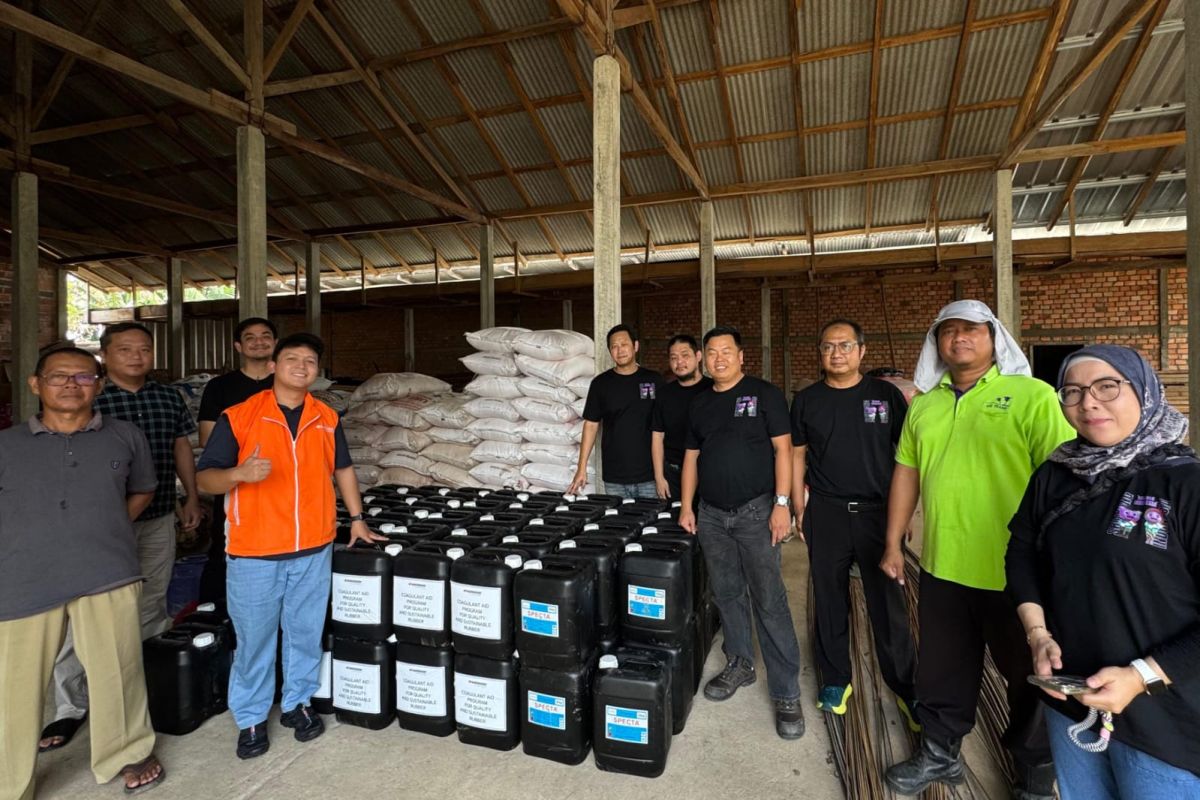
Jakarta (ANTARA) - The tyre company based in Cikarang, West Java, PT Hankook Tire Indonesia, is strengthening its commitment to sustainable practices by distributing aid materials and training to rubber farmers in South Sumatra to improve the quality and consistency of natural rubber supply from upstream sources.
President Director of PT Hankook Tire Indonesia, Jung Jinkyun, stated that the programme is aimed at addressing challenges in the upstream rubber industry sector, particularly amid rising production costs.
“We understand that quality tyres start with rubber processed through proper coagulation, but the use of certain coagulants still poses risks to health and the environment,” said Jung Jinkyun in a written statement on Monday.
Through the initiative themed “Coagulant Aid Programme for Quality and Sustainable Rubber”, the company is distributing rubber coagulant materials consisting of 2,500 kg of formic acid, 1,000 kg of NPK fertiliser, and 200 tapping knives to farmers.
In line with these conditions, this programme is part of Hankook’s efforts to strengthen rubber quality from upstream. Through this initiative, the company is also encouraging more optimal production processes, while maintaining the quality of raw materials used in Hankook tyre products.
“Therefore, through today’s formic acid donation, we are introducing an environmentally friendly and health-safe thickening material solution for farmers. And ensuring a more standardised, efficient processing process, the quality of raw materials can be more guaranteed,” said Jung Jinkyun.
The education aims to enhance farmers’ understanding in supporting superior and sustainable harvest quality, and to ensure the proper use of fertiliser and formic acid according to recommended dosages, to prevent potential environmental pollution while optimising production cost efficiency.
Jung Jinkyun explained that formic acid plays an important role in the rubber processing process, particularly in helping to thicken latex to produce more consistent raw material quality that meets tyre industry standards.
Meanwhile, Chaikrit Rattana, Director of PT Sri Trang Lingga Indonesia, Hankook’s strategic partner in distributing technical specification natural rubber raw materials from local farmers, said that maintaining rubber quality requires a consistent process from the start.
“Therefore, this activity is expected to have a positive impact, not only in improving rubber processing quality but also in strengthening relationships between farmers and industry players,” he said.
Since its first launch in 2022, Hankook has consistently implemented and expanded this programme to various regions as part of its commitment to increasing rubber farmer productivity while strengthening responsible procurement practices in the natural rubber sector.
In addition, since 2018, Hankook, which is registered as a member of the “Global Platform for Sustainable Natural Rubber” (GPSNR), has implemented sustainable natural rubber policies to uphold transparency, protect human rights, and preserve the environment, including efforts to prevent deforestation and protect peatlands.
Looking ahead, Hankook Tire Indonesia plans to make this programme an annual sustainable initiative, with a focus on strengthening farmer education, improving raw material quality, and implementing more environmentally friendly and standardised rubber processing practices.