
Hangzhou Chamber of Commerce Expands Indonesia–China Business Partnerships
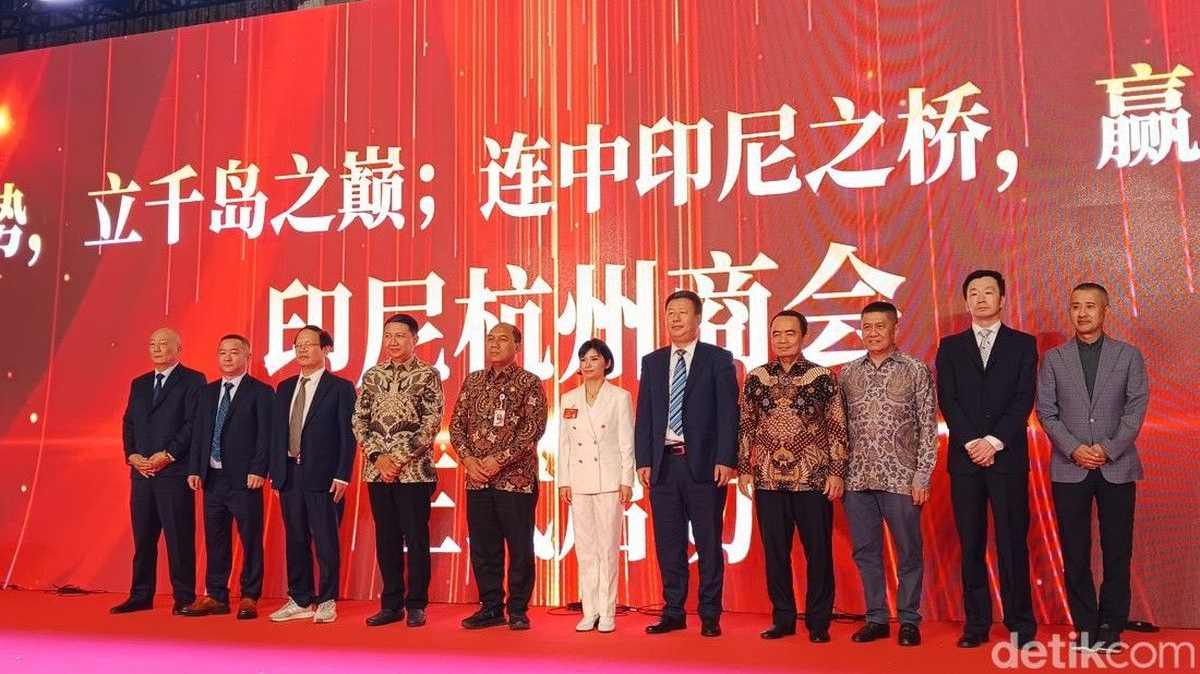
Economic ties between Indonesia and China are entering a new phase with the inauguration of the Hangzhou Chamber of Commerce in Indonesia on Thursday (5 November 2026). The organisation is intended to expand investment, open up market access and accelerate technology exchange between the two countries, Detik Finance reported.
The inauguration coincided with a business gathering bringing together entrepreneurs from Hangzhou, China, and several key Indonesian stakeholders. The event was initiated by PT Halimun Reka Mandiri.
The Indonesian company focuses on developing business partnerships with China. Its areas of activity include technology-based industries, defence, manufacturing, trade, investment, shipping, mining, and hospitality, restaurant and café businesses.
The Hangzhou Chamber’s role in business cooperation
Ye Daifeng, president of the Hangzhou Entrepreneurs Association in Indonesia, said the organisation was established to connect Hangzhou’s industrial and entrepreneurial capabilities with economic opportunities in Indonesia.
Ye said Jakarta held a strategic position as a gateway for investment in Indonesia, while Hangzhou was known as one of China’s centres for technological development, innovation and advanced industry.
Speaking at the Indonesia–Hangzhou Chambers of Commerce business gathering in Central Jakarta on Thursday (5 November 2026), Ye stressed that compliance with legal requirements was the foundation of long-term business relations.
“Hangzhou is a city with an extraordinary spirit of innovation. We want to connect Hangzhou’s strengths in technology, industry and entrepreneurship with Indonesia’s resource potential and market. Compliance with Indonesian law is not an obstacle, but the strongest foundation for sustainable business,” Ye said.
The organisation is intended to be more than a symbol of trade relations. The Hangzhou Chamber of Commerce in Indonesia is expected to serve as an official link for companies and businesspeople from both countries.
One intended benefit is improved market access for Indonesian entrepreneurs. Through the network, national companies are expected to find it easier to establish partnerships and expand their activities in Hangzhou and southern China.
Alongside trade access, the organisation is also intended to facilitate technology transfer. Knowledge exchange, the use of advanced technology and the development of local human resources are part of the cooperation agenda.
Investment is another focus. Productive capital investment across industrial sectors is expected to stimulate economic activity and create new jobs in both Indonesia and China.
Facilitating permits is also included in the scope of cooperation. Central and regional governments are said to be ready to support investment procedures and transparent, fair business partnerships, including exit permits for experts who require them.
Ye said the success of the partnership would not be measured solely by the establishment of business ties, but also by the tangible benefits they generated for both countries.
“Our hope is that Hangzhou’s entrepreneurial spirit and values will take firm root in Indonesia, grow and ultimately deliver tangible benefits and success for both sides,” Ye said.
Indonesia–China trade rises to US$168 billion
Sudrajat, chairman of the Indonesia–China Economic, Social and Cultural Cooperation Institute, welcomed the establishment of the Hangzhou entrepreneurs’ association. He said trade relations between the two countries had a long historical foundation.
The organisation he leads was first initiated in 1980 and officially inaugurated in 1987. Sudrajat is its second leader, succeeding Sudharmono, who served as vice-president from 1988 to 1993 and had previously chaired the Indonesian Chamber of Commerce and Industry.
Sudrajat recalled the state of Indonesia–China relations when the organisation was first established. The two countries had severed diplomatic relations in 1967 following the 30 September Movement (G30S/PKI).
With political ties yet to recover, the idea of reopening communication through trade began to emerge. Sudrajat recounted an initiative Sudharmono had put to President Soeharto.
“At the time, Mr Sudharmono reported to President Soeharto: ‘Sir, we have had no relations with China since 1967. What if we start by reopening trade?’” Sudrajat said, recalling the history.
Trade subsequently became an important aspect of bilateral relations. From a level of around tens of billions of dollars in its early days, Indonesia–China trade has now reached US$168 billion.
Sudrajat said there was scope for the figure to increase further, with both countries aiming to reach US$200 billion in trade soon.
“If in 2006 our trade was still in the tens of billions of dollars, it has now exceeded US$168 billion. We are targeting it to reach US$200 billion soon,” he said.
Digital economy and SME development among priorities
Beyond conventional trade, Sudrajat highlighted Hangzhou’s potential in digital economic development and technological innovation. He said both areas offered significant opportunities to expand Indonesia–China cooperation.
The hoped-for cooperation extends beyond investment in the real sector and the development of micro, small and medium-sized enterprises (MSMEs). Priorities also include strengthening the digital intelligence economy, exchanging technology and offering education scholarships to young people in both countries.
MSME development is also intended to help local businesses enter manufacturing and technology sectors. Examples include producing automotive components such as car carburettors and electronic components such as telephone printed circuit boards (PCBs).
Sudrajat stressed that building MSME capacity should involve producing higher-value goods, rather than focusing only on basic trading activities.
“[The partnership should] become a driving force for job creation, technology transfer and MSMEs that are not just selling meatballs and the like, but making car carburettors, telephone PCBs and all sorts of things. Indonesian MSMEs should be able to go digital and learn from Hangzhou, while Chinese MSMEs can also grow together with them in Indonesia,” Sudrajat said.
With the establishment of the Hangzhou Chamber of Commerce in Indonesia, the areas of collaboration include trade, investment, technology, education and industrial development. The strengthened relationship is expected to create broader opportunities for companies and MSMEs in both countries to grow together.
Source: jawawa.id (https://jawawa.id/newsitem/hangzhou-chamber-of-commerce-expands-indonesia-china-business-partnerships-1793897431)
Originally published by demokratis.co.id (https://demokratis.co.id/kamar-dagang-hangzhou-indonesia), translated from Indonesian